Everything you need to plan your edging
Each ClickConnect™ box gives you 7.2m of edging with the spikes included. ClickConnect™ Flex and Rigid lengths join without screws. Measure your garden, choose a height and finish, and the Design Tool works out what you need.
80+
stockists
see it in person
7.2m
per box
ClickConnect™ box set
57cm
circle
from a 1.8m Flex length
1.5mm
steel
rolled top edge
3
heights
75mm to 150mm
0
power tools
for ClickConnect™
Work out exactly what you need, then take the list to your nearest stockist.
Design Your Garden Edging
Bracing Options
Optional Accessories
Current Selection
Important
Included in your selection
Total Meterage
0m
Estimated Total (Incl. GST)
$0.00
In their own words
What landscapers and home gardeners say about our edging
Reviews from people who have installed Straightcurve edging, word for word from our Trustpilot page.

Charles
Large garden refurbishment
“The Straightcurve curving sections are a joy to work with, very easy to keep vertical when curving over long and short curves and over elevation changes. This was a big job, done in the wet, completed in 2 days.”
~500m
of edging laid
2 days
to install, in the wet
Jake
Mornington Turfing and Landscaping
“I sent the boys to install some Straightcurve for the first time… allowed the whole day for install… I got to the job 2 hours after they started and it was finished.”
2hrs
for a full-day job
150%
productivity vs flat bar
Aaron Simpson
Landscaper, on an architect-specified project
“This is the best system I have ever used bar none. The product quality is absolutely spot on, no deviations or inaccuracies, every piece fits like it should.”
30+
years in landscaping
Real gardens
See garden edging in finished gardens
These are real projects built with Straightcurve steel. Click any garden to see the edging style, height and finish that were used, then plan your own in the Design Tool.
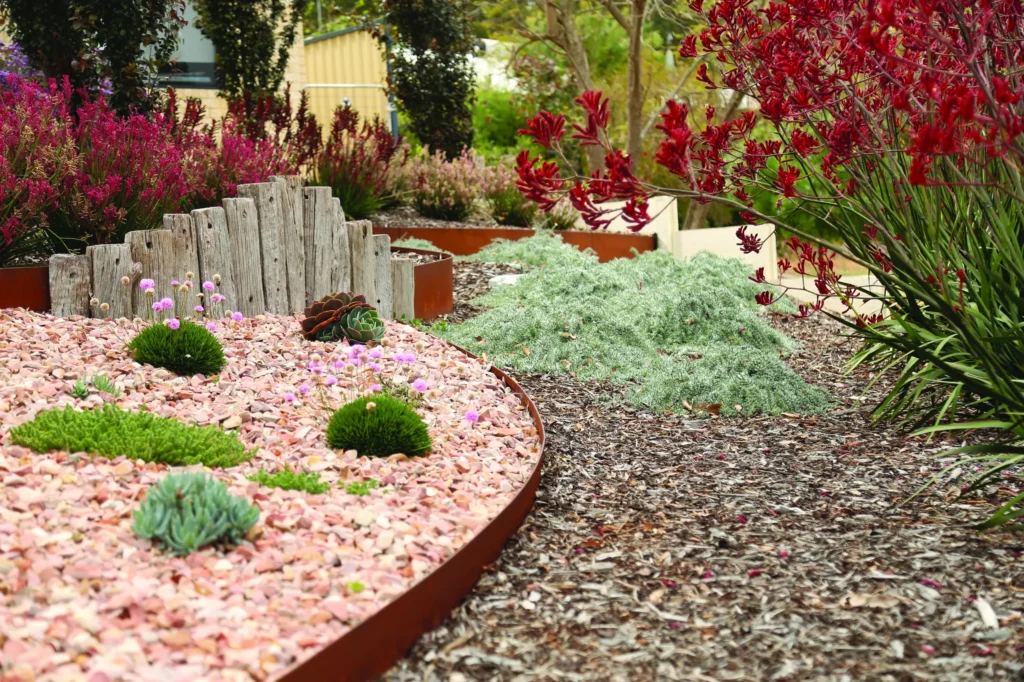
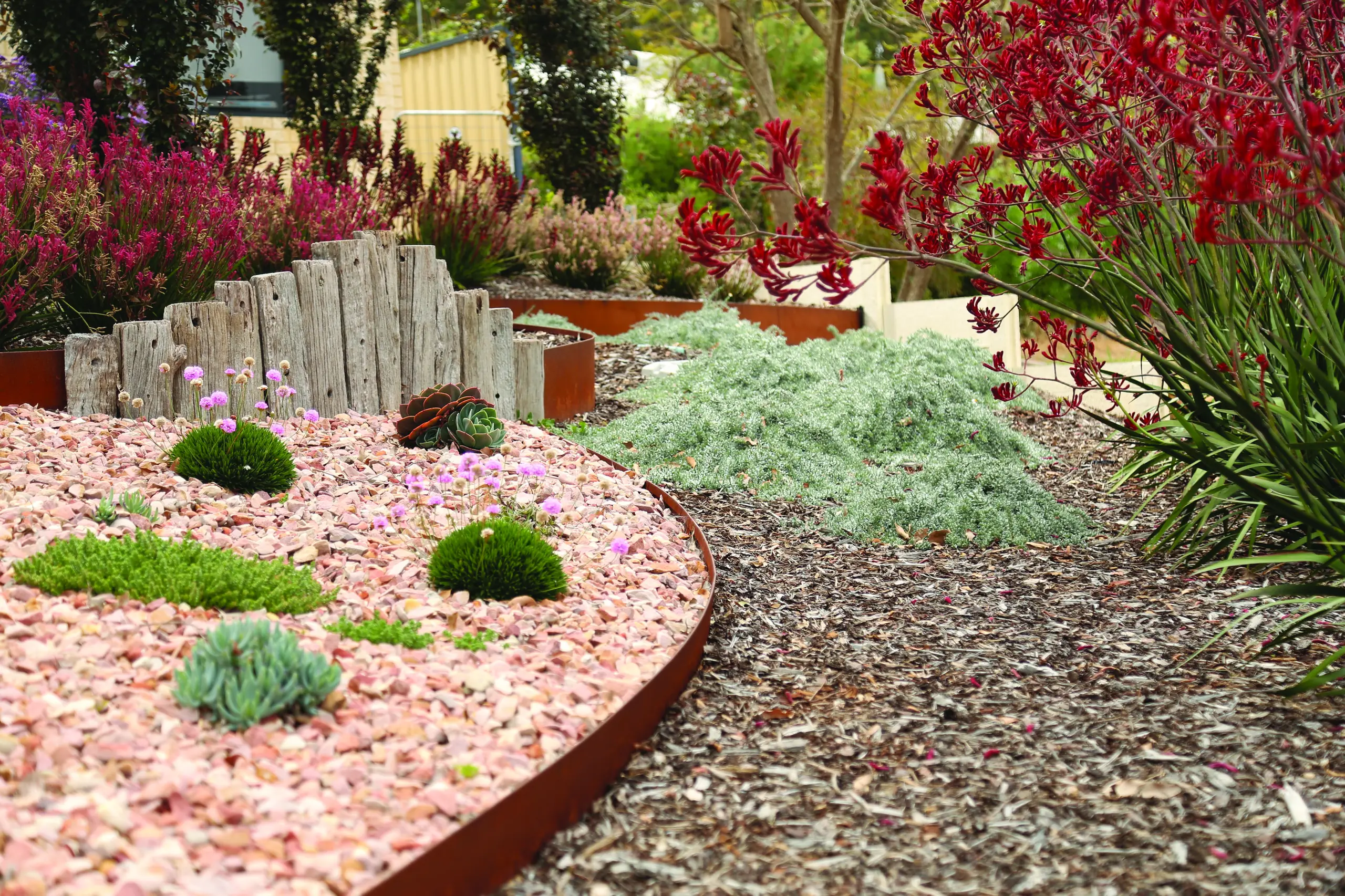
Pink Gravel and Kangaroo Paw Beside a Mature Weathering Steel Edge

Perth, WA
2 years old
Evening Garden with Sculpted Weathering Steel Edges

Ferny Hills, QLD
2 years old
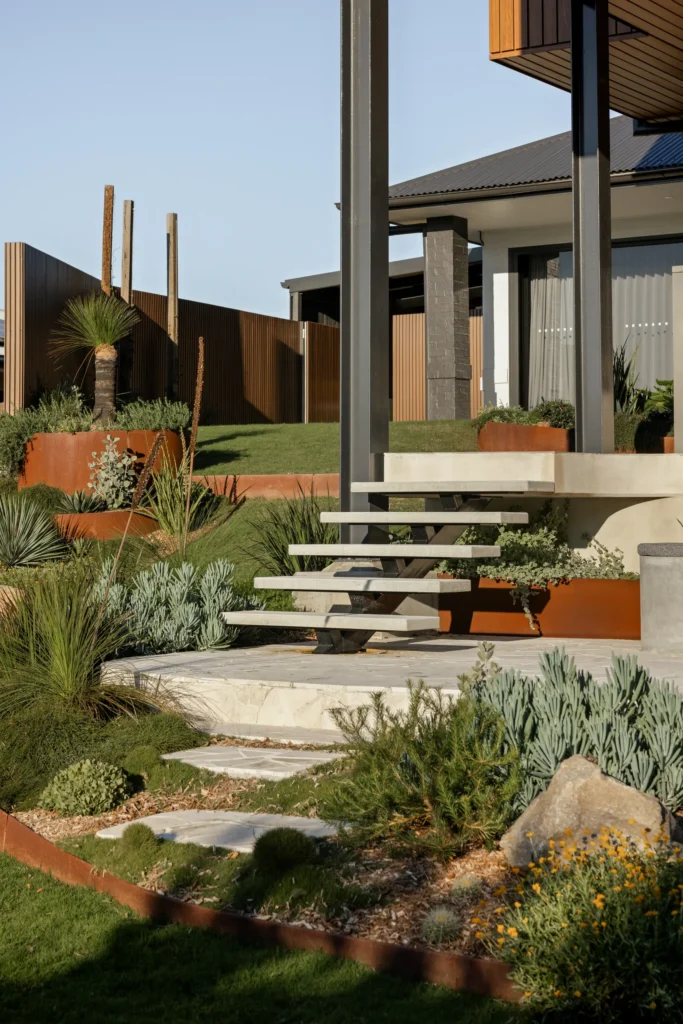
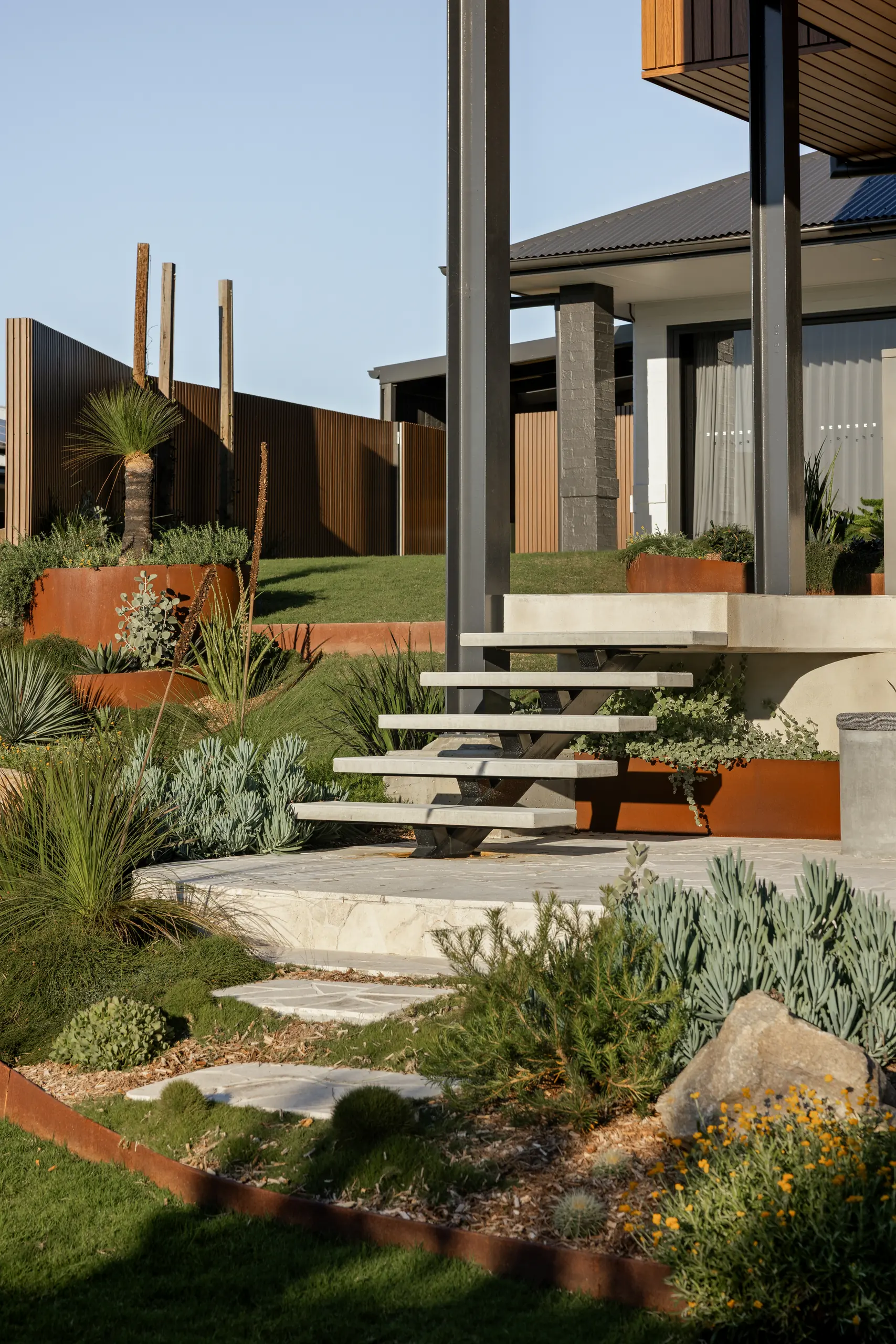
Floating Concrete Steps Through a Native Garden with Weathering Steel

Ferny Hills, QLD
2 years old
Aerial View of Curved Lawns and Weathering Steel Edged Terraces
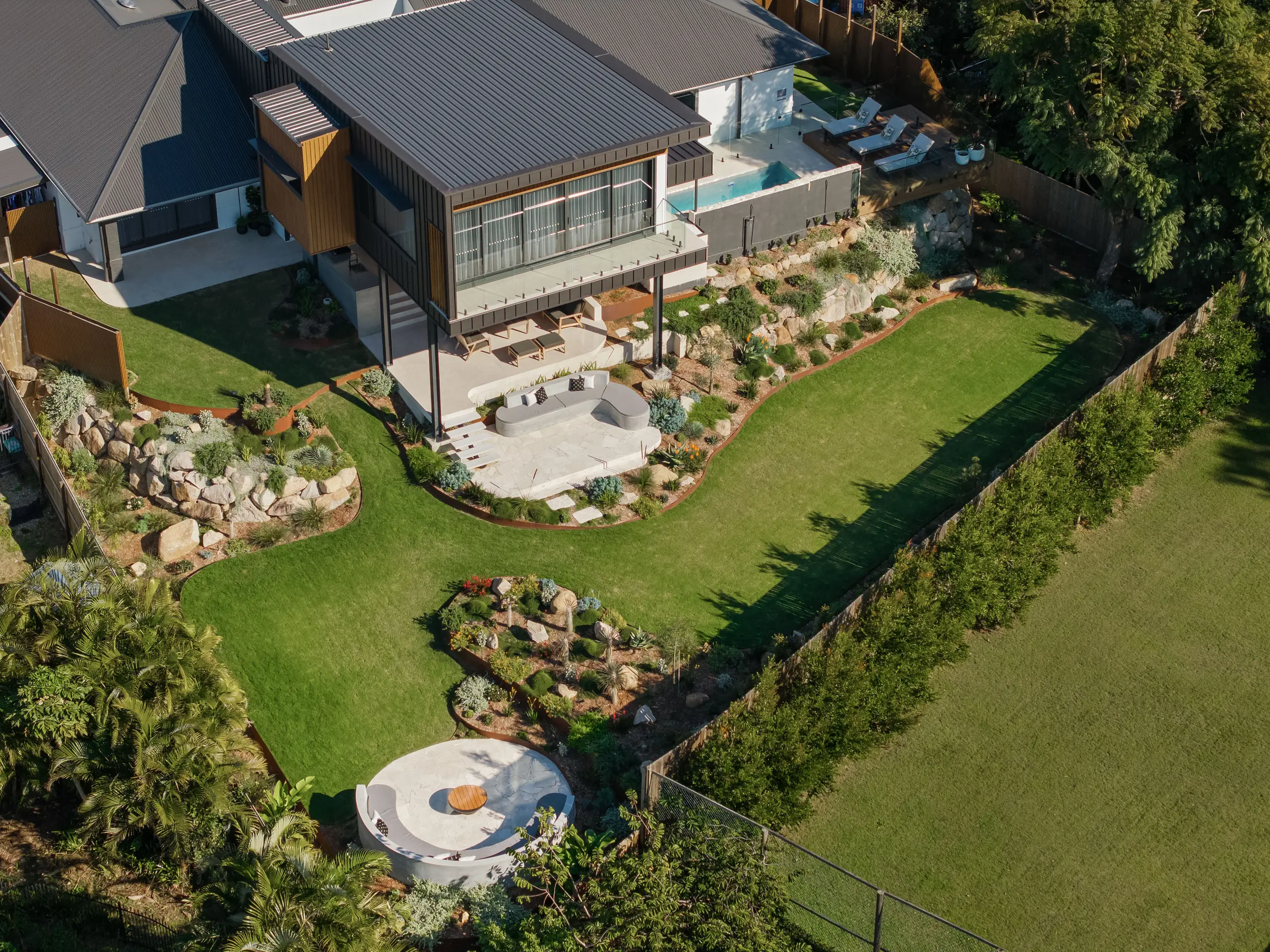

Ferny Hills, QLD
2 years old
Boulder Rock Garden with Weathering Steel Planters and Edging
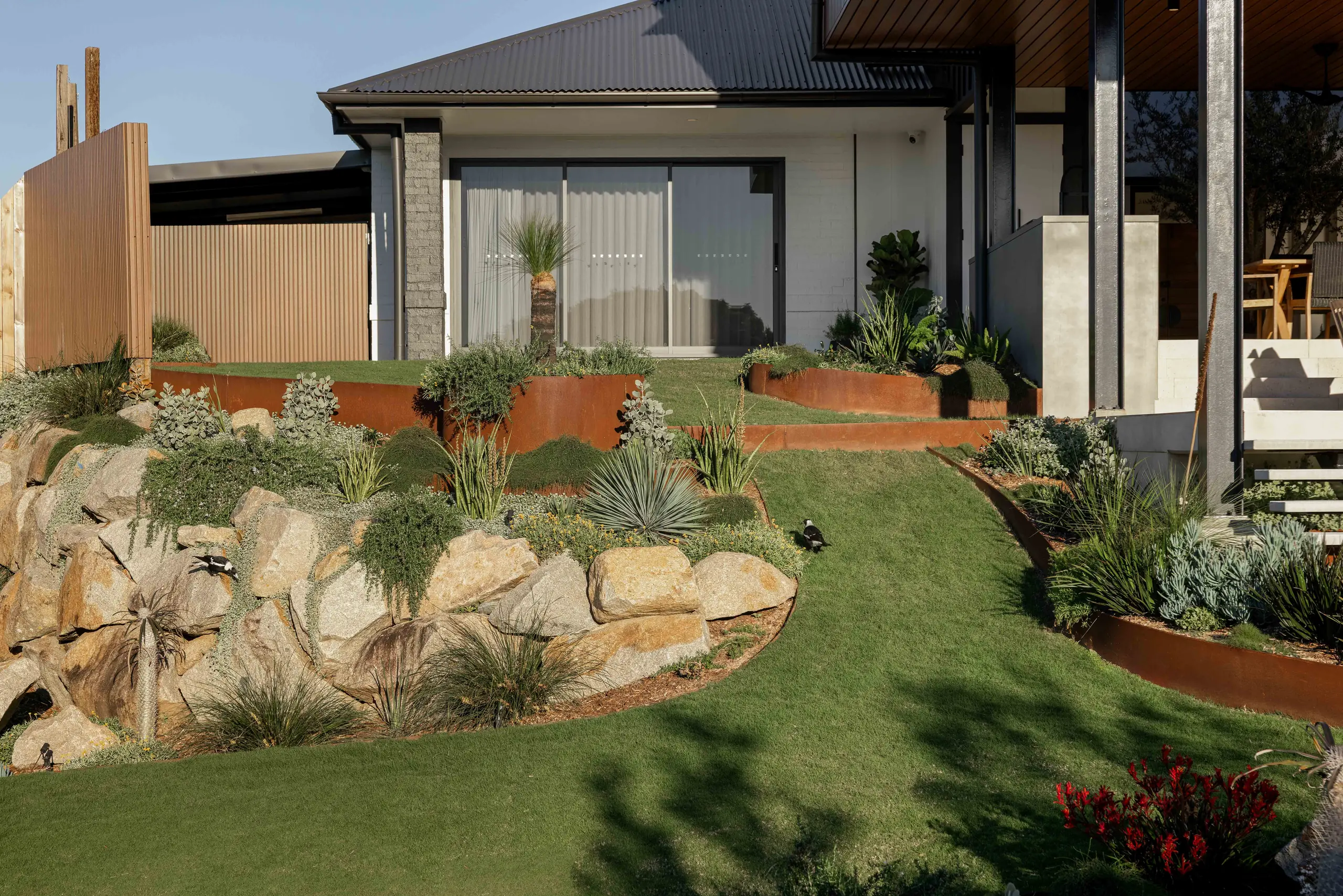

Margaret River, WA
2 years old
Native Border in Weathering Steel


Victoria
2 years old
Gravel Path Through Weathering Steel Edged Native Gardens to a Modern Home
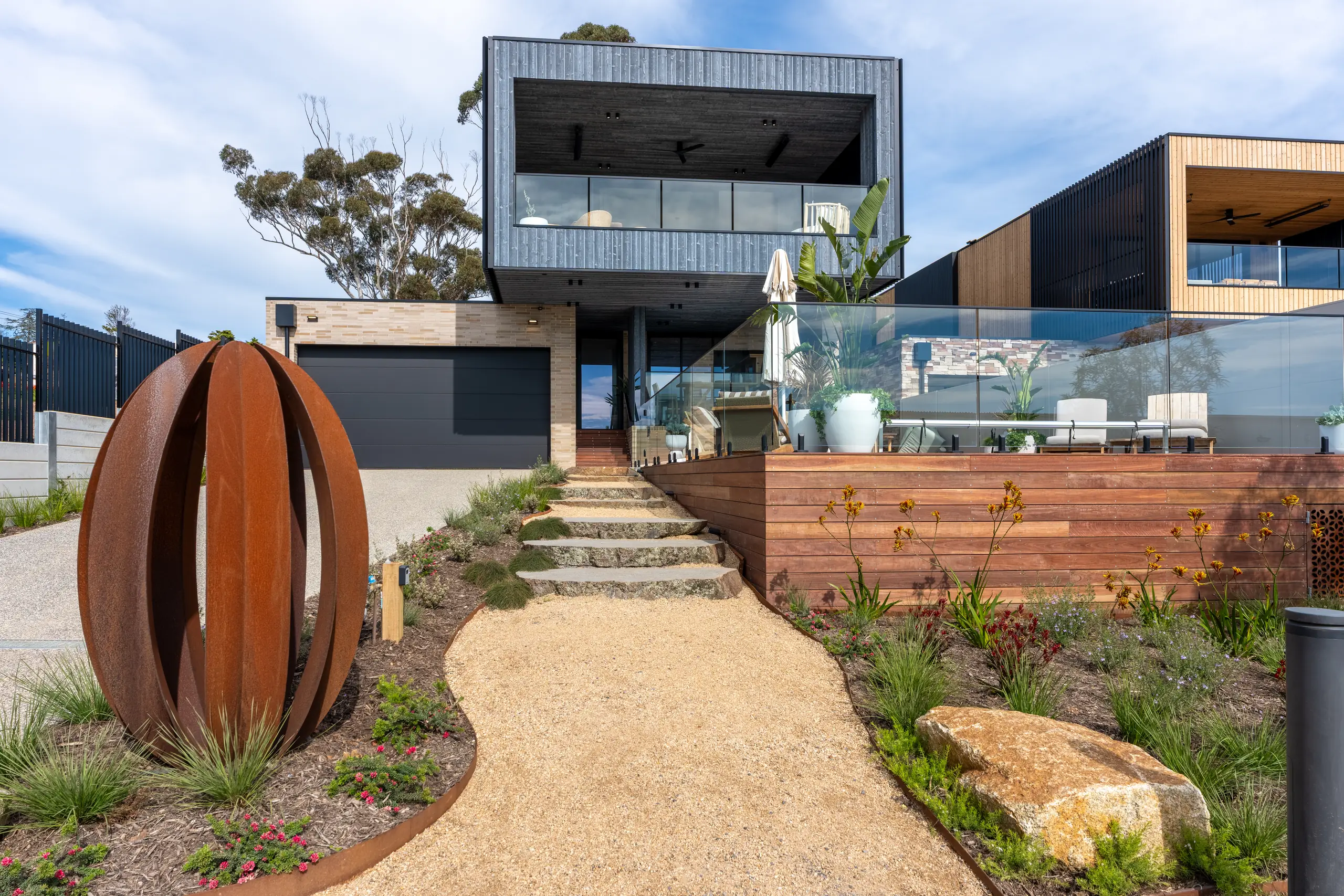

Perth, WA
2 years old
Sweeping Dusk Lawn with Hidden Weathering Steel Edge


Victoria
2 years old
Lawn, Stone Bath and Barrel Sauna with Weathering Steel Edging
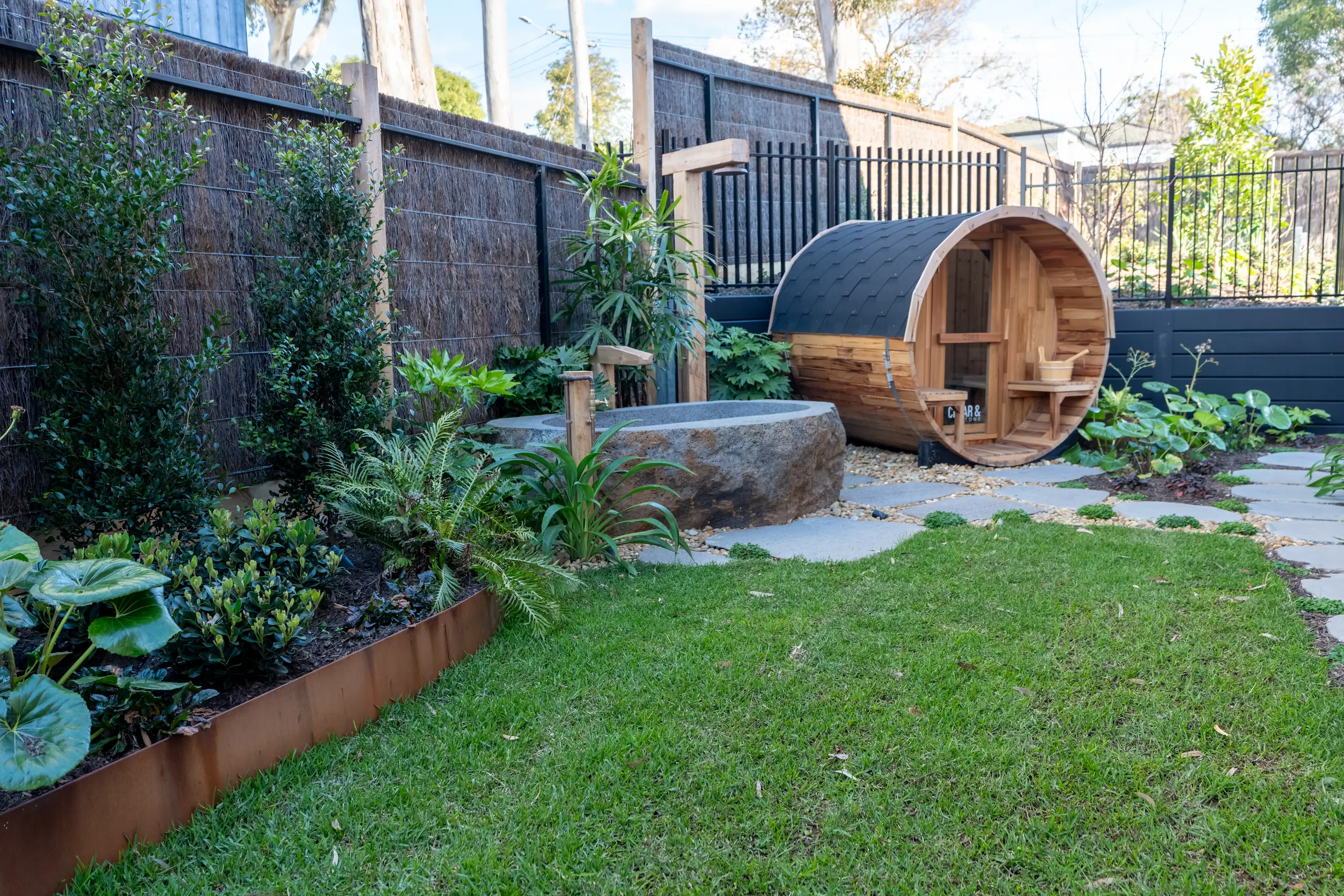

Ferny Hills, QLD
2 years old
Succulents and Silver Groundcover Above a Weathering Steel Edge


Sydney, NSW
2 years old
Flex Edging Curved into Rooftop Planter Rings


Ferny Hills, QLD
2 years old
Covered Alfresco Above a Native Garden Edged in Weathering Steel
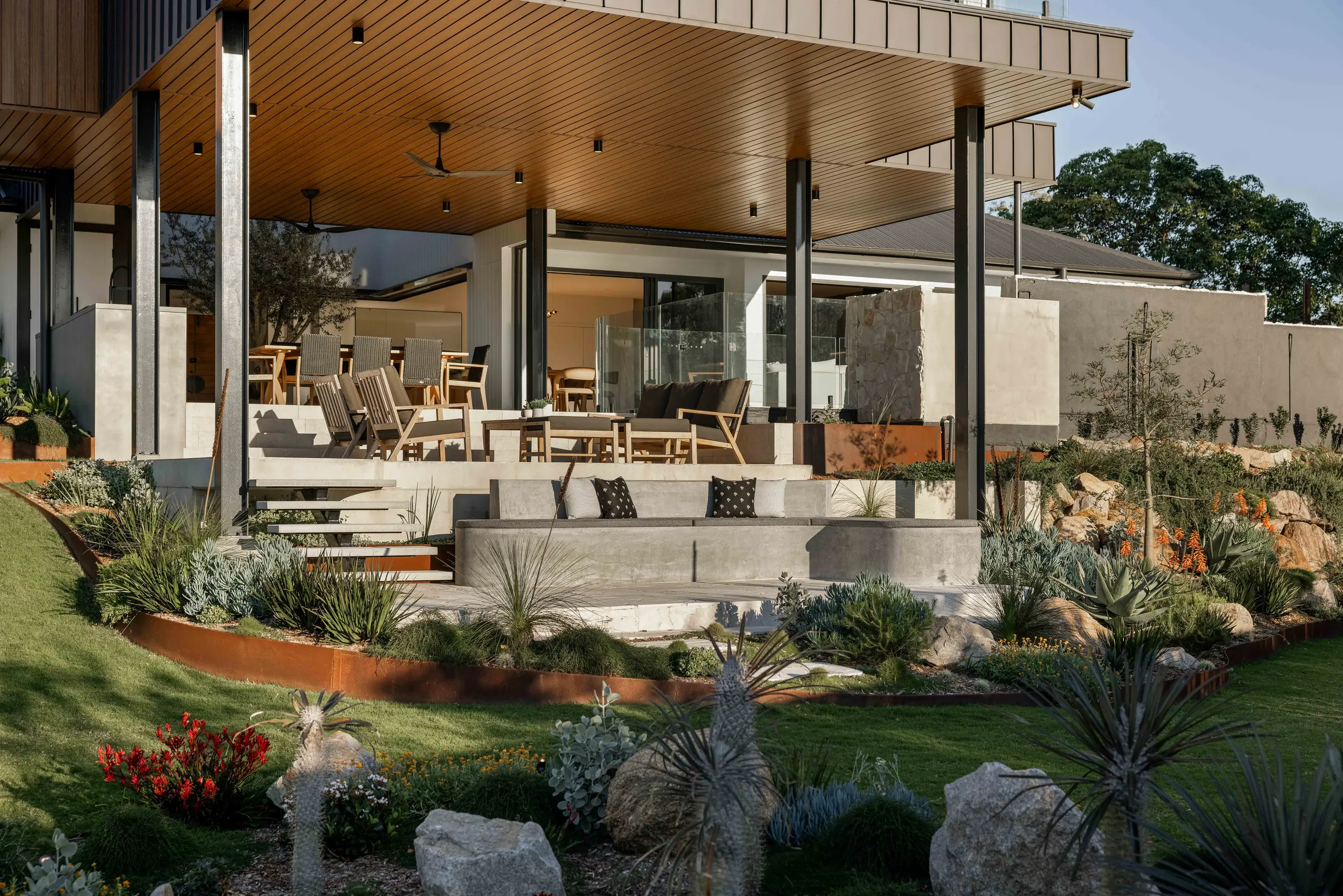
Seen one you like? Plan your own in the Design Tool.
Installation videos
Watch ClickConnect™ edging go together
Three short videos on how the lengths join, how Flex follows a curve and how Rigid holds a straight line.
3 spikes
per 1.8m length
12 in every 7.2m box set
29cm
smallest curve radius
Flex bends this tight by hand
30sec
per join
slide it on until it clicks
Living material
How weathering steel changes on your garden edging
Weathering steel, often called corten, arrives dark and builds a rust-coloured patina through ordinary wet and dry weather. That patina slows further corrosion. On edging you see the change along the top edge and the exposed face.
-
The Raw Starting Point
Dark, near-black surface from the mill-scale oxide layer. Each panel may vary slightly in tone. This evens out as the patina develops.
-
Breaking Through
Orange patches appear as the mill-scale breaks down. Development may be uneven initially, particularly on faces with different weather exposure.
-
The Orange Phase
The full surface transitions through shades of orange. Against green foliage and fresh soil, this phase is particularly striking.
-
Warming and Deepening
Reddish-brown tones replace the brighter orange. The patina builds its protective density. Adjacent panels converge in colour.
-
Finding Its Character
A deeper brown develops. The surface becomes increasingly uniform. The protective layer is well established.
-
Rich and Stable
Deep, rich brown tone. The patina is stable and self-protecting, and asks very little of you. A quick rinse and an occasional check are all most gardens need.
Coastal conditions
Within about 2 km of the sea, airborne salt speeds up corrosion and makes it hard for the patina to form. Weathering steel can still be used near the coast with good drainage, gravel rather than mulch against the steel, and regular checks, as set out in our Product Care Guide.
Inland climate
Inland, ordinary wet and dry weather builds the patina, usually over the first 6 to 12 months. That layer slows further corrosion, and good drainage helps it keep working.
Downloads
Technical resources
The catalogue, and our two guides on how weathering steel lasts and how to look after it.
Product Catalogue
The full Australian range: heights, profiles, finishes, specifications and what comes in each box set.
Longevity Guide
What decides how long weathering steel lasts, from distance to the coast to drainage.
Product Care Guide
Practical guidance on looking after weathering steel products for the best possible patina development.
Visiting a stockist
What to expect when you visit
You have seen the gardens and watched the videos. A visit is where you get to handle the product and settle the questions that are hard to answer on a screen.
-
Try it yourself
Ask them to open a ClickConnect™ box. Push two lengths of ClickConnect™ edging together until they click, bend a Flex length by hand, and run your finger along the rolled top edge. You have seen how easy it is in the videos, and this is where you find out for yourself.
-
See it at full size
Stand next to a full-height raised bed panel and feel the weight of the steel. The height and thickness are much easier to judge in person than in a photo.
-
See both finishes as they arrive
Weathering steel arrives dark grey and builds its rust-coloured patina over the following months. Galvanised steel arrives silver and stays that way. Seeing them side by side makes the choice easier.
-
Talk through your project
Ask the team for advice on which product profile, height or finish would best suit your project, based on factors such as your soil type, slope angle or proximity to the coast. They can also check your quantities, so you leave with the right number of sets, corners and accessories.
-
Take it home today
If your products are in stock you can start the same day, and pick up the soil and mulch on the same trip.
Before you go
Four things to do at home, so the visit is quick and the advice fits your garden.
Measure the space
Measure each run in metres and note the curves and corners. For raised beds, choose a height: 240mm, 400mm or 560mm.
Call ahead
Stock varies between stockist locations. Call ahead to check they have your preferred products or can order them in. You can find your nearest stockist's contact details on our Nearest Stockist page.
Photograph the spot
Photos of the area, the soil and anything nearby, such as paving, a fence or a slope, help the team advise you.
Check what is underground
Edging spikes and bracing go into the ground, so find out where pipes and cables run. Before You Dig Australia is a free service.
Honest comparison
Steel vs Timber vs Plastic Garden Edging
| Feature | Straightcurve Steel | Timber | Plastic | |
| Material | 1.5mm precision-formed steel. Safety tops: 4mm on ClickConnect, 6 to 8mm on Original. 1.8m and 2.2m lengths. |
Varies. Softwood rots fast. Hardwood is expensive and still degrades. |
Lightweight. Expands and contracts, causing shifting and buckling. |
|
| Appearance | Clean lines. Discreet joins. Patina or contemporary matte grey. |
Natural initially. Greys, splits, softens over time. |
Can look artificial. Colour fades. Limited to black or green. |
|
| Installation | Hammer and spikes. Basic tools. One person. |
Cutting, treating, staking, screwing. Heavy sections need two people. |
Arrives coiled with memory. Difficult to lay flat. Pegs work loose. |
|
| Maintenance | Weathering steel self-protects as its patina forms. Protective coating optional. Many of the same care steps apply to galvanised. | Annual treatment recommended. Untreated timber rots from ground up. |
No treatment, but replacement every few years adds up. |
|
| End of life | Steel does not rot. |
Treated timber often cannot be composted. Landfill. |
Most garden plastic is not recyclable. Landfill. |
Steel edging is a larger upfront investment than plastic or timber.
But timber softens within a few years in damp soil.
Plastic shifts, cracks, and fades in the Australian sun.
Both need replacing, often more than once in a decade.
Because you buy it once, steel works out the more economical choice over time.
Good to know
Questions to answer before you buy
The questions gardeners and landscapers ask us most before they order garden edging, from choosing a profile to corners, finishes and tools.
Which profile should I choose: Flex, Rigid or Zero-Flex?
Choose by the line you want. Flex bends by hand on site, so it suits tight curves, tree rings and free-form shapes, down to a curve radius of about 29cm for ClickConnect™ Flex and about 35cm for Original Flex. Rigid holds a straight line and takes gentle curves. Zero-Flex is for dead-straight runs that must not move, such as along paths, paving and formal borders. Flex and Rigid can be joined in the same run when you choose the same height and the same range.
What is the difference between ClickConnect™ and the Original range?
Both ranges are 1.5mm steel. ClickConnect™ comes in weathering steel, and the Original range comes in weathering steel or galvanised. ClickConnect™ edging is offered in 100mm and 150mm Flex and Rigid. Each length has a connector plate fitted at the factory, and you slide the next length on until it clicks, with no screws. The Original range, which includes 75mm, 100mm and 150mm in Flex, Rigid and Zero-Flex, joins with a pre-attached connector plate and is fixed with Tek screws. The two connectors are different, so keep each run within one range.
What height edging do I need?
75mm suits lawn-to-bed mowing edges and shallow borders. 100mm and 150mm hold back more soil and mulch and give a deeper border. Edging is mostly buried, so allow for that when you choose. For mowing edges, see our lawn edging ideas. For taller beds and retaining, look at our raised garden beds in 240mm, 400mm and 560mm.
How deep should I bury the edging?
Flex and Rigid edging is usually buried by at least a third of its height. How much more depends on what will be leaning against it from behind: the heavier or denser that material is, the more of the edging should go into the ground, and the more that is buried, the stronger the edge. Zero-Flex only needs to be buried far enough to hide its foot. On a firm base with the soil or mulch filled close to the top, the edge holds its line.
How do I make corners?
Use a corner piece. It comes pre-made at 90 degrees, and you can bend it to a different angle by hand. Corner pieces are available for the Original range; ClickConnect™ corner pieces are not yet available in Australia. To make your own corner or cut a length to size, you will need an angle grinder.
Can I install edging on a slope?
Yes. Flex and Rigid edging can both follow a slope, as long as the incline is even along the run. The notches in Flex are there so it can bend around curves; they do not help it follow a change in slope. Where the slope changes, step the edging at that point and start the next run at the new level. Zero-Flex needs a smooth, even base, which can be on an incline. For steeper ground, build terraces with raised garden beds. See our guide to sloping garden ideas.
What tools do I need?
For ClickConnect™ Flex and Rigid you need a spade, a hammer for the spikes and a rubber mallet, because the lengths join by hand. Original edging, including Zero-Flex, joins with Tek screws, so you also need a cordless drill and a Tek screw bit. The only time you need an angle grinder is to cut lengths or make your own corners. Every length in both ranges comes with its connector plate already fitted and its spikes included, and our installation videos show each step.
Should I choose weathering steel or galvanised?
Both finishes are the same 1.5mm steel and use the same parts, so the choice comes down to the look you want and where you live. Weathering steel, similar to COR-TEN, arrives dark and builds a rust-coloured patina over the following months. Galvanised keeps a silver-grey finish. Weathering steel suits most inland, well-drained gardens. Within about 2km of the coast, salt in the air can stop the patina forming properly, so galvanised is the better choice there. Our Longevity Guide explains how to choose for your site.
Will weathering steel rust through, and how long will it last?
Weathering steel rusts on the surface first, and that rust layer then settles into a patina that slows further corrosion. A patina does not make any COR-TEN or weathering steel completely rustproof, and for this reason drainage matters most, especially for the part of the edging that sits in the ground (usually at least a third of its height). Free-draining soil, keeping mulch from piling up against the steel, and choosing galvanised near the coast make the biggest differences. The Longevity Guide and Product Care Guide explain what affects service life and how to look after your edging.
Will it stain my paving?
Weathering steel can leave rust marks on light paving and concrete during the first few months while the patina forms. Leave a small gap between the edging and the pavers, or choose galvanised next to light paving. Once the patina has settled, the run-off stops, and marks that do appear can usually be lifted with oxalic acid.
Is the edging safe for children and pets?
Yes. Every profile has a rolled, rounded top edge, so there is no raw cut edge along the top. If you cut a length or make a corner yourself, smooth the cut end before the edging goes in.
Is it made in Australia?
Straightcurve is owned, designed and engineered in Western Australia, where the company started over a decade ago. Our products are manufactured to our designs in Shanghai, China, to the highest ISO standard. As a result, Straightcurve is the highest-precision product in landscaping steel. This also allows us to distribute globally with greater efficiency, furthering our wider mission. Every batch of steel comes with a test report covering strength, thickness, coating weight and composition, and the Longevity Guide explains how that steel performs in Australian conditions.
How do I work out what to buy, and where do I get it?
Use the Design Tool on this page. Choose your profile, height and finish, and it works out the lengths, corners and accessories you need. Take that list to your nearest stockist, where you can see the edging in person and buy it. Stock varies between stockists, so call ahead to check they have your products. If you would like to see prices first, request our price list. Landscape professionals can apply for a Trade Account to access trade pricing, build product quotes and use our technical trade resources.
BEYOND THE GARDEN
The Ignition Chamber
Straightcurve is part of The Ignition Chamber, an Australian company that builds vertically integrated climate infrastructure companies. Each one funds what comes next.
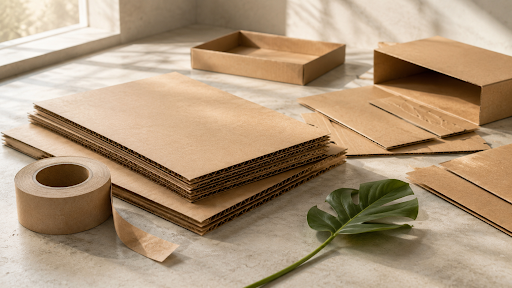
Circular Design
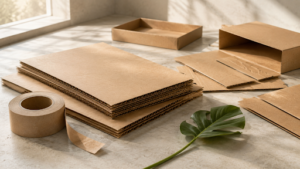
Zero plastic packaging
Two years of R&D replaced every piece of foam and plastic with waterproof cardboard and compostable tape.

Carbon Capture
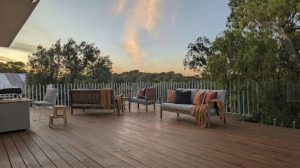
Essier bamboo decking
Bamboo boards that are 60% carbon negative, returned at end of life for permanent underground storage.
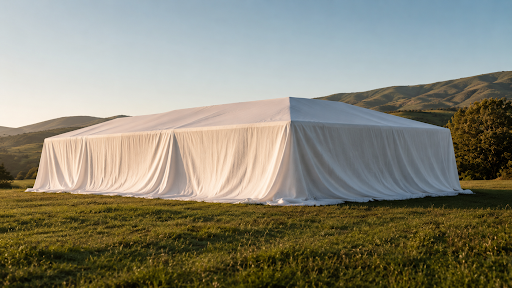
Climate Housing
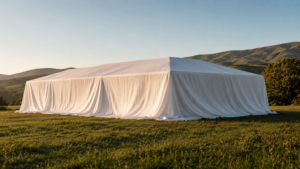
Elysium Living
Homes designed to be carbon negative to build, energy positive to live in, and globally deployable.
Why a garden company builds houses
Straightcurve was the first company built inside The Ignition Chamber. The lessons from scaling it across seven countries are now being applied to carbon-negative housing.
Straightcurve started with a redesign of steel garden edging. No welding. No specialist tools. Professional results from a single modular system. But scaling globally meant confronting harder questions. Weathering steel corrodes over time. Packaging depends on plastic. Two years and hundreds of thousands of dollars later came protective coatings developed to help the steel last longer, and cardboard waterproofed with organic oil instead of plastic film. The same perseverance produced Essier, bamboo decking that is 60% carbon negative; and Elysium, housing designed to remove carbon from the atmosphere. Each company funds what comes next.
Start today
Ready to plan your garden edging?
Join the home gardeners and landscapers who have already put more than 5,837 km of Straightcurve steel into their gardens.
