How our raised garden beds go together
The panels don’t need to be buried. Each panel stands on its own feet on the ground. Panels join end to end with fittings you tap in with a hammer, and a bracing set on the back holds them upright once they are full of soil.
2mm
steel panels
rigid at full height
2
profiles
Flex and Rigid
1.4m
circle
from two Flex panels
19mm
rounded top
no sharp edges
3
heights
240mm to 560mm
80+
stockists
see it in person
Get the price of every raised garden bed set in one list.
Design Your Raised Garden Beds
Bracing Options
Optional Accessories
Current Selection
Important
Included in your selection
Total Meterage
0m
Estimated Total (Incl. GST)
$0.00
Why they don’t need burying
Our walls stand without burial, because they are held at the top and the bottom
A full raised bed pushes hard on its walls. Many steel garden beds handle that by burying part of each panel and setting posts into the ground. Ours sit on the ground and are held at the top by a bracing chain and at the base by twisted nails. That is why the full height of the panel stays above the soil. The drawings below show how it works.

Post or bracing?
A post has to hold the wall up on its own. Our bracing shares the load between the top and the base.
The soil pushes the top out, and the post has to resist it alone by turning in the ground.The chain holds the top and the twisted nails hold the base, so the panel only bulges slightly.

Why the wall settles a little
Our nails let the base settle a few millimetres, and that small movement lowers the pressure on the wall.
Nothing can move, so the soil keeps pushing at full pressure.The base settles a few millimetres against the nails and the wall leans back. It is stable, and it looks stable.The post turns in the soil and the top moves out, which looks like failure.

Curved or straight beds?
A curved bed holds itself up through its shape. A straight run needs the universal bracing set.
To tip over, a curve has to lift both ends. The nails and the soil on its feet stop that.A straight run tips on its own base, so it needs the universal bracing set.

If you would rather use posts
If you use our posts, fix the panel at the top only and let the spikes hold the base.
The post takes all the load, and the whole wall leans out with it.The base settles a little, the wall leans back and the pressure drops.

If your soil is loose sand
In loose sand, put a wide concrete collar at the top of the post instead of concrete down the hole.
The concrete sits where it does little, and the post is weakest where it meets the surface.The pivot moves up to the collar, and the deep, firm soil does the work.
What this means for your garden
No trench to dig and no concrete in normal soil. Straight runs use the universal bracing set, and posts are an option on 400 and 560mm beds.
In their own words
What gardeners, landscapers and designers say
People who have worked with Straightcurve steel, in their own words.

Chloe Thomson
Horticulturalist, Hurstbridge VIC
“It curves beautifully. It actually comes straight, you just curve it to match the space, or slope of the land.”
33%
slope on her block
1,000m²
hillside garden
Gino Cursio
Landscaper, Growscape Melbourne
“When we had the time constraints we didn’t have to dig anything, just come in and install. On The Block you have to save time when you can, but it also looks amazing!”
#2
house on The Block
3
garden areas
Brodie Young
Landscape designer, Brodie Young Design
“Being able to use products like Straightcurve that was quick and easy to install, no welding, no Tek screws needed was like child’s play.”
3
bed heights used
4
garden areas
Real gardens
See raised garden beds in finished gardens
These are real projects built with Straightcurve steel. Click any garden to see the profile, height and finish that were used, then plan your own beds in the Design Tool.

Perth, WA
7 years old
Pale Gravel Path Winding Between Curved Weathering Steel Beds


Bluestone Steps Edged in Weathering Steel Through Lush Planting
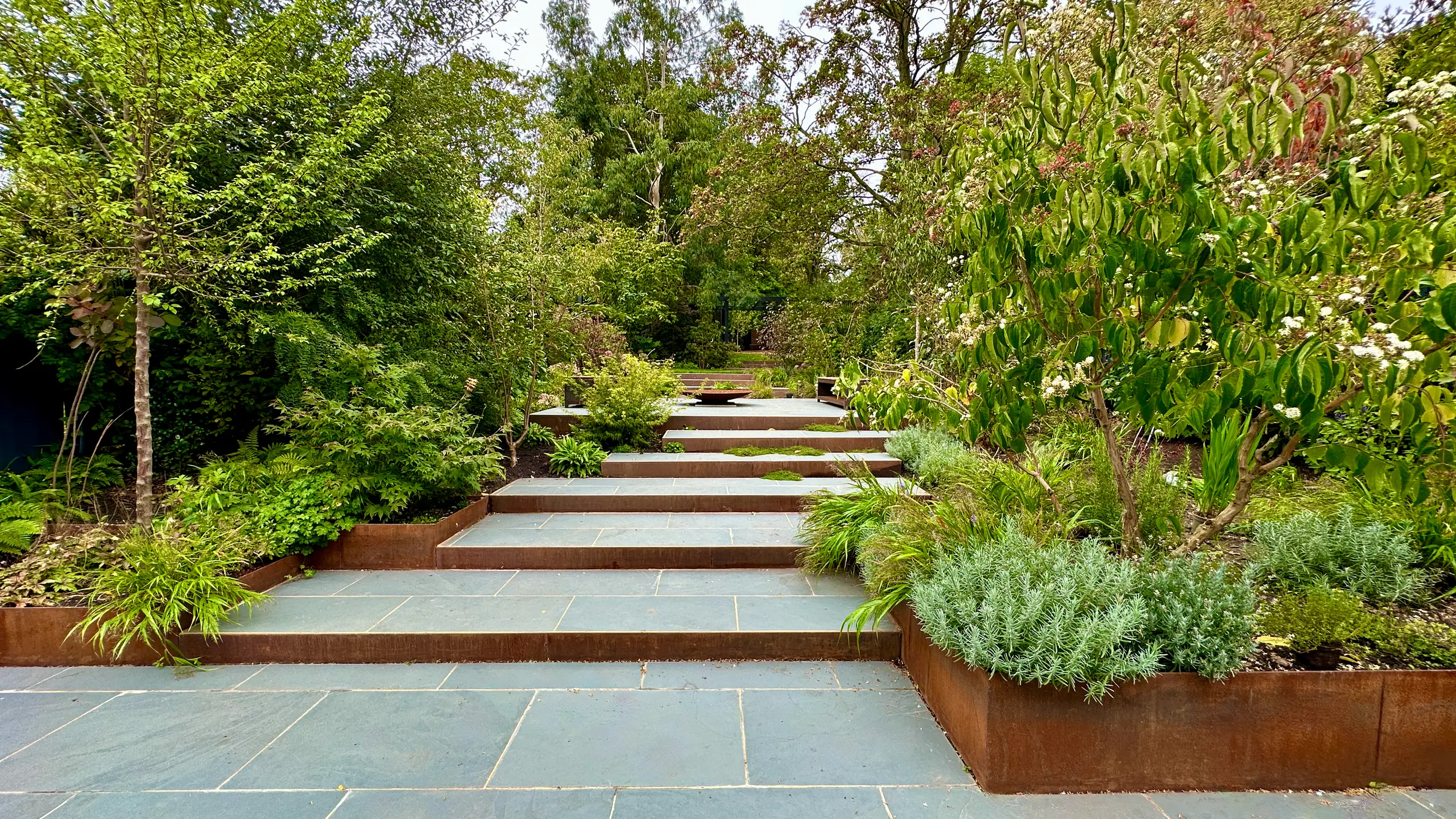

Perth, WA
2 years old
Weathering Steel Raised Bed on a Brick Patio
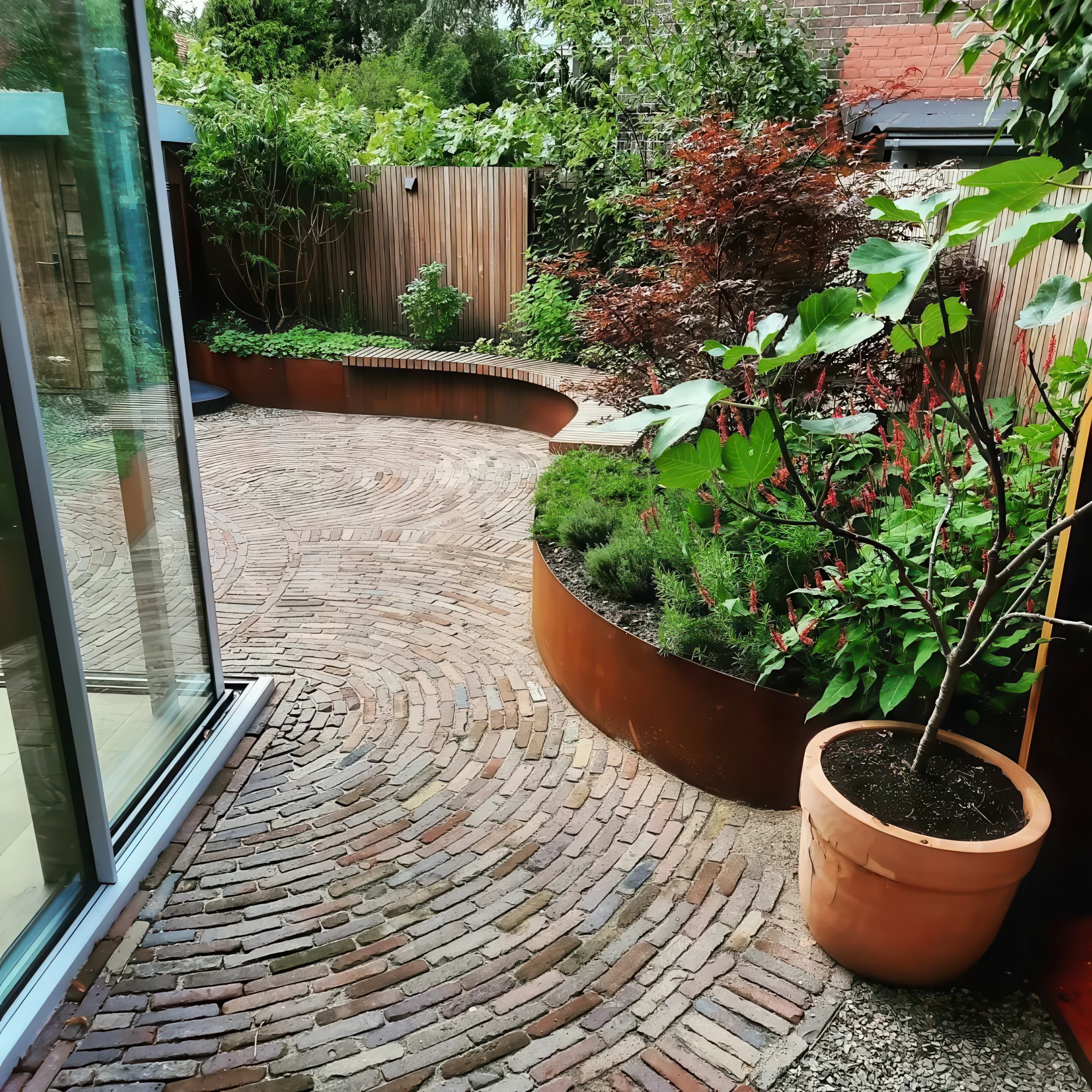

Albany Creek, QLD
2 years old
Layered Weathering Steel Tiers with Sandstone Stepping Pavers
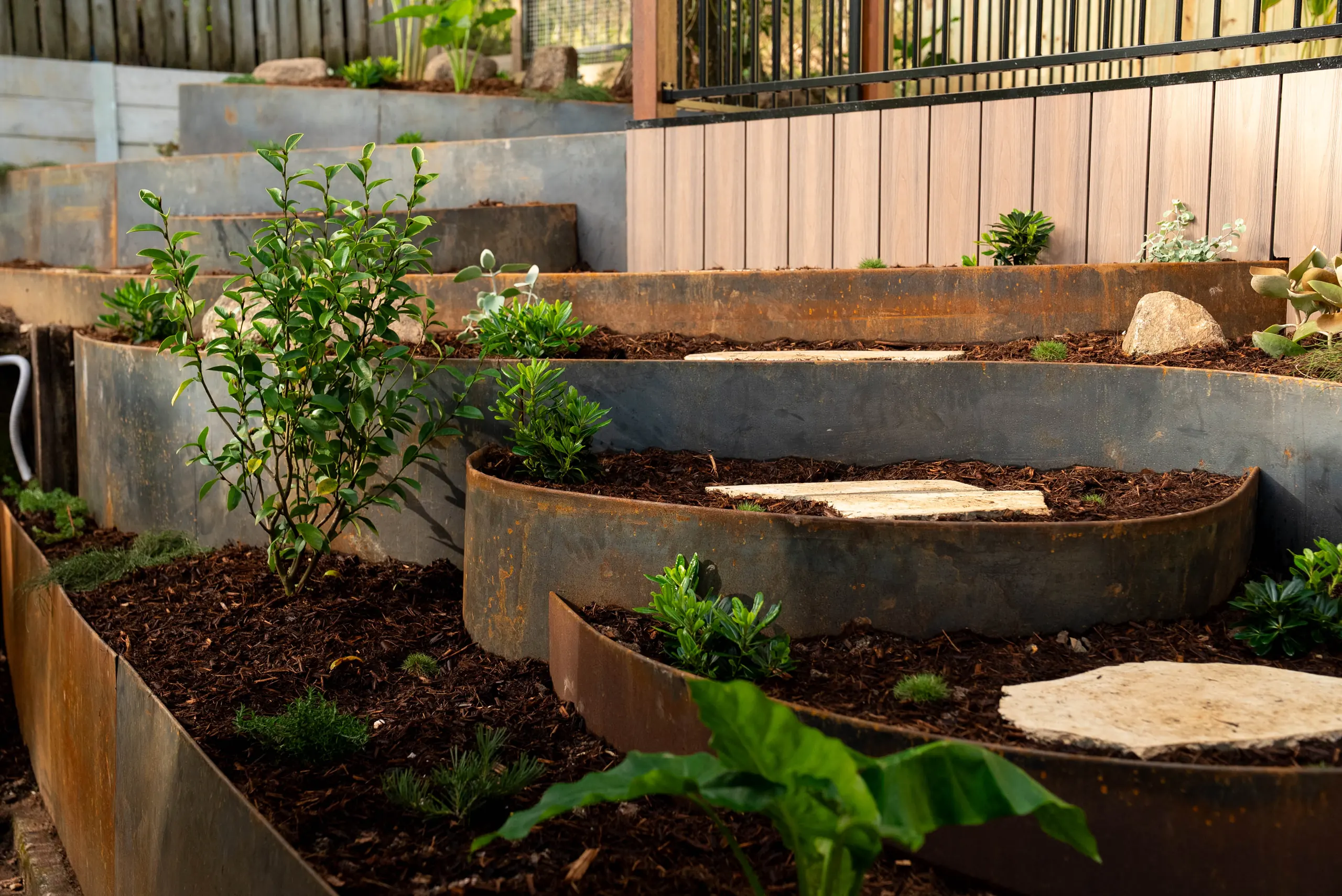

Victoria
2 years old
Five Curved Lawn Terraces Held by Weathering Steel
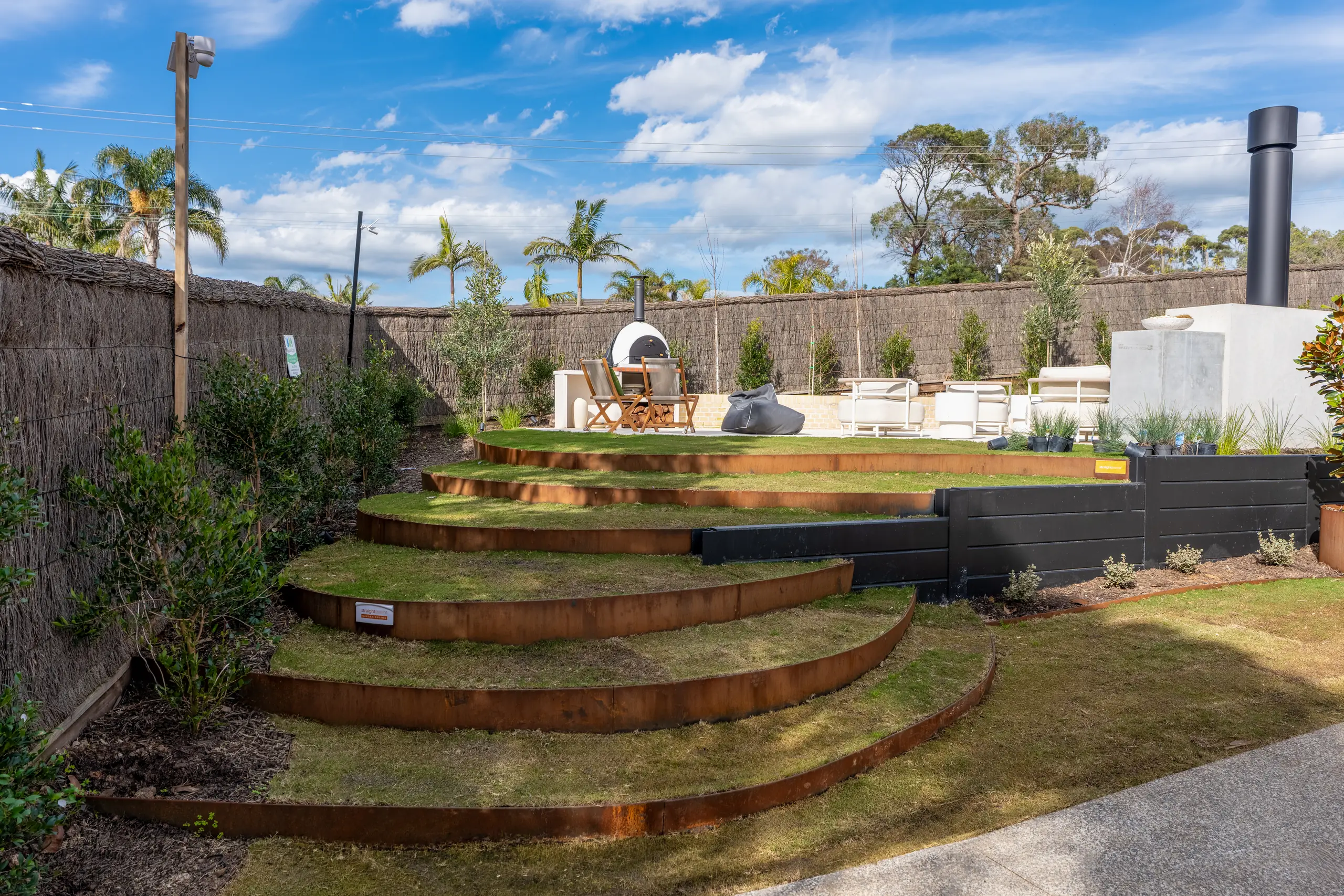

Ferny Hills, QLD
2 years old
Sunken Fire Pit Lounge Below Weathering Steel Garden Terraces

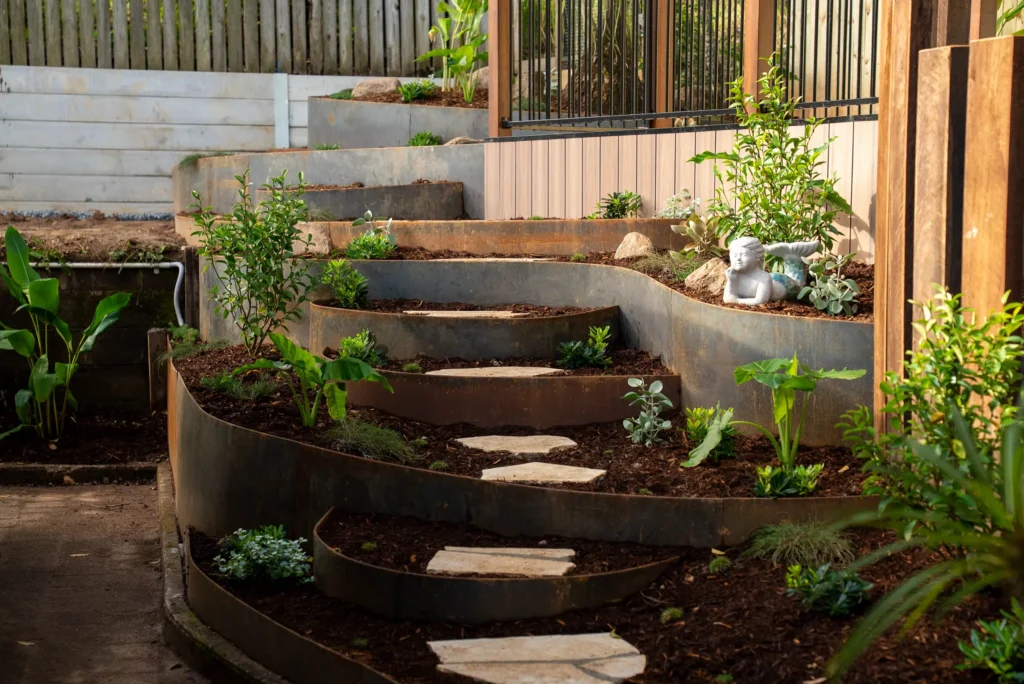
Albany Creek, QLD
2 years old
Stepping Stone Path Through Curved Weathering Steel Tiers

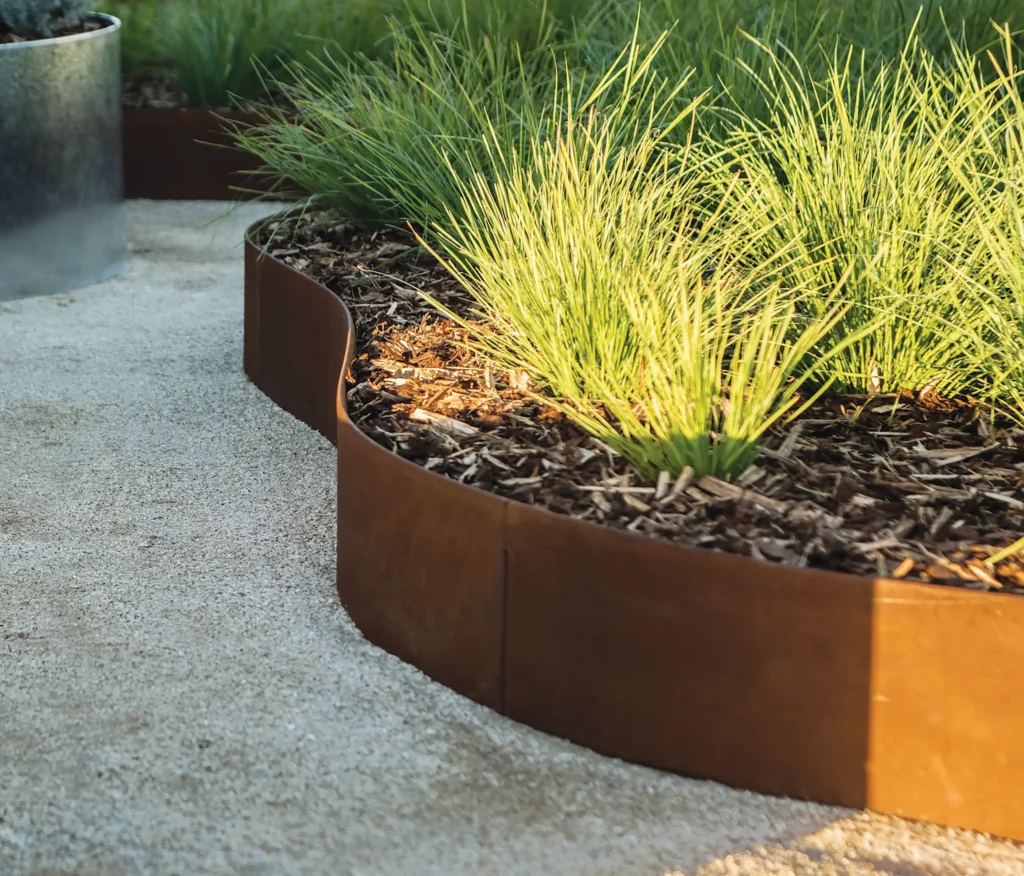
Curved Weathering Steel Bed of Bright Grasses Beside Pale Gravel

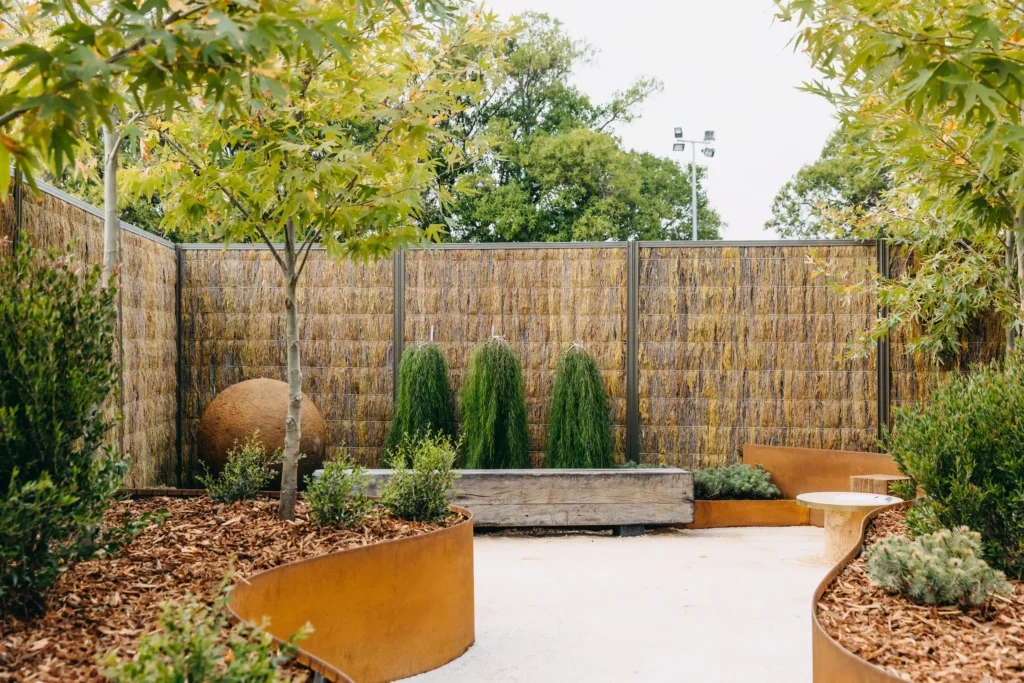
Perth, WA
7 years old
Curved Weathering Steel Beds with a Timber Bench and Stone Sphere

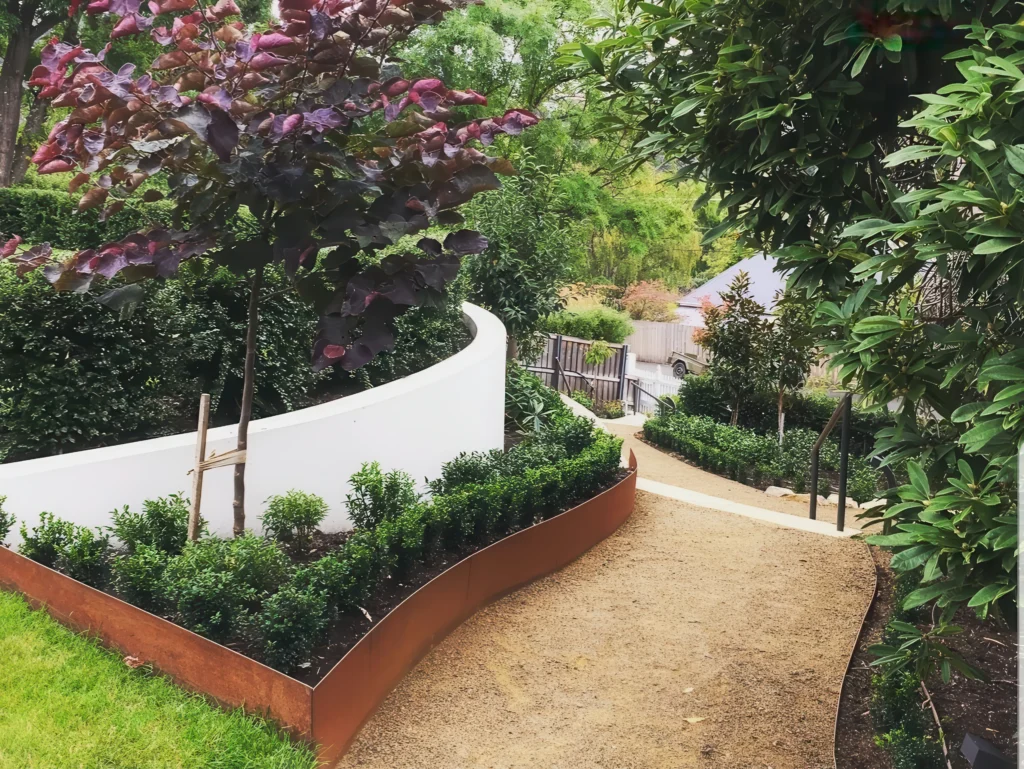
Melbourne, VIC
2 years old
Curved Raised Weathering Steel Beds Framing a Path

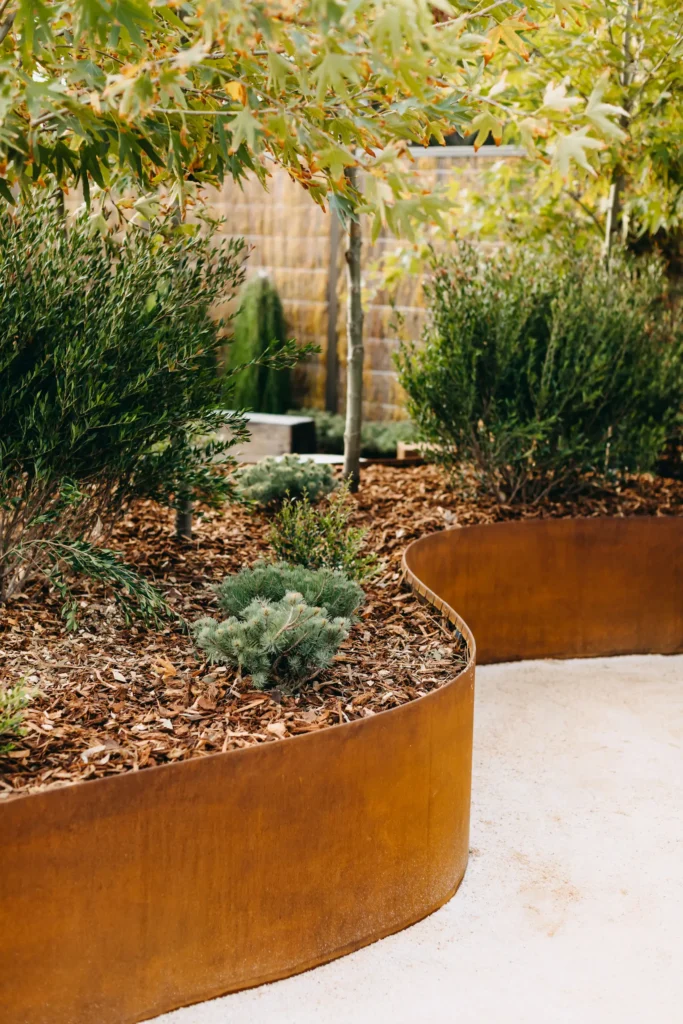
Perth, WA
7 years old
Flowing Weathering Steel Bed Planted with Shrubs and Young Trees

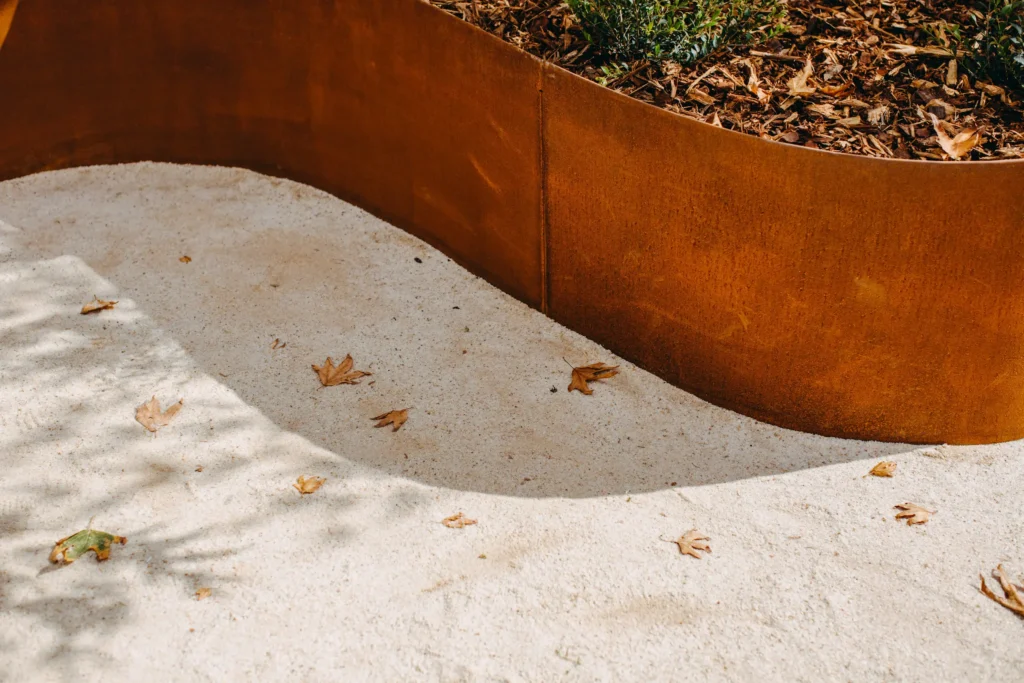
Perth, WA
7 years old
Soft Shadow of a Curving Weathering Steel Wall on Pale Gravel

Seen one you like? Plan your own in the Design Tool.
Installation videos
Watch a raised garden bed go together
Three short videos that show the parts of a raised garden bed install people ask us about most.
0
power tools
for Flex and Rigid beds
17kg
per 400mm panel
one 2.2m length to carry
2
bracing sets
per panel, added by the Design Tool
Living material
How weathering steel changes on your raised garden beds
Weathering steel, often called corten, arrives dark and builds a rust-coloured patina through ordinary wet and dry weather. That patina slows further corrosion. On a raised garden bed the whole face sits above the ground, so you see the full change, and it is more striking than on edging.
-
The Raw Starting Point
Dark, near-black surface from the mill-scale oxide layer. Each panel may vary slightly in tone. This evens out as the patina develops.
-
Breaking Through
Orange patches appear as the mill-scale breaks down. Development may be uneven initially, particularly on faces with different weather exposure.
-
The Orange Phase
The full surface transitions through shades of orange. Against green foliage and fresh soil, this phase is particularly striking.
-
Warming and Deepening
Reddish-brown tones replace the brighter orange. The patina builds its protective density. Adjacent panels converge in colour.
-
Finding Its Character
A deeper brown develops. The surface becomes increasingly uniform. The protective layer is well established.
-
Rich and Stable
Deep, rich brown tone. The patina is stable and self-protecting, and asks very little of you. A quick rinse and an occasional check are all most gardens need.
Coastal conditions
Within about 2 km of the sea, airborne salt speeds up corrosion and makes it hard for the patina to form. Weathering steel can still be used near the coast with good drainage, gravel rather than mulch against the steel, and regular checks, as set out in our Product Care Guide.
Inland climate
Inland, ordinary wet and dry weather builds the patina, usually over the first 6 to 12 months. That layer slows further corrosion, and good drainage helps it keep working.
Downloads
Technical resources
The catalogue, and our two guides on how weathering steel lasts and how to look after it.
Product Catalogue
The full Australian range: heights, profiles, finishes, specifications and what comes in each set.
Longevity Guide
What decides how long weathering steel lasts, from distance to the coast to drainage.
Product Care Guide
Practical guidance on looking after weathering steel products for the best possible patina development.
Visiting a stockist
What to expect when you visit
You have seen the gardens and watched the videos. A visit is where you get to handle the product and settle the questions that are hard to answer on a screen.
-
Try it yourself
Ask them to open a ClickConnect™ box. Push two lengths of ClickConnect™ edging together until they click, bend a Flex length by hand, and run your finger along the rolled top edge. You have seen how easy it is in the videos, and this is where you find out for yourself.
-
See it at full size
Stand next to a full-height raised bed panel and feel the weight of the steel. The height and thickness are much easier to judge in person than in a photo.
-
See both finishes as they arrive
Weathering steel arrives dark grey and builds its rust-coloured patina over the following months. Galvanised steel arrives silver and stays that way. Seeing them side by side makes the choice easier.
-
Talk through your project
Ask the team for advice on which product profile, height or finish would best suit your project, based on factors such as your soil type, slope angle or proximity to the coast. They can also check your quantities, so you leave with the right number of sets, corners and accessories.
-
Take it home today
If your products are in stock you can start the same day, and pick up the soil and mulch on the same trip.
Before you go
Four things to do at home, so the visit is quick and the advice fits your garden.
Measure the space
Measure each run in metres and note the curves and corners. For raised beds, choose a height: 240mm, 400mm or 560mm.
Call ahead
Stock varies between stockist locations. Call ahead to check they have your preferred products or can order them in. You can find your nearest stockist's contact details on our Nearest Stockist page.
Photograph the spot
Photos of the area, the soil and anything nearby, such as paving, a fence or a slope, help the team advise you.
Check what is underground
Edging spikes and bracing go into the ground, so find out where pipes and cables run. Before You Dig Australia is a free service.
Material Comparison
Steel, timber sleeper and corrugated kit raised garden beds compared
The questions worth asking before you choose what to build your raised garden beds from.
| Feature | Straightcurve Steel | Timber Sleepers | Corrugated Kit Beds |
| Height and slopes | 240mm, 400mm and 560mm panels use the same joins, so you can step the heights to terrace a slope. Plan yours in the Design Tool |
Built up one sleeper at a time, so every extra row means more cutting and fixing. | You choose from the set heights in the range. |
| Shape | Flex bends by hand into curves and rings. Rigid is for straight sides with a slim top edge, and pre-made 90-degree corners finish square beds. | Straight runs and square corners. Curves are not practical. | Rectangles and rounds in the sizes that are made. |
| Holding wet soil | 2mm steel with a rolled top. The feet are pinned with spikes, and taller or longer runs are braced. See the bracing options |
Sleepers can bow outwards and need posts set in the ground as the bed gets taller. | Thin corrugated sheet. Long straight sides can need extra bracing. |
| Putting it together | Panels join with a wedge and slider tapped in with a hammer, with no welding and no digging in. Ground anchor posts also need a drill. | Cutting, drilling and screwing. Sleepers are heavy, so it is often a two-person job. | Bolted together at the corners with nuts and bolts. |
| Growing food | No treatment chemicals in contact with the soil. | Treated pine can leach preservatives, so check the treatment first. | Coated steel, so there is no timber treatment to think about. |
| How it looks over time | Weathering steel builds a rust-brown patina. Galvanised stays silver-grey. How weathering steel changes |
Greys and splits, and can rot or attract termites. | Keeps its painted or zinc finish and corrugated look. |
| Getting it home | Flat-packed and collected from your nearest stockist. Find your nearest stockist |
2.4m sleepers usually need a trailer or delivery. | Flat-packed kits, delivered or bought in store. |
If you are growing food, the material around your soil matters.
Treated timber can leach preservatives.
Untreated timber rots from the ground up, often within a few years of Australian weather.
Plastic alternatives vary widely in quality and longevity.
For a fuller side-by-side of steel, timber and brick, see our guide to raised garden bed edging ideas.
Straightcurve raised garden beds are 2.0mm steel. No treatment. Nothing leaching into your soil. Structurally sound for the long term.
The investment is higher on day one. The long term benefits and savings far outweigh the initial cost.
Good to know
Questions to answer before you buy
The questions gardeners and landscapers ask us most before they order a raised garden bed, from choosing a height to bracing and finishes.
Do the panels need to be buried in the ground?
No. Straightcurve raised garden bed panels stand on their own feet on top of the ground, so a 400mm bed stands a full 400mm tall. You level the ground, pin the feet down with the galvanised fixing spikes that come in each set, and brace the panels before you fill the bed with soil. There is no trench to dig and no concrete footing to pour. For the full build, from levelling the ground to bracing and filling, see our guide on how to build a raised garden bed. For borders set into the ground, see our metal garden edging range.
Which height should I choose: 240mm, 400mm or 560mm?
240mm suits low borders, herbs and shallow-rooted plants, or a bed sitting on good soil that roots can grow down into. 400mm gives a mid-height bed with room for most vegetables. 560mm is the tallest panel and the easiest to work at without kneeling.
Can I build curved beds, circles or my own shape?
Yes. Flex panels bend by hand on site, so you can make curves, circles and free-form shapes, and two Flex panels make a circle about 1.4m across. Rigid panels are for straight sides with a slim top edge. Flex and Rigid use the same joins, so curved and straight sections can go in the same bed, and pre-made 90-degree corners are available for square beds.
Should I choose weathering steel or galvanised?
Both finishes are the same 2mm steel and use the same parts, so the choice comes down to the look you want and where you live. Weathering steel, similar to COR-TEN, arrives dark and builds a rust-coloured patina over the following months. Galvanised keeps a silver-grey finish. Weathering steel suits most inland, well-drained gardens. Within about 2km of the coast, salt in the air can stop the patina forming properly, so galvanised is the better choice there. Our Longevity Guide explains how to choose for your site.
Is a steel raised garden bed safe for growing vegetables?
Yes. Weathering steel does not leach harmful chemicals into the soil, and there is no timber treatment sitting against your soil as there can be with treated sleepers. Small amounts of iron oxide may wash off the surface, and they are not harmful to plants. The panels can get warm in full sun, but soil is a good insulator and the heat does not travel far into the bed. Mulch on the soil surface and normal watering look after the plants growing along the edge.
Will weathering steel rust through, and how long will it last?
Weathering steel rusts on the surface first, and that rust layer then settles into a patina that slows further corrosion. A patina does not make any COR-TEN or weathering steel completely rustproof, and for this reason how long a bed lasts depends on the site, and drainage matters most. Good drainage, keeping wet leaf litter and mulch from piling up against the outside of the steel, and choosing galvanised near the coast make the biggest differences. The Longevity Guide and Product Care Guide explain what affects service life and how to look after your beds.
Is it made in Australia?
Straightcurve is owned, designed and engineered in Western Australia, where the company started over a decade ago. Our products are manufactured to our designs in Shanghai, China, to the highest ISO standard. As a result, Straightcurve is the highest-precision product in landscaping steel. This also allows us to distribute globally with greater efficiency, furthering our wider mission. Every batch of steel comes with a test report covering strength, thickness, coating weight and composition, and the Longevity Guide explains how that steel performs in Australian conditions.
Will it stain the paving or concrete around it?
Weathering steel can leave rust marks on light paving and concrete during the first few months while the patina forms. Leave a small gap or a gravel strip between the bed and light paving, or choose galvanised where the bed sits on or next to hard surfaces. Marks that do appear can usually be lifted with oxalic acid. If the bed sits on concrete, the feet can be fixed down with DynaBolts instead of spikes.
What tools do I need, and can I build it myself?
You need a hammer and a rubber mallet. The joins are tapped in with a hammer, so there is no welding, drilling or screwing. You only need a cordless drill for ground anchor posts or for fixing to concrete. You only need an angle grinder if you want to cut a panel to a custom length. Each set comes with its join set, bracing rods and fixing spikes, and our installation videos show each step.
How do I stop the sides bowing once the bed is full of soil?
Each long set comes with bracing rods fitted to the back of the panels. You connect these to a Universal Bracing Set, which holds the panel upright with a turnbuckle, a chain and a ground stake, or you can anchor them to a wall, a fence or a DynaBolt in concrete. Allow two bracing sets per panel length; they are sold separately through your stockist. Ground anchor posts are the alternative where you want a fixed post. Circles made from Flex panels hold themselves up and need no bracing.
Can I build a raised garden bed on a slope?
Yes. The 240mm, 400mm and 560mm Flex and Rigid panels share the same join slots, so you can join different heights end to end. On a slope, use taller panels lower down and shorter panels higher up, so the top edge of the bed stays level and continuous. Plan the levels before you start, and brace the panels as you would on flat ground. See our guide to sloping garden ideas.
How do I work out what to buy, and where do I get it?
Use the Design Tool on this page. Choose your profile, height and finish, and it will calculate the sets, corners and accessories you need. Take that list to your nearest stockist, where you can see the panels in person and buy them. Stock varies between stockists, so call ahead to check they have your products. If you would like to see prices first, request our price list. Landscape professionals can apply for a Trade Account to access trade pricing, build product quotes and use our technical trade resources.
BEYOND THE GARDEN
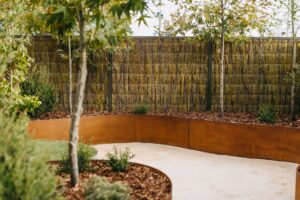
The Ignition Chamber
Straightcurve is part of The Ignition Chamber, an Australian company that builds vertically integrated climate infrastructure companies. Each one funds what comes next.
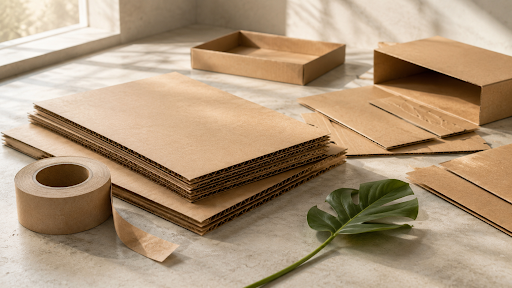
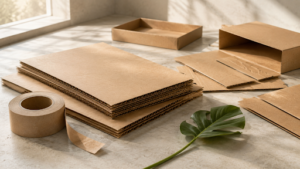
Circular Design
Zero plastic packaging
Two years of R&D replaced every piece of foam and plastic with waterproof cardboard and compostable tape.

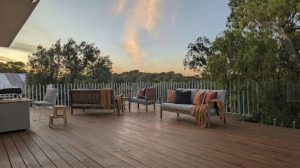
Carbon Capture
Essier bamboo decking
Bamboo boards that are 60% carbon negative, returned at end of life for permanent underground storage.
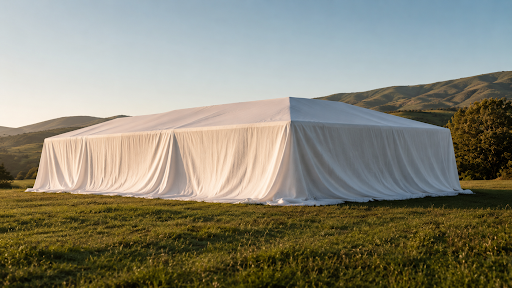
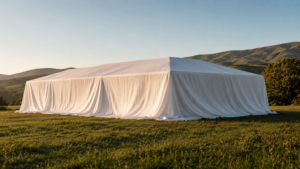
Climate Housing
Elysium Living
Homes designed to be carbon negative to build, energy positive to live in, and globally deployable.
Why a garden company builds houses
Straightcurve was the first company built inside The Ignition Chamber. The lessons from scaling it across seven countries are now being applied to carbon-negative housing.
Straightcurve started with a redesign of steel garden edging. No welding. No specialist tools. Professional results from a single modular system. But scaling globally meant confronting harder questions. Weathering steel corrodes over time. Packaging depends on plastic. Two years and hundreds of thousands of dollars later came protective coatings developed to help the steel last longer, and cardboard waterproofed with organic oil instead of plastic film. The same perseverance produced Essier, bamboo decking that is 60% carbon negative; and Elysium, housing designed to remove carbon from the atmosphere. Each company funds what comes next.
Start today
Ready to plan your raised garden beds?
Join the home gardeners and landscapers who have already put more than 5,837 km of Straightcurve steel into their gardens.
