
- 01 What is corten steel and weathering steel?
- 02 Will it rust away like my old garden ornaments?
- 03 Thickness matters for mild steel too
- 04 How long does weathering steel last?
- 05 UK coastal guidance
- 06 Can I buy it already orange?
- 07 Will it stain my paving slabs?
- 08 Can I use weathering steel for a water feature?
- 09 My edging is flaking, should I be worried?
- 010 Flaking is not failure
- 11 Shop the range
- 12 Common questions about corten and weathering steel
What is corten steel and weathering steel?
Corten steel and weathering steel are terms that often cause confusion, they refer to the same material. If you’re considering corten steel garden edging or weathering steel for a landscaping project in the UK and want to understand exactly what you’re buying, this article answers the seven questions we’re most commonly asked.
COR-TEN (shortened to Corten) is the original trademark name for weathering steel, first developed in the 1930s for railway freight wagons and later adopted for bridges and large outdoor structures. The name combines “corrosion resistance” and “tensile strength,” the two properties that set it apart. The alloy has since been produced by multiple manufacturers under different names, but the chemistry and performance characteristics are consistent across all of them.
Straightcurve uses weathering steel that meets international standards (ASTM, EN ISO, BS ISO, DIN). Whether it’s branded as Corten, Redcor, SSAB, or another trade name, the alloy is the same, what varies is the environment it goes into, not the steel itself.
Quick Summary
Corten and weathering steel are the same material, a high-strength alloy that forms a controlled rust layer called a patina, which protects the steel beneath rather than letting it corrode through. Used for decades in bridges, structures, and landscape design, it’s valued for its durability and its distinctive, warm rust colouring. It performs best in well-drained inland gardens; for coastal environments, it benefits from additional care — see our Longevity Guide and Product Care Guide for the specific steps — or galvanised steel may be considered as an alternative. The seven questions below cover everything most gardeners and landscapers need to know before committing to it.
Will it rust away like my old garden ornaments?
This is the most common concern, and it’s a fair one. Most people have seen cheap steel garden ornaments turn to flaking rust within a couple of seasons and reasonably assume the same will happen with corten steel edging. The difference comes down to the steel itself.
Decorative garden ornaments are typically made from thin-gauge mild steel. It’s easy to cut into intricate shapes, which is why manufacturers use it, but it’s not designed to live outside permanently. As soon as mild steel starts to rust, the rust is porous and doesn’t seal the surface. Corrosion continues unchecked until the steel is gone.
Weathering steel works on an entirely different principle. Because of its alloy composition, when it’s exposed to moisture and oxygen it forms a rust layer (a patina), that is denser and more adherent than ordinary rust. This patina doesn’t just sit on the surface; it actively inhibits further corrosion by reducing the rate at which oxygen and moisture can reach the steel beneath. The result is a controlled, self-limiting process rather than progressive deterioration.
The minimum structural lifespan you should expect from a properly installed weathering steel garden edge is at least ten years, and well beyond that in favourable conditions. The key qualifier is “properly installed,” which we’ll address in the lifespan question below.
Pro Tip
Thickness matters for mild steel too
If you’re comparing products and a supplier is offering mild steel edging rather than weathering steel, ask about the gauge. Mild steel at 3–5mm thickness will also last a reasonable number of years in a garden, not as long as weathering steel, but it’s a relevant variable when making comparisons. Thin mild steel (under 2mm) is in a different category entirely.
How long does weathering steel last?
Weathering steel edging can last decades in the right conditions. But giving a single definitive answer isn’t possible, and any supplier who does is overstating their confidence in the material’s behaviour across different environments.
What determines lifespan is the environment: soil type, drainage, moisture levels, proximity to the coast, and whether the edging stays properly buried. Weathering steel performs by cycling between wet and dry in open air, the patina forms during wet periods and stabilises during dry ones. Disrupt that cycle and the protection is reduced.
The conditions that affect lifespan most significantly are:
Coastal proximity
In gardens within approximately 2km of the coast, or areas with high airborne salt and chloride deposition, chloride ions can interfere with patina formation and increase corrosion risk. Weathering steel can still perform in these conditions with the right care, see our Product Care and Longevity Guides for the specific steps that make the most difference. For coastal locations where lower maintenance is a priority, galvanised steel is a practical alternative.
Soil conditions
The buried section of any steel edging is in a more challenging environment than the exposed section. In organic-rich soils (compost beds, mulched areas) pH can drop below 6, which increases the corrosive load on the buried steel. Good drainage and keeping soil levels topped up around the edging both help.
Persistent moisture
Edging that stays wet without drying (in poorly drained spots, or under permanent mulch coverage) doesn’t get the dry phase the patina needs to stabilise. This is more relevant in the UK than in drier climates: British winters are long and wet, so site drainage is worth thinking about at installation stage.
One thing working in the UK’s favour: the seasonal wet-dry cycle (wet autumns and winters, drier springs and summers) is actually well-suited to weathering steel patina development above ground. The steel gets the moisture it needs to initiate the patina, then the drier months allow it to stabilise. Many UK gardens offer close to ideal atmospheric conditions for weathering steel, provided drainage is adequate. The same material that forms a beautiful patina on garden edging performs equally well in weathering steel raised beds, the alloy is identical.
Ready to see the full range? Request a UK price list and brochure — it covers all panel heights, materials, and configurations.
Pro Tip
UK coastal guidance
The UK has a substantial coastline and many gardens within a few kilometres of the sea. In coastal locations, weathering steel requires more attention to perform at its best, our Product Care and Longevity Guides cover the specific care steps that make a real difference. For those who prefer a lower-maintenance option in coastal conditions, galvanised steel is a practical alternative with the same clean installation system.
Can I buy it already orange?
No, you can’t.
The patina on corten steel and weathering steel develops over time with exposure to the elements. Freshly installed edging starts as a dull, silvery-grey steel colour and gradually develops its characteristic warm orange-brown tones over weeks and months, deepening and stabilising into a darker, richer colour over subsequent years. The exact tone depends on your local microclimate, soil conditions, and aspect.
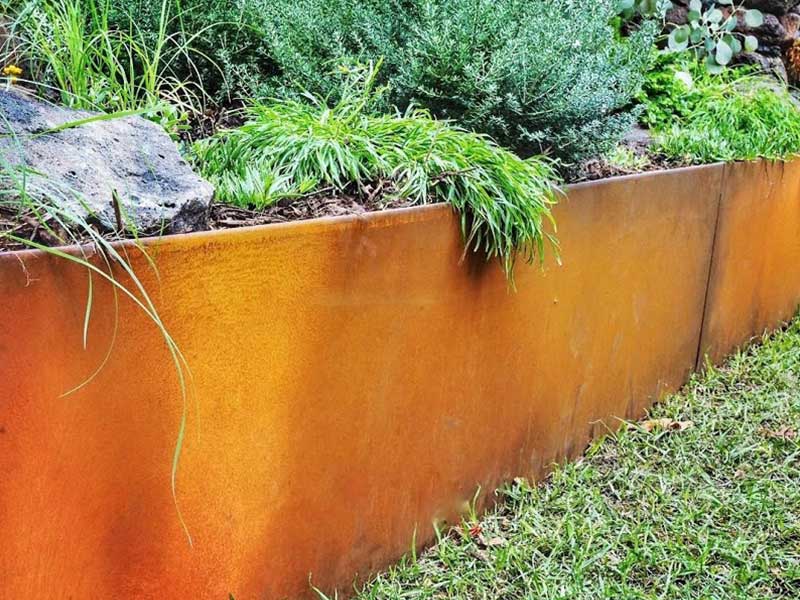
If you want the orange look from day one, particularly for a show garden, a photographic project, or a sensitive installation where early rust run-off would be a problem, it’s possible to pre-rust the steel before installation using a patina accelerator. Look for a product designed specifically for this purpose, available from specialist metal suppliers and some garden centres. The accelerator promotes a stable early-phase patina without damaging the steel.
One thing to understand: a pre-rusted patina is still in its early stages. The steel will continue to develop and deepen in colour after installation, the pre-rusting just gets you past the raw steel phase more quickly and reduces the risk of staining on adjacent paving slabs in the early weeks.
Will it stain my paving slabs?
It can, and this is worth planning for before installation, not after.
During the initial period when the patina is forming, weathering steel produces orange-brown run-off when wet. On grass or soil this is barely noticeable. On paving slabs, gravel, or pale aggregate, it can leave staining that’s difficult to remove. The same effect can be caused by mild steel, but the difference is that with mild steel the run-off continues indefinitely. With weathering steel, the run-off is much less intense, and once the patina is stable (typically within one to two seasons), the run-off stops.
There are three practical approaches to managing this:
- Pre-rust before installation. Using a patina accelerator, initiate the heavy run-off phase before the edging goes in, not afterwards. By the time the edging is installed, the initial rust run-off is already done.
- Dampen the steel regularly in the early weeks — misting or wiping with a damp cloth, without allowing water to run off onto the slabs. This encourages patina formation without directing run-off where you don’t want it.
- Set the edging back slightly from sensitive paving, or use a fine gravel border between the steel and the slabs. Once the patina has fully developed, you can change out the gravel if you prefer the steel closer to the paving.
Once the patina is stable, staining is no longer a concern.
Can I use weathering steel for a water feature?
This is one we’d steer people away from, and it’s worth explaining why.
Welding weathering steel is possible but technically problematic. The elevated phosphorus content in the alloy makes cracking at or within the weld significantly more likely than with mild steel. If welding is necessary, it should be done with Corten-compatible MIG or TIG welding wire. Standard welding rods are a poor substitute, they produce welds that won’t develop a rust patina, leaving a visually distinct bright weld on an otherwise rust-covered structure, and structural integrity with standard rods is also compromised.
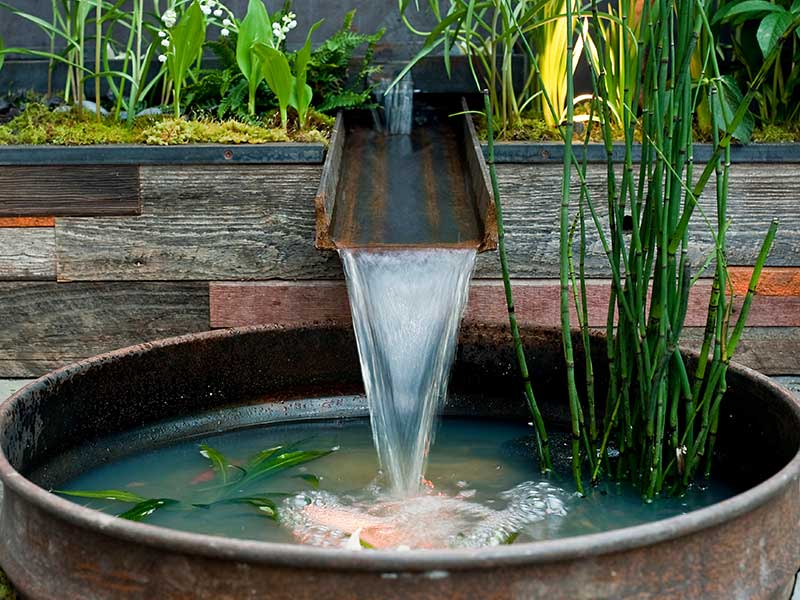
Beyond the welding issue, there’s a more fundamental problem. The patina on weathering steel relies on an ongoing wet-dry cycle to develop and stabilise. A water feature that keeps the steel constantly wet prevents this cycle from happening, particularly at the waterline, where the steel fluctuates between wet and dry. The patina either fails to form properly or remains unstable, and long-term performance is unpredictable.
For steel water features, we recommend mild steel at a minimum of 4mm thickness. In a well-designed water feature application you can reasonably expect that to last up to 15 years.
My edging is flaking, should I be worried?
Usually not, but it’s worth understanding what you’re looking at.
The most common cause of flaking on weathering steel edging is simple: the soil level around the edging has dropped, exposing steel that was previously buried. That buried section never had the chance to develop an atmospheric patina, it was in soil, not air, so it rusted differently. When it becomes exposed, the rust layer it formed underground can appear loose and flaky.
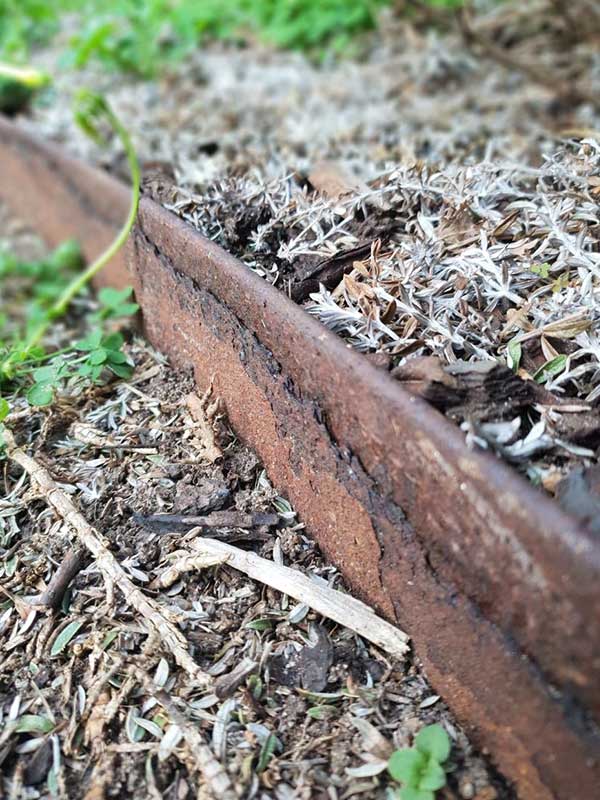
The practical solution is straightforward: top up with soil to the level it was originally installed at. This re-buries the exposed section and stops further atmospheric exposure of steel that isn’t yet patinated.
The second thing worth knowing is that rust looks worse than it is. Rust is approximately seven times thicker than the steel it came from, so 2mm of steel produces roughly 14mm of rust. This means flakes can look alarming when the actual steel loss is minor. Flaking doesn’t mean the edging is failing; it means you’re seeing the rust layer that has built up, not a structurally compromised edge.
Importantly, leave the rust layer in place. It’s acting as a protective barrier, slowing further corrosion. Removing it exposes fresh steel and restarts the process from scratch.
In UK gardens with heavy clay soil, it’s worth keeping an eye on soil levels annually, clay compacts and sinks over time more than free-draining soils, and previously buried sections can become exposed without obvious cause. Keeping soil levels topped up is one of the most effective maintenance steps you can take.
Pro Tip
Flaking is not failure
Visible rust and even some flaking on weathering steel edging doesn’t mean the product is failing. Visually rusted steel can still develop and maintain a stable patina, and it still provides structural strength. The rule is simple: don’t remove the rust layer. Leave it, top up the soil level if sections have become exposed, and the edging will continue to perform.
Shop the range
Browse the full Straightcurve range: garden edging, raised beds, and planter boxes, or request a price list if you’d like specs and pricing before you buy.
Common questions about corten and weathering steel
Are corten steel and weathering steel the same thing?
Yes. Corten is the original trademark name for weathering steel, developed by U.S. Steel in the 1930s. The name has since become so widely used that it’s often treated as a generic term, in much the same way as Hoover or Google. Multiple manufacturers produce the same alloy under different names (Redcor, SSAB, and others), all meeting the same international standards. For practical purposes, corten steel and weathering steel are interchangeable terms.
How long does weathering steel garden edging last?
In favourable conditions (a well-drained, inland garden) corten steel edging can last well beyond ten years and potentially for decades. In more challenging environments (coastal locations, poorly drained ground, highly acidic soil), lifespan is significantly reduced. No honest supplier can give a single guaranteed lifespan, because the environment is the biggest variable. Choosing the right steel for your conditions (weathering steel for inland, galvanised for coastal) is more important than any specific lifespan claim.
A detailed breakdown of what drives those differences — soil type, drainage, coastal proximity, and installation depth — is set out in our guide on how long corten steel lasts in different UK environments.
For coastal-specific care steps, see the Longevity Guide and Product Care Guide.
Does weathering steel rust away?
Yes, it does rust away. It rusts 4x slower than mild steel. Where mild steel gets you 2 to 3 years life, Weathering steel gives you 8 to 12 years.. Mild steel rusts progressively because the rust layer is porous and doesn’t seal the surface. Weathering steel forms a dense, adherent patina that actively slows further corrosion. The steel changes appearance as the patina develops.
For a broader comparison of how different garden edging materials hold up over time, the complete guide to garden edging covers material selection, installation, and long-term performance in detail.
Will weathering steel stain my paving slabs?
It can stain adjacent paving slabs during the early period when the patina is forming, typically the first one to two seasons. Once the patina is fully established, run-off stops. To minimise staining risk: pre-rust before installation, mist the steel regularly without directing run-off onto slabs, or set the edging back from sensitive paving with a gravel border during the early months.
Is weathering steel suitable for coastal gardens in the UK?
Weathering steel performs best in inland, well-drained gardens, but can work in coastal locations with the right care and maintenance approach, see our Product Care and Longevity Guides for the specific steps. For gardens within approximately 2km of the coast where lower maintenance is a priority, galvanised steel is a practical alternative that handles salt air well. Both options are available in the Straightcurve range.
Does weathering steel need maintenance?
Very little. The main maintenance tasks are keeping soil and mulch levels topped up around the edging (to prevent previously buried sections from becoming exposed) and clearing debris from around the base of the steel. Don’t remove any rust layer that forms, it’s doing protective work. In UK gardens with clay soil, checking and topping up soil levels once a year is a useful habit.