Garden Edging Ideas: 10 Long-Lasting Options for Your Garden | Straightcurve
Some of the most popular garden bed edging ideas:
- Brickwork
- Rocks & Gabions
- Block or Stonework
- Flexible Corten Steel
- Galvanised Steel Edging
- Timber Sleepers
- Poured Concrete
- Aluminium Edging
- Recycled Plastic & Composite Edging
- Natural Edging (Woven Willow, Log Rolls & Bamboo)
1. Brickwork
This is a popular choice that ties in well with a slightly more traditional or cottage garden look. Bricks are quite adaptable, suiting a very formal and geometric layout or looking great in funky, irregular patterns. The latter may include curves or staggers like with the 19th-century domino or sawtooth style. Here, mismatched bricks are set on the diagonal, back to back. There’s a whole language around using bricks as edges. They may also be set as soldiers (standing up on edge) or as sailors (flat on their side).
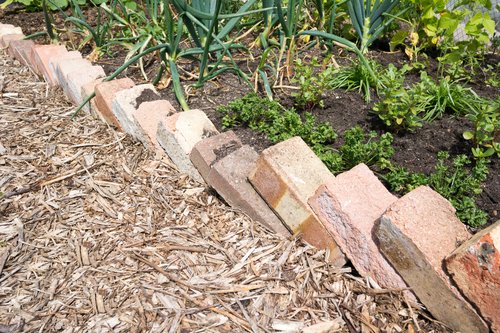
domino or sawtooth-style brick edge can be done neater than this!
Bricks are easy enough to find, with reclaimed yards being a great source. If you’re looking to squeeze them nice and tight on a tamped base of sand, they will be prone to shifting. For a solid, lasting result, a concrete footing is definitely the go and makes more things possible. You can even use bricks to create a mowing strip if the bricks are set slightly higher than the soil level and concreted in ready-for-mower wheel traffic. That’s a definite bonus because it saves you time on trimming for years ahead! A word of warning, though: if you have an invasive lawn, you need to be extra vigilant in creating an unbroken root barrier a little deeper down.
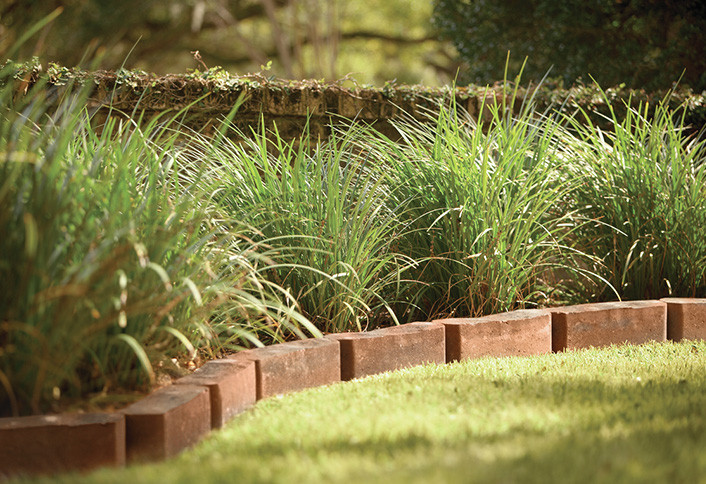
‘A brick edge concreted in place, looking tidy’
Pros:
- Wide range of colours, sizes, and laying patterns.
- Great for both formal and informal gardens.
- Relatively affordable material cost.
Cons:
- Labour-intensive installation, especially for curved layouts.
- Can crack in areas with heavy frost or significant ground movement
- Won’t stop invasive root systems without an additional barrier beneath.
- Mortar joints may need repointing over time.
2. Rocks & Gabions
Working with loose feature rocks is a more involved and creative endeavor compared to the other options. It’s all about matching rocks based on shape and colour to create a natural garden edge.
It’s good to set them firmly in place by giving them a good base of crushed stone so they sit proud rather than sinking into the garden bed soil. This kind of edge lends itself to an informal look, winding along and sometimes repeating within the bed itself. Inter plantings can further soften the overall feel. Alyssums, succulents, and native ground covers come to mind as well-suited gap fillers for this style of garden. To avoid disappointment, check first what rocks are available in your local landscape yards to be sure they’re to your taste.
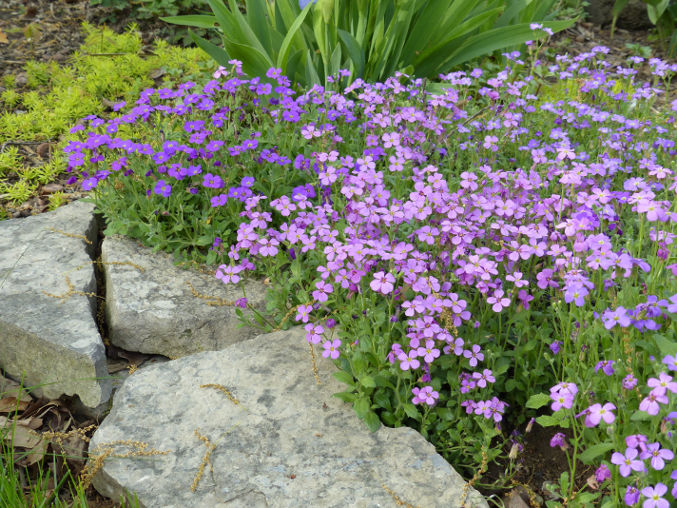
A rocky edge is well suited to interplanting
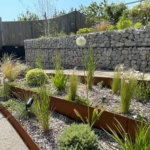
On the other hand, Gabions can provide a more formal look. These allow for less picky rock selection as it’s more about the effect of many rather than individual feature stones. You can even use recycled building materials and broken bricks in these to create a surprisingly attractive gabion edge/wall. They allow for your personality to come through in the fill you choose and can double as seats if paired with good boarding on top. It’s always great to have more places to sit in your garden!
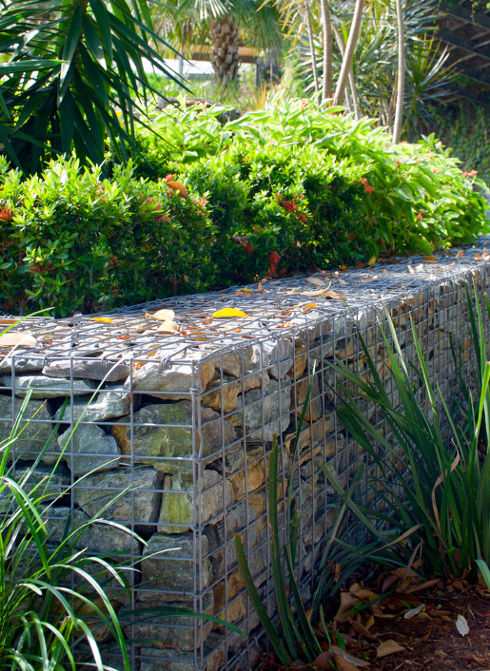
Rock-filled gabion within a garden
Pros:
- Natural, organic look that blends with the landscape.
- Great for interplanting and softening hard lines.
- Surprisingly versatile.
- Rocks don’t rot, rust, or degrade.
Cons:
- Time-consuming and requires a good eye.
- Heavy to transport and position.
- Loose rocks can shift on slopes or in areas with heavy rain.
- Weeding between loose rocks can be fiddly and ongoing.
3. Block or Stonework Garden Edging Ideas
You can also look at stackable stone blocks or more elaborate stonework to really define a path through a garden or the edge of a bed. This has the added benefit of retaining your mulch and soils to give you a lower maintenance garden.
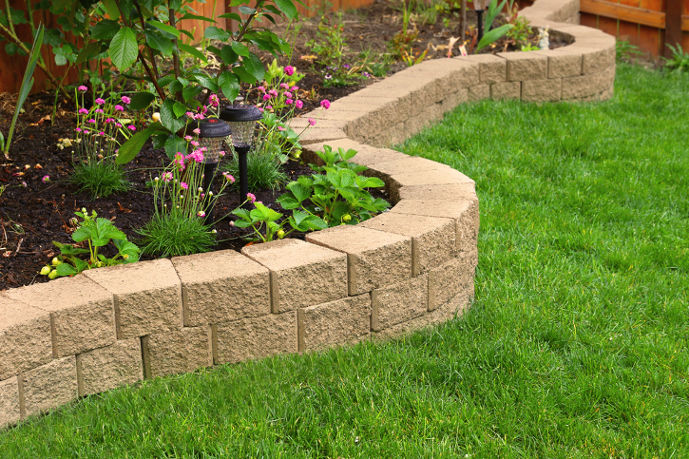
Stackable edge blocks!
There are many styles of ‘easy stack’ stone blocks you can use, which allow for colour and texture choices. You have control over how high you want to go, and this will in turn determine what you need to do to fix the stones in place. They are quite easy to work with really, how you feel afterwards just depends on the number of blocks used!
Stonework with the talents of a stone mason employed is another approach to giving a unique and bespoke look to your garden. This is definitely a fancy option in terms of garden edge ideas that guarantees a very natural look that can be fun to plant around later.
Pros:
- Excellent for retaining soil and mulch on sloped sites.
- Wide variety of pre-made block styles, colours, and textures.
- Easy-stack systems are genuinely DIY-friendly for low walls.
- Custom stonework creates a one-of-a-kind, premium look.
- Extremely durable and long-lasting.
Cons:
- Block walls over 500mm typically require engineering and council approval.
- Heavy materials mean higher transport costs.
- Custom stonemason work is expensive.
- Can be difficult to adjust or relocate once installed.
- Mortar-set stonework may crack with ground movement.
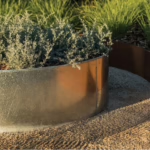
4. Corten (Weathering) Steel Garden Edging
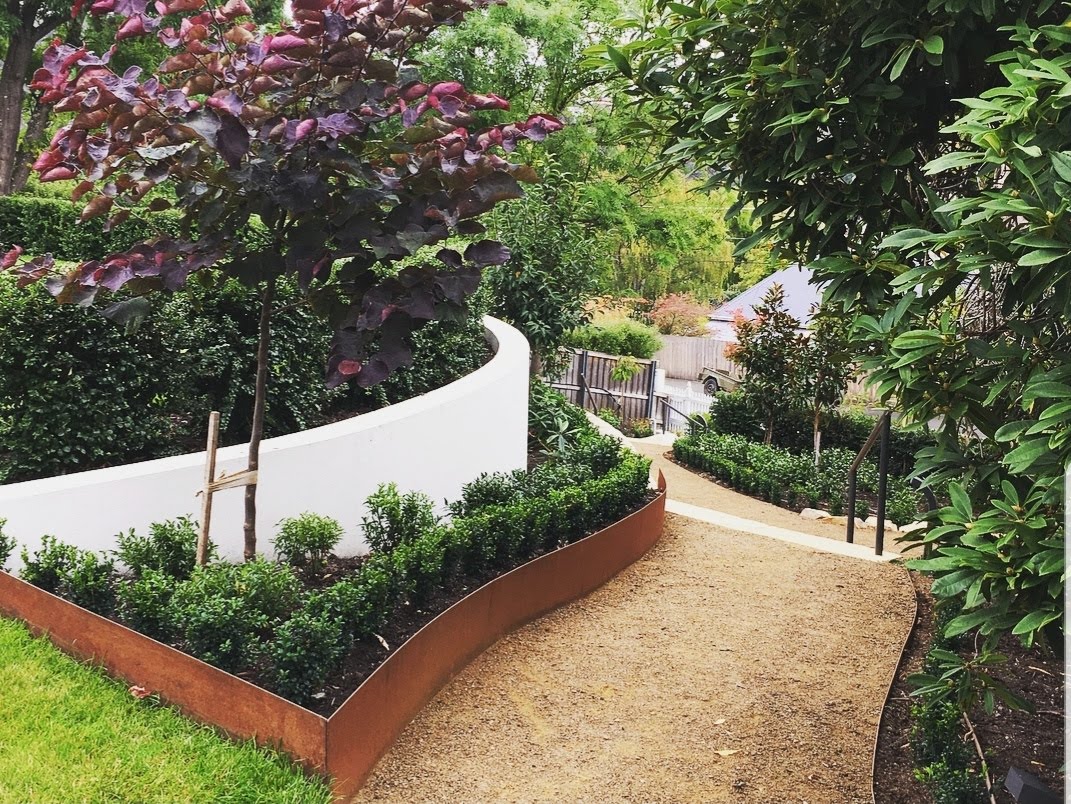
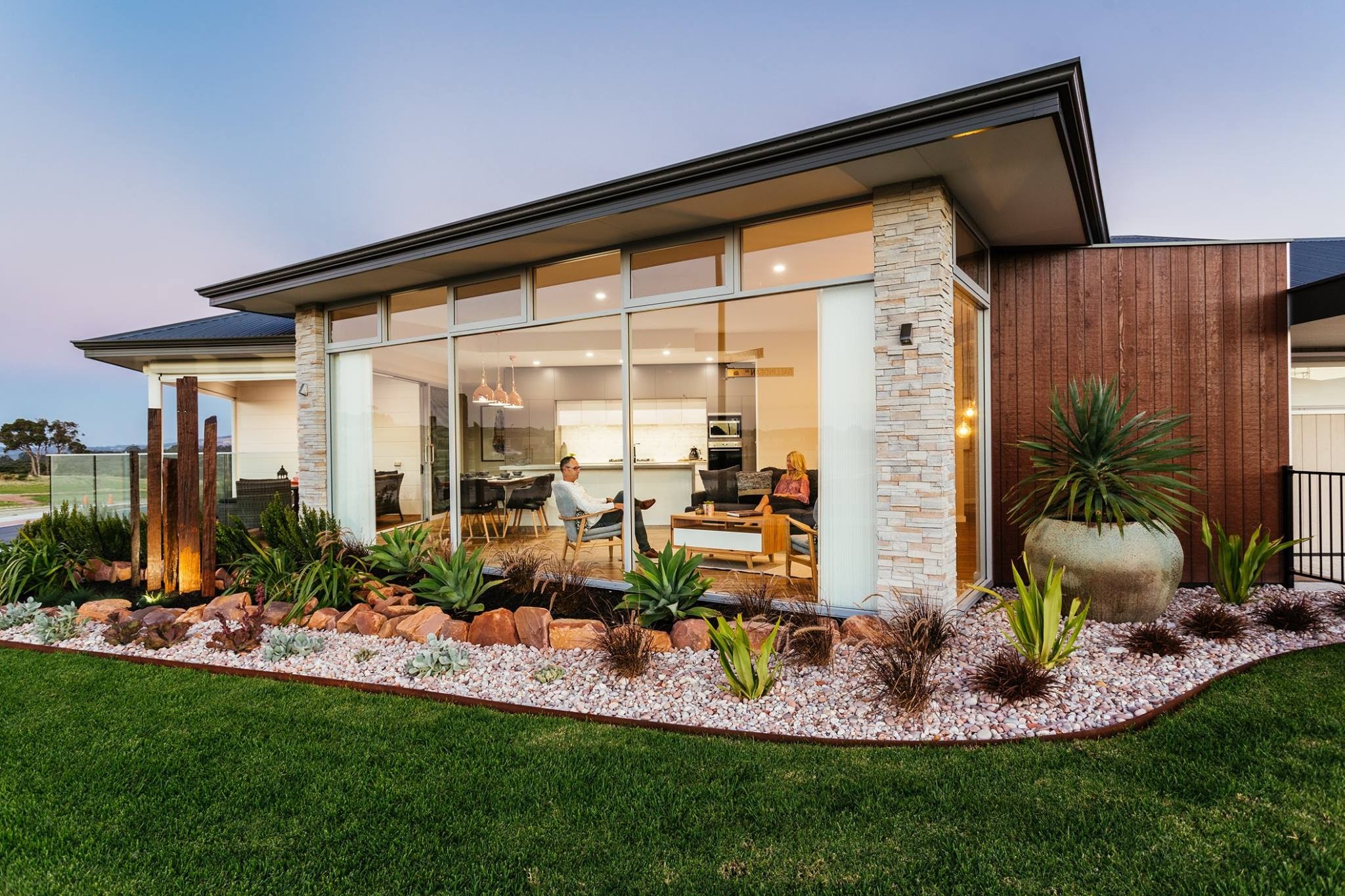
This option can be used as a discreet or highly visible garden edge, depending on your taste. Corten steel edging has become more user-friendly than ever because of the latest innovations, which means it can be flexed easily to create attractive flowing lines. As such, it has become a DIY-suitable option with the ability for adjustments to be easily made on-site. This means it’s quite forgiving to work with.
Its distinctive rust-coloured patina develops naturally over time, forming a protective layer that actually prevents further corrosion. The result is an edging material that looks better with age. The warm, earthy tones of corten make it a natural companion to lush green plantings, native gardens, and contemporary landscape designs alike. This makes it a very flexible choice for various garden edging ideas.
Pros:
- Develops a beautiful, self-protecting rust patina with no painting or coating needed.
- Extremely long lifespan (50+ years in most conditions).
- Flexible profiles allow smooth, flowing curves for natural landscapes.
- Won’t crack, splinter, rot, or shift once installed.
- Minimal ongoing maintenance.
- Increasingly DIY-friendly with modern connection systems.
- Works as both a subtle divider and a visible design feature
Cons:
- Higher upfront cost compared to materials like timber or plastic.
- Rust run-off can stain adjacent paving, concrete, or light-coloured surfaces during the initial weathering phase (typically first 6–12 months).
- Thinner gauges can be prone to denting during installation if not handled with care.
5. Galvanised Steel Edging
Galvanised steel edging is quite similar to corten. They offer many of the same benefits, but with a clean, silver-toned finish. The zinc coating will protect against rust and corrosion, making it a solid option in wet or coastal climates where uncoated steel would deteriorate quickly.
This finish tends to lighten the visual weight of a garden edge, making it a good fit for modern, minimalist, or coastal-style gardens. Over time, galvanised steel weathers to a matte grey that sits quietly in the landscape.
Pros:
- Corrosion-resistant zinc coating suits wet and coastal environments.
- Clean, modern appearance that blends with contemporary gardens.
- Long lifespan (20–40 years depending on coating thickness and conditions).
- Flexible profiles allow curved and organic layouts.
- Won’t crack, rot, or splinter.
- No rust staining on adjacent surfaces.
Cons:
- The zinc coating can be scratched during installation, creating localised rust points that can lead to damage.
- Doesn’t develop the warm patina aesthetic of corten, and has a more industrial appearance.
- Can look stark or cold in heritage or cottage-style gardens.
- Galvanising will eventually wear, particularly in acidic soils or high-salt environments.
- Higher cost than timber or plastic options, though typically less than corten.
6. Timber Sleepers Stand the Test of Time as a Garden Edge
Working with timber as a garden edge is another relatively quick and easy approach. Timber sleepers provide a substantial and solid garden edge. If done well, they can look fantastic, and you can even stand them vertically! You can also buy steel retaining uprights, which allow easy connection between sleepers and certainly alleviate potential headaches.
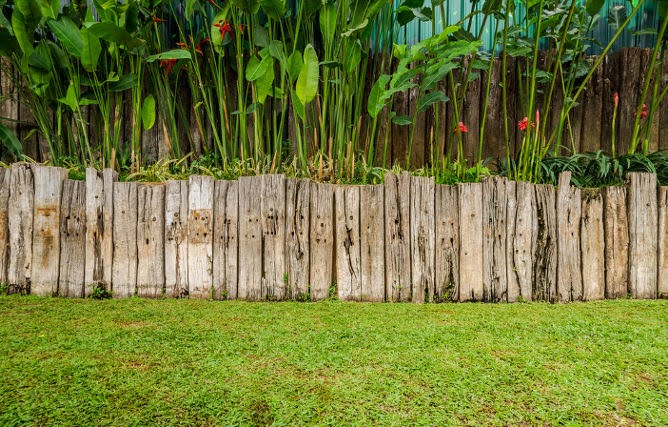
The selection of the right timber is important to give you confidence that it will last when set in the ground. How will it handle moisture, insect and fungal attacks, and will it be safe near edible crops? For these reasons, jarrah is a popular choice as a garden sleeper, while the certain reclaimed timbers can work as great options. They can certainly bring some character when oiled up as a garden edge, or as they age with grace and make a perfect companion to the look of a plant-rich garden.
Pros:
- Warm, natural aesthetic that suits a wide range of garden styles.
- Relatively quick and easy to install for a DIY project.
- Can be stacked, stood vertically, or used as single-height borders.
- Reclaimed sleepers offer character and sustainability.
- Easy to cut and shape on-site with basic tools.
Cons:
- Even treated or naturally durable timber will eventually rot (typical lifespan 10–20 years in ground contact).
- Can attract termites and borers depending on species and region.
- CCA-treated (arsenic-treated) sleepers should not be used near edible gardens.
- May warp, crack, or split over time, especially in extreme weather.
- Quite heavy. A standard hardwood sleeper can weigh 60–80kg.
- Ongoing maintenance (oiling or staining) required to preserve appearance.
7. Poured Concrete Edging
Poured concrete gives you complete control over shape, height, and profile. Because it’s a liquid pout, it can fill virtually any curve. Afterwards, it can also be finished smooth, textured, stamped, or even coloured to match your design. This is a popular option for creating integrated mowing strips or defining long, sweeping edges.
Closely related is also machine-extruded concrete edging (often called continuous concrete kerbing). This is a common professional service that produces a consistent profile along the entire run. DIY is possible with hand-formed edges, though results depend heavily on preparation and finishing skill.
Pros:
- Completely customisable in shape, colour, texture, and profile.
- Follows any curve smoothly with no joints or connection points.
- Creates a permanent, solid edge that won’t shift.
- Can be formed as a mowing strip for low-maintenance lawn care.
- Relatively affordable when done as DIY.
Cons:
- Prone to cracking over time, particularly in areas with reactive (clay) soils or frost.
- Difficult to repair neatly once cracked and often requires full replacement of a section.
- Can look utilitarian or dated if not finished well.
- Permanent and very difficult to relocate or adjust.
- Professional machine extrusion adds significant cost.
- Coloured concrete typically fades unevenly over time.
8. Aluminium Edging
Aluminium edging has gained popularity as a lightweight, corrosion-resistant alternative to steel. It won’t rust, making it a reliable choice in coastal areas, tropical climates, and anywhere that moisture is a constant. It’s typically available in thin, flexible profiles that can be curved on-site depending on your needs.
Aluminium is most commonly used as a discreet, almost invisible edging. It’s used for separating lawns from garden beds at ground level without drawing attention. Aluminum edging is a workhorse, not a showpiece.
Pros:
- Won’t rust or corrode, even in coastal or tropical environments.
- Lightweight and easy to handle during installation.
- Flexible enough for gentle curves.
- Low-profile options are nearly invisible once installed.
- Minimal maintenance.
Cons:
- Thin profiles can bend, kink, or buckle under pressure or heavy foot traffic.
- Lacks the structural strength of steel. Not suitable for retaining soil at any significant height
- Limited aesthetic appeal.
- Can be pushed out of position by aggressive root systems or soil movement.
- Joins and stakes can become visible over time as soil levels change.
- Generally more expensive than plastic edging for a similar look.
8. Aluminium Edging
Aluminium edging has gained popularity as a lightweight, corrosion-resistant alternative to steel. It won’t rust, making it a reliable choice in coastal areas, tropical climates, and anywhere that moisture is a constant. It’s typically available in thin, flexible profiles that can be curved on-site depending on your needs.
Aluminium is most commonly used as a discreet, almost invisible edging. It’s used for separating lawns from garden beds at ground level without drawing attention. Aluminum edging is a workhorse, not a showpiece.
Pros:
- Won’t rust or corrode, even in coastal or tropical environments.
- Lightweight and easy to handle during installation.
- Flexible enough for gentle curves.
- Low-profile options are nearly invisible once installed.
- Minimal maintenance.
Cons:
- Thin profiles can bend, kink, or buckle under pressure or heavy foot traffic.
- Lacks the structural strength of steel. Not suitable for retaining soil at any significant height
- Limited aesthetic appeal.
- Can be pushed out of position by aggressive root systems or soil movement.
- Joins and stakes can become visible over time as soil levels change.
- Generally more expensive than plastic edging for a similar look.
9. Recycled Plastic & Composite Edging
Recycled plastic and composite edging products have improved significantly in recent years. Made from post-consumer plastics (often HDPE), they offer an environmentally conscious option that doesn’t rot, rust, or attract insects.
These products come in various forms. From flexible rolls, plank-style boards that mimic timber sleepers, to interlocking block systems. Composite options (blending recycled plastic with wood fibre) can more closely replicate the look and texture of natural timber.
Pros:
- Won’t rot, rust, or attract termites.
- Made from recycled materials.
- Lightweight and easy to cut and install.
- Available in timber-look profiles for a more natural appearance.
- Unaffected by moisture, ideal for wet climates or irrigated gardens.
- Generally affordable.
Cons:
- Can look artificial, particularly cheaper products.
- May become brittle and fade with prolonged UV exposure.
- Doesn’t have the structural strength for retaining walls or significant height.
- Limited colour options compared to natural materials.
- Can warp or bow in extreme heat.
- Aesthetic quality varies enormously between products.
10. Natural Edging: Woven Willow, Log Rolls & Bamboo
For cottage gardens, informal borders, and wildlife-friendly spaces, natural edging materials like woven willow hurdles, log rolls, and bamboo can create a charming, organic look. These options sit comfortably in gardens that lean into a softer, less structured aesthetic.
Woven willow provides a traditional English cottage feel. Log rolls can offer a rustic border that can define beds without feeling rigid. Bamboo edging, typically sold as panels of canes bound with wire, adds an Eastern or tropical flavour.
Pros:
- Organic, natural look that suits cottage, woodland, and wildlife gardens.
- Biodegradable and environmentally friendly.
- Generally inexpensive.
- Easy to install.
- Readily available at most garden centres.
Cons:
- Short lifespans, typically 2 to 5 years before rot and decay set in.
- Provides almost no structural support; won’t retain soil or mulch.
- Attractive to insects, fungi, and moisture damage.
- Can look untidy as they age and deteriorate.
- Not suitable for clean, modern, or formal garden styles.
- Frequent replacement adds to long-term cost and effort.
Frequently Asked Questions
What is the most durable garden edging material?
Corten steel is widely considered the most durable option for garden edging. A good quality corten steel edge can last 50+ years with practically no maintenance. The rust patina that forms on corten actually acts as a protective layer that keeps it from corroding. Galvanised steel and natural stone are close runners-up for longevity.
Can I install steel garden edging myself?
Modern flexible steel edging has become more and more DIY-friendly in the past few years. This holds true for both corten and galvanised steel. A lot of products now feature easy to use connection systems. Aside from that, they come in a wide array of flexible profiles that allow you to shape them as needed on-site without special tools. However, rigid steel and thicker profiles may require professional installation.
What is the cheapest garden edging option?
Natural edging materials like log rolls and woven willow are going to be the cheapest upfront. Recycled plastic edging and DIY poured concrete are also quite budget friendly. However, these are mostly for immediate costs, and it’s important to take lifespan into account. Cheaper natural edging that will have to be replaced every couple of years will end up costing a lot more than durable materials that only have to be installed once.
Is timber edging a good choice?
Timber sleepers can look fantastic and offer a warm, natural aesthetic. Just keep in mind they will eventually rot in ground contact. Even durable hardwoods like jarrah typically only last 10–20 years. If you choose timber, select a naturally durable species appropriate for ground contact and avoid CCA-treated timber near edible garden beds. Be prepared for some ongoing maintenance (oiling or staining) and eventual replacement.
What garden edging is best for curves?
Flexible steel edging (both corten and galvanised) excel at creating smooth, flowing curves. They can be bent on-site to follow virtually any shape. Poured concrete also handles curves extremely well since it’s formed in place. Aluminium and recycled plastic edging can typically manage gentler curves. Bricks can achieve curves but require much more skill and time. Rigid steel and stone blocks are generally best suited to straight lines and sharp angles.
How deep should garden edging be?
As a general rule, garden edging should be set at least 75-100mm (3-4 inches) into the ground for stability. If you’re dealing with an invasive lawn variety like kikuyu, couch, or buffalo, you’ll want the edging and/or an accompanying root barrier to extend at least 150–200mm deep to prevent runners from crossing underneath.
Do I need to use a concrete footing for garden edging?
It depends on the material. Bricks and stone blocks benefit significantly from a concrete footing for long-term stability. Steel edging is typically secured with stakes or pins driven into the ground and won’t require concrete. Timber sleepers may need stakes or steel uprights but rarely require concrete unless they’re retaining significant soil. Poured concrete edging is, of course, its own footing.
Can garden edging help with lawn maintenance?
Absolutely. One of the most practical benefits of a well-installed garden edge is reduced trimming time. Materials like steel, brick (set on a concrete footing), and poured concrete can be set at a height that allows mower wheels to run along the edge, eliminating the need for a separate trimming pass. Over years of lawn maintenance, this time saving adds up significantly.
What garden edging is best for slopes?
Stackable stone blocks, timber sleepers, and steel edging with adequate depth are the strongest performers on slopes. Flexible steel edging works well for gradual slopes as it can step down incrementally. For steeper gradients, a retaining wall system will be more appropriate than a simple garden edge.
Is recycled plastic edging any good?
Higher-quality composite products can look surprisingly good, particularly those designed to mimic timber. However, cheaper products can look artificial, and all plastic edging is susceptible to UV degradation over time. It’s best suited as a functional, ground-level divider rather than a visible design feature.
Latest Posts
-
 Corten Steel Edging: A Quick Guide to Weathering Steel for Your Garden
15 March 2026
Corten Steel Edging: A Quick Guide to Weathering Steel for Your Garden
15 March 2026
-
Garden Bed Edging Ideas: What Works, What Lasts, and What’s Worth
15 March 2026
-
Celebrating 10 years of Straightcurve at MIFGS
9 June 2025
-
Garden Edging Ideas: A Guide to Better Garden Design
25 February 2025
-
26 Modern Australian Front Yard Ideas to Transform Your Space
31 January 2025