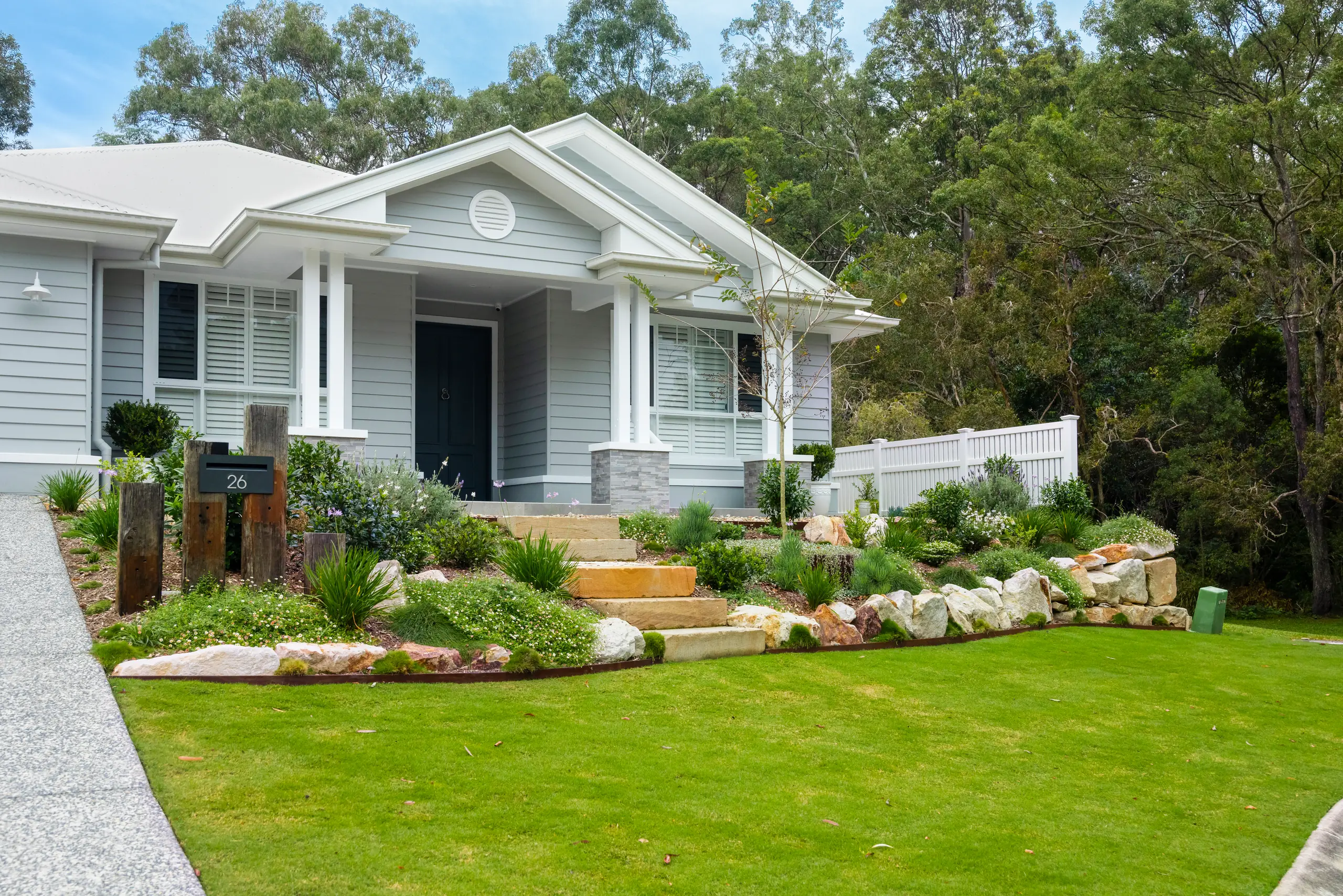
- 01 Where to Start With a Modern Front Yard
- 02 Check Your Site Before You Plan
- 03 1. Choose Drought-Tolerant Plants for a Water-Wise Front Yard
- 04 2. Plant Natives Like Kangaroo Paw and Grevillea
- 05 3. Swap Lawn for Hardy Ground Covers
- 06 4. Add Raised Garden Beds for Organised Planting Zones
- 07 5. Define Pathways With Durable Materials
- 08 6. Blend Hardscaping and Planting With a Defined Edge
- 09 7. Edge Beds With Weathering Steel for a Clean, Modern Line
- 010 8. Pair Natives With Minimalist Planting
- 11 9. Screen for Privacy Without Closing the Space Off
- 12 Get the edges in before you plant
- 13 10. Use Vertical Gardens in Smaller Front Yards
- 14 11. Plan a Compact Layout for a Small Front Yard
- 15 12. Build Structure With Bold Shapes and Clean Lines
- 16 13. Soften the Layout With Curved Pathways
- 17 14. Add Texture With Gravel or Pebbles
- 18 15. Anchor the Design With Steel or Stone Planters
- 19 16. Add Seating Beside Raised Planting
- 20 17. Add Movement and Calm With a Water Feature
- 21 18. Light Pathways With Solar or Low-Energy Fittings
- 22 19. Plant Flowering Natives for Seasonal Colour
- 23 20. Use Mulch or Decorative Stones to Retain Moisture
- 24 21. Frame the Entrance With Symmetrical Planting
- 25 22. Layer Plants by Height for Depth
- 26 23. Add Warmth With Weathering Steel Edging
- 27 24. Anchor the Garden With Feature Trees
- 28 25. Zone the Space for Different Uses
- 29 26. Pair Garden Beds With Pathways for a Structured Finish
- 30 Bringing Your Front Garden Ideas Together
- 31 Common Questions About Front Yard Landscaping
Where to Start With a Modern Front Yard
Most front yards look fine for a season, then start to unravel. Edges blur, lawn browns off over summer, and garden beds spread where they shouldn’t, until the yard needs constant work just to look the way it did on day one. A well-designed front yard avoids that by working with the local climate, keeping planted areas contained, and using materials that hold their shape without ongoing repair. Get the planting, the structure, and the steel garden edging right and the space keeps looking deliberate for years.
Quick Summary
The best front yard landscaping ideas balance three things: hardy, water-wise planting, a clear structure of beds and paths, and steel edging that keeps beds, paths and lawn clearly defined. Native and drought-tolerant plants cut watering and upkeep, while steel edging and raised beds give the garden its modern shape and stop it drifting out of definition. Work through the 26 ideas below by layer, from ground cover and planting through to pathways, edging, and focal points, and combine the ones that suit your block.
Check Your Site Before You Plan
Before you choose plants or materials, check four things. Note which way the frontage faces and where the hot afternoon sun falls in summer. Dig a test hole to see whether the soil is sandy, loamy or heavy clay, and how quickly water drains away. If any work will sit on the nature strip or verge, read your council’s verge guidelines first, as many councils limit what can be planted or paved there and some require a permit. Before digging for beds, paths or edging, lodge a free Before You Dig Australia enquiry so underground services are located.
1. Choose Drought-Tolerant Plants for a Water-Wise Front Yard
Drought-tolerant plants are the simplest way to cut watering while keeping a front yard looking full. Succulents, agaves, and yuccas hold their form through hot, dry spells and need little attention once established, which suits most Australian conditions. Group plants with similar water needs together so any irrigation stays efficient, and mass a few species in generous drifts rather than dotting single plants around. North- and west-facing beds cop the most sun and the harshest afternoon heat, so save the toughest, full-sun species for those positions.
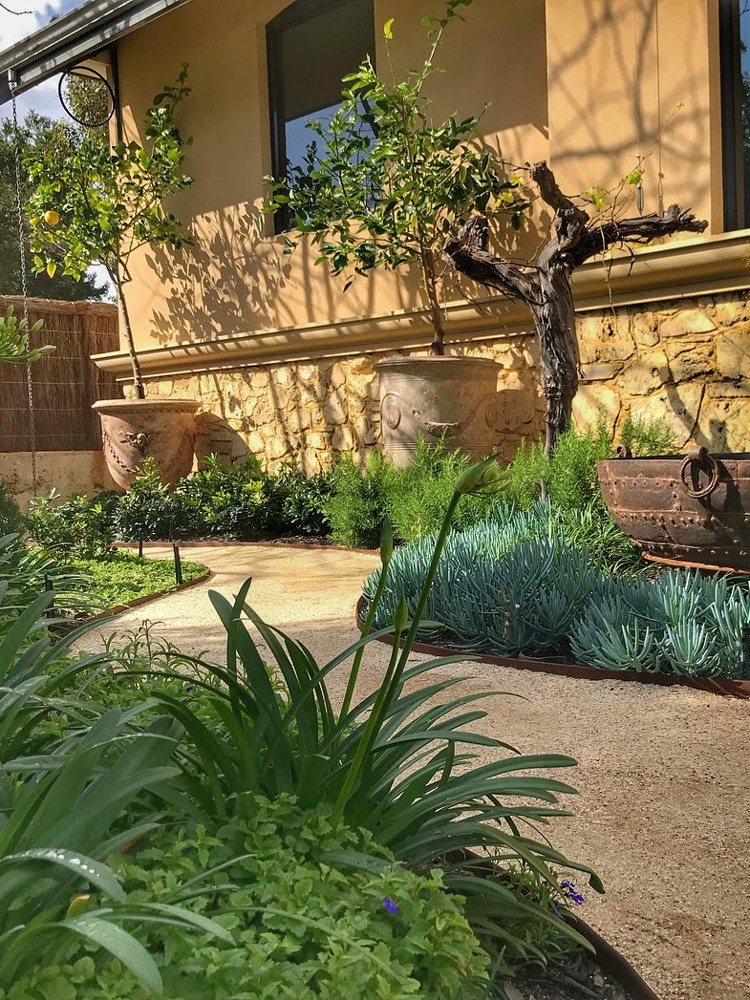
2. Plant Natives Like Kangaroo Paw and Grevillea
Australian natives such as kangaroo paw (Anigozanthos), grevillea, and callistemon bring colour and texture while handling local heat and soils far better than most exotics. They also draw in nectar-feeding birds, so the garden feels alive through the year. Their loose, informal habit looks best inside a contained bed, where a clean edge balances the planting.
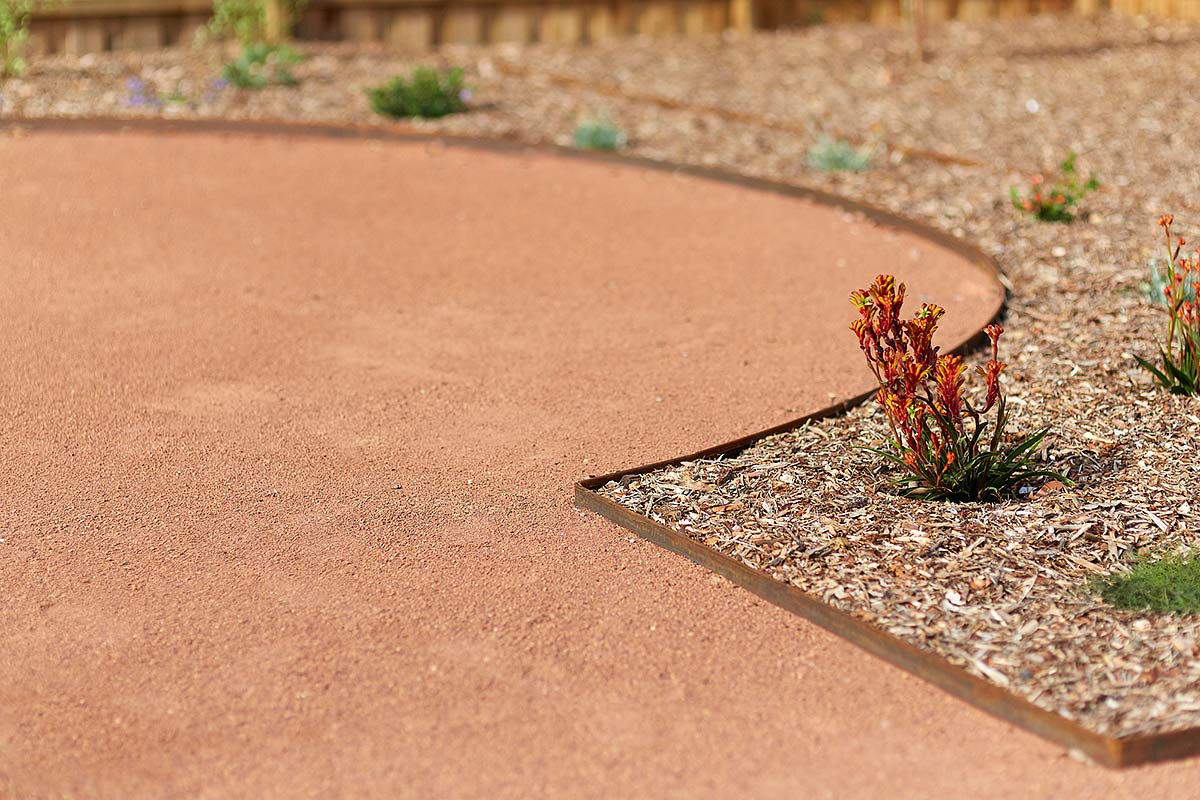
3. Swap Lawn for Hardy Ground Covers
A traditional lawn costs more water and time than most people expect, especially through an Australian summer. Ground covers give you a green, low-growing surface for a fraction of the input: native violet (Viola hederacea) spreads readily in moist, part-shaded spots, dichondra handles light foot traffic, and creeping thyme copes with dry, sunny positions. Ground covers work best contained by a clear border, otherwise they creep into paths and paving. If you would rather keep a small lawn as a feature, define its edge cleanly so it reads as a deliberate shape.

4. Add Raised Garden Beds for Organised Planting Zones
Raised beds add height and define planting zones in a front yard. Choose the height around access, growing depth and the view from the house, then plan drainage and support. Straightcurve Flex/Rigid raised bed panels come in 240mm, 400mm and 560mm and use wedge-and-slider joins; Zero-Flex options include 400mm and 560mm with their own join sets.
Our essential guide to raised garden beds explains the planning in more detail.
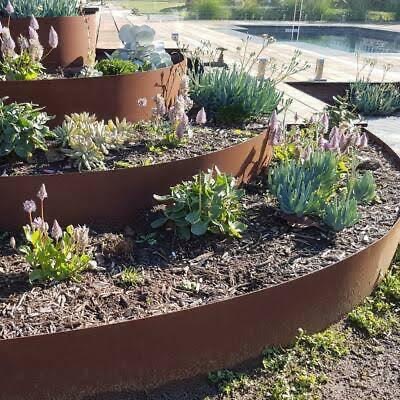
5. Define Pathways With Durable Materials
A clear path gives a front yard structure and guides people to the door. Choose paving, concrete or compacted gravel for its appearance, drainage and slip resistance, then prepare the base for the site. As a guide, aim for a main entry path of around 1.2m so two people can walk side by side, and go wider on larger frontages. Where the path meets steps, keep each riser the same height and light the treads so the approach is safe after dark. Straightcurve Rigid and Zero-Flex profiles suit the straight runs beside a formal path, holding a defined line between paving and planting. Keep the profile and fixings clear of the walking surface.
6. Blend Hardscaping and Planting With a Defined Edge
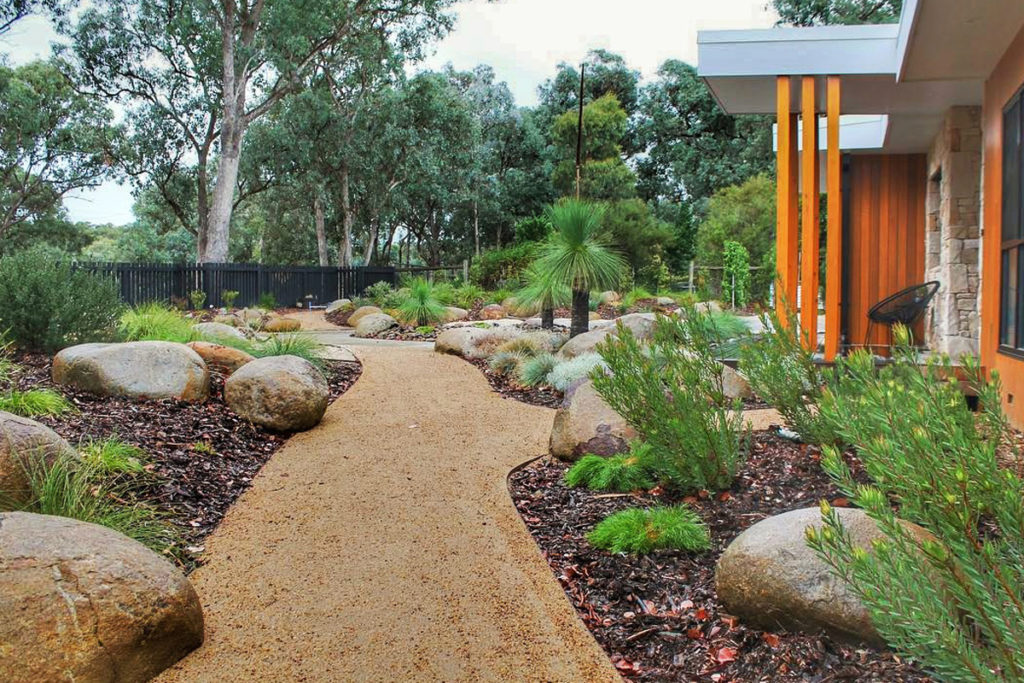
Hard surfaces and planting look best set against each other, but the join between them is where the design usually falls apart. Gravel migrates into beds, mulch washes onto paving, and the line that read as crisp on day one turns ragged. A steel edge set along that join works as a physical barrier, holding gravel or mulch on its own side so the contrast between a paved area and layered planting stays sharp. Sticking to two or three materials also means fewer of these joins to hold in the first place.
7. Edge Beds With Weathering Steel for a Clean, Modern Line
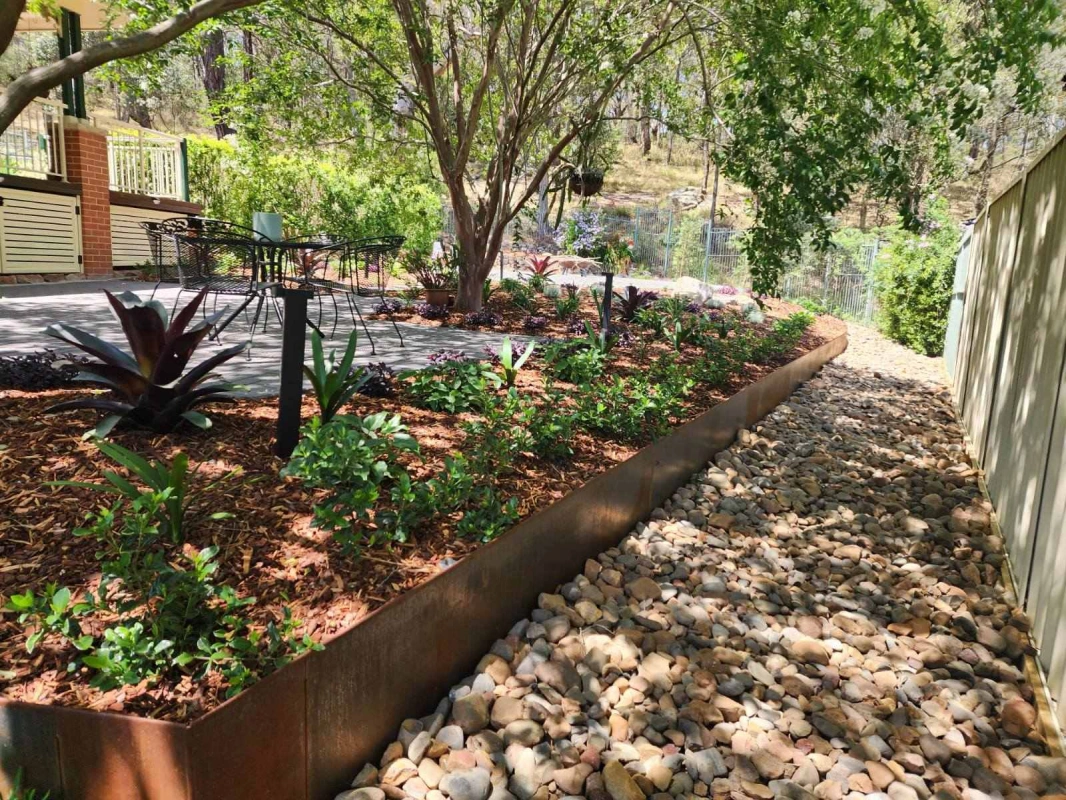
Weathering steel is a popular choice for defining garden beds because it develops a stable, rust-toned patina that suits both native and minimalist planting. The warm colour deepens over time while the steel holds a precise line between bed and path. Weathering steel performs well across most inland, well-drained Australian gardens. Within about 2km of the coast, airborne salt can interfere with patina formation, so weathering steel benefits from additional care. Our Longevity Guide and Product Care Guide cover the steps that make the most difference. In coastal locations, galvanised steel is a practical alternative, though salt and poor drainage wear its zinc coating too, so the same care applies.
8. Pair Natives With Minimalist Planting
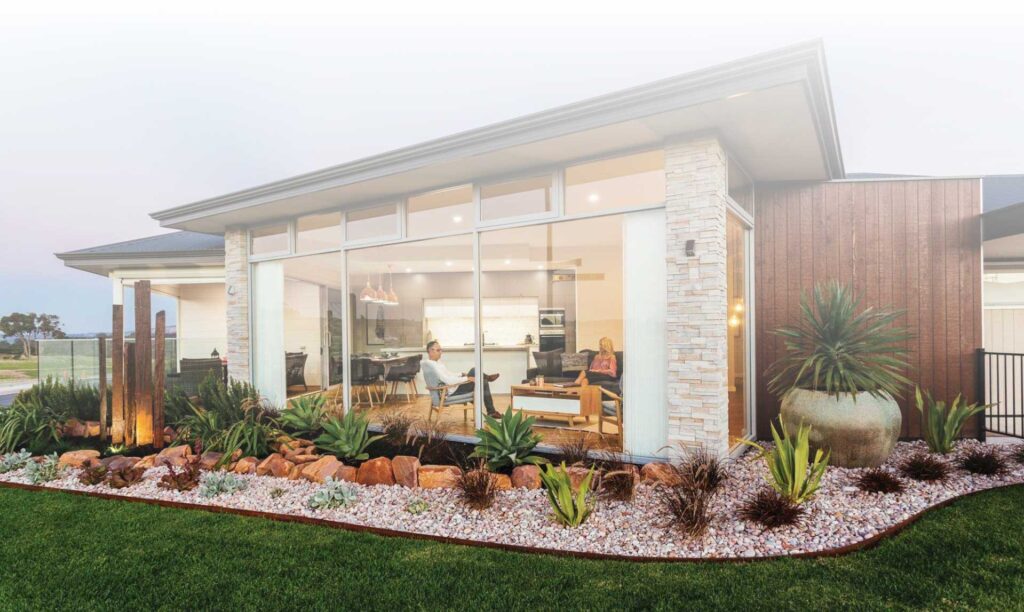
A minimalist scheme built around a few well-chosen natives feels modern and stays easy to manage. Structural species like lomandra, dianella, and westringia give year-round form without much trimming or spread, so a bed can look full with only three or four plant types. Repeat those in generous groups and let negative space do some of the work. The restraint reads as intentional, and fewer plant types means simpler care through the seasons.
9. Screen for Privacy Without Closing the Space Off
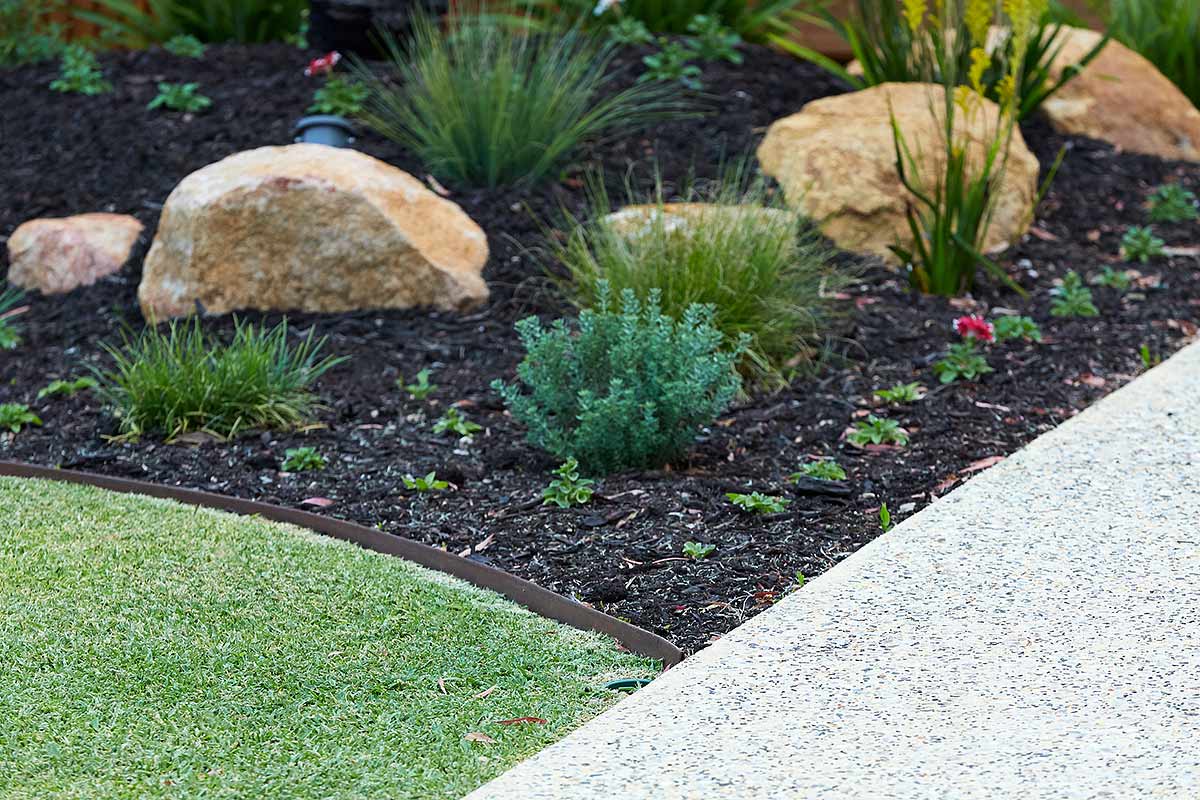
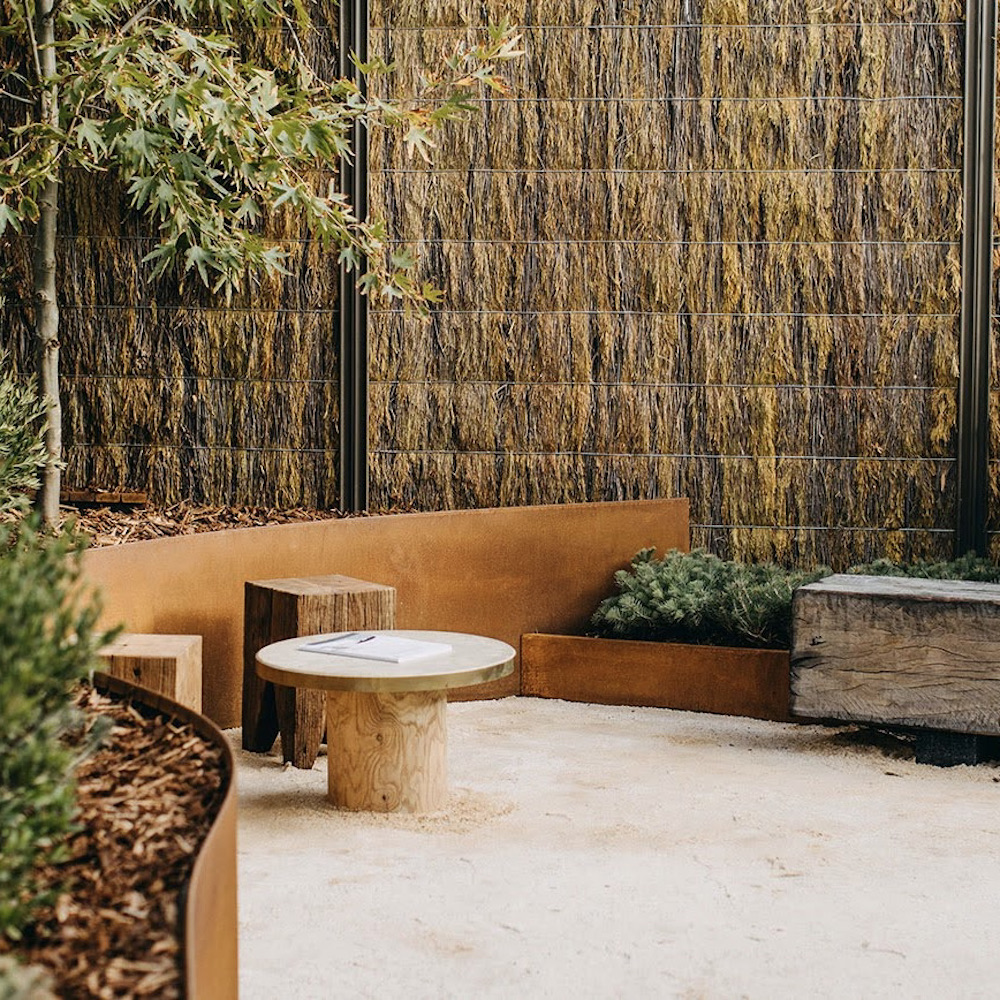
Screening plants such as suitable lilly pilly cultivars or clumping bamboo can create privacy. Choose for the mature size and conditions, then position them to block specific sightlines. Screen only the sightlines that matter, such as a front window or a seating spot, and keep the entry open so the house still faces the street. If you plan a front fence, check your council’s height limits first.
Pro Tip
Get the edges in before you plant
Settle the structure first: where the paths run, where the beds sit and where the edging lines fall. For general product information, request a price list and brochure or visit a stockist to see the range. Once the layout is measured, you can configure your garden edging and request a custom quote.
10. Use Vertical Gardens in Smaller Front Yards
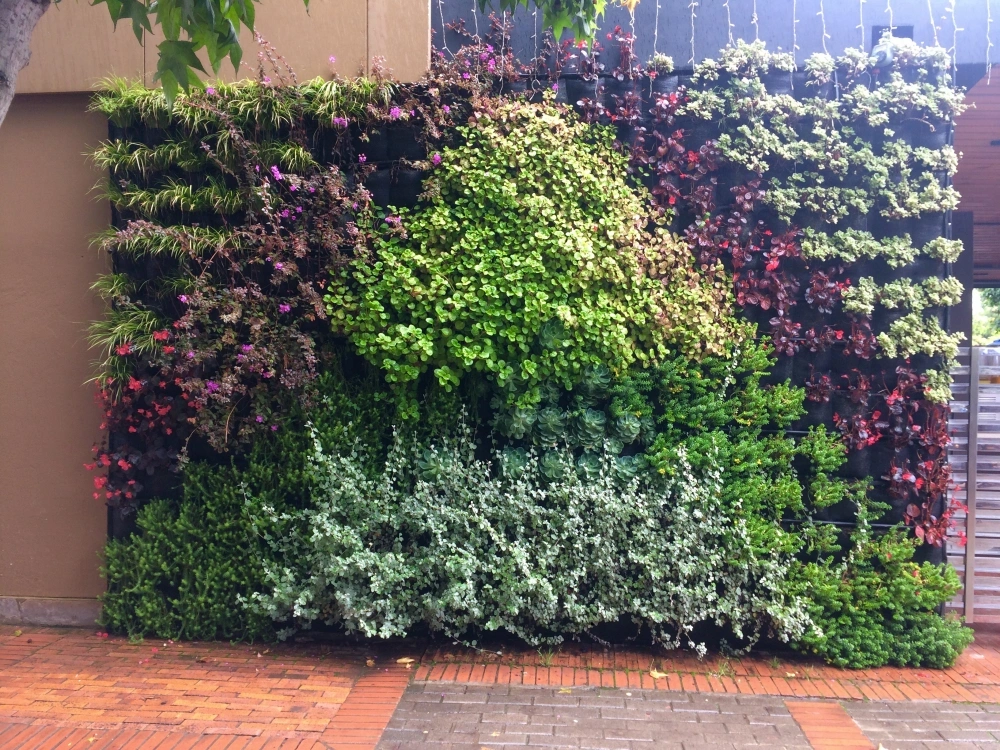
Vertical gardens make the most of limited ground by growing up a wall or frame, which suits herbs, succulents, or trailing flowers on a compact block. They add a green focal point without eating into path or seating space, and they draw the eye up so a small frontage feels taller. Ground the frame in a narrow steel planter or a 240mm raised bed panel at its base and the vertical feature gets a defined footprint. Keep the planting palette simple so it looks lush and uncluttered.
11. Plan a Compact Layout for a Small Front Yard
On a small frontage, every element has to earn its place. Prioritise multi-use zones, choose plants that stay in scale, and keep the entrance path clear. Defined beds with a clean edge make a compact yard feel ordered, because the eye reads clear shapes. A limited plant palette repeated across the space reinforces that sense of order.
12. Build Structure With Bold Shapes and Clean Lines
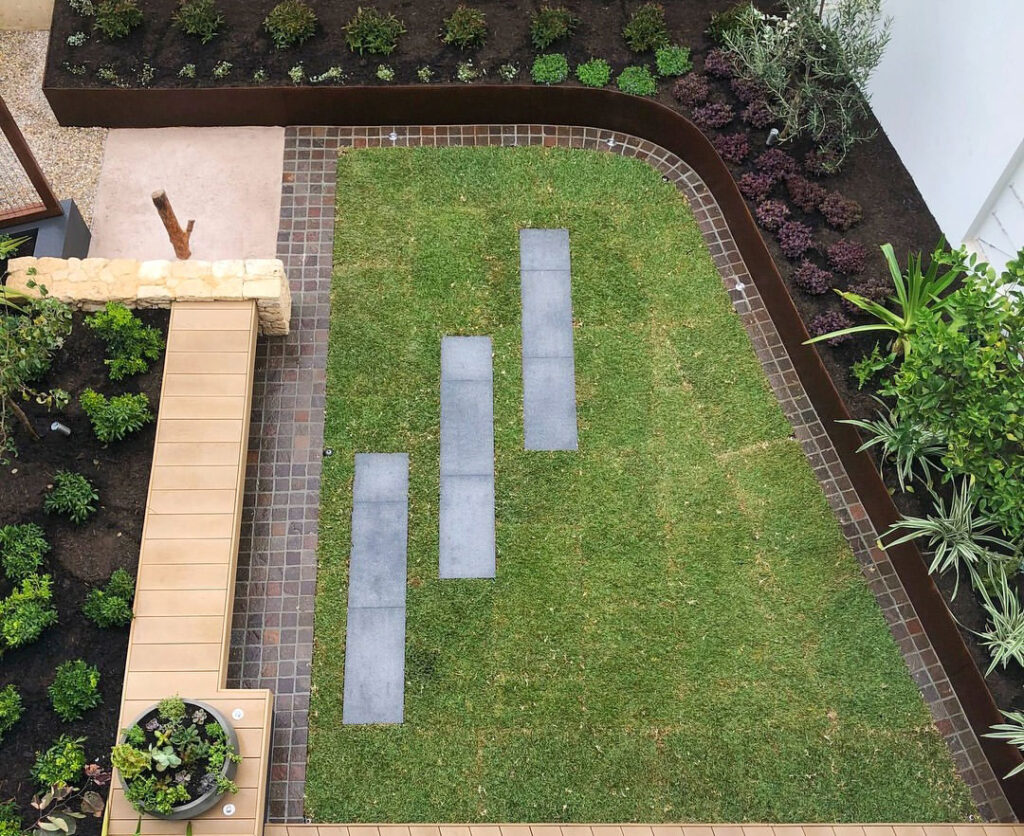
Geometric beds, straight borders, and crisp rectangular planters give a front yard a contemporary, architectural feel. Straight-line profiles like Straightcurve Rigid and Zero-Flex suit these formal shapes and keep a clean line when installed to the product guide, so square and rectangular beds stay crisp. Bold, simple shapes also photograph well, which matters for street appeal and for the first impression a visitor forms at the kerb.
13. Soften the Layout With Curved Pathways
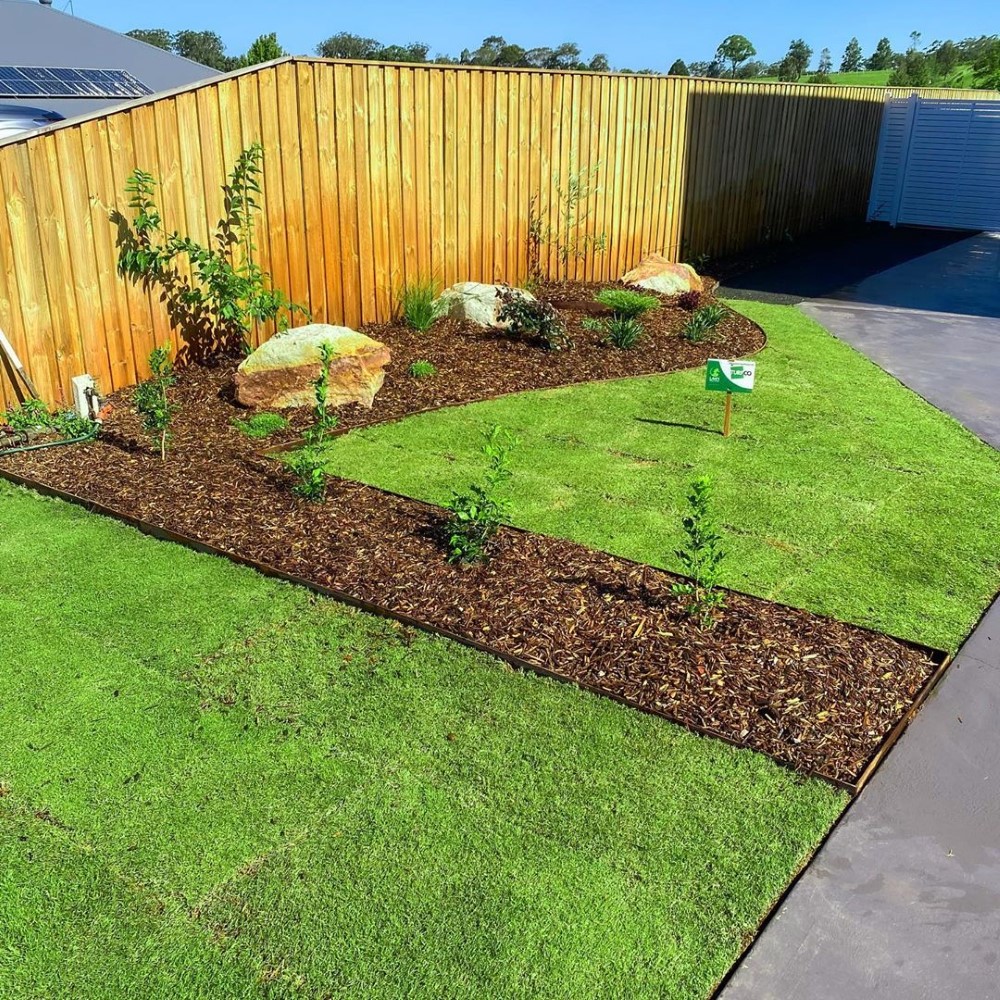
A curved path adds movement and draws visitors gently through the space, softening an otherwise rigid layout. Curves suit an organic garden or an asymmetrical house facade, where a dead-straight path would feel forced. For these lines, Straightcurve Flex is shaped by hand on site to follow organic curves, tree rings, and sweeping bed borders, so the edge flows with the path. Balance one or two curves against straighter elements so the design still feels intentional.
14. Add Texture With Gravel or Pebbles
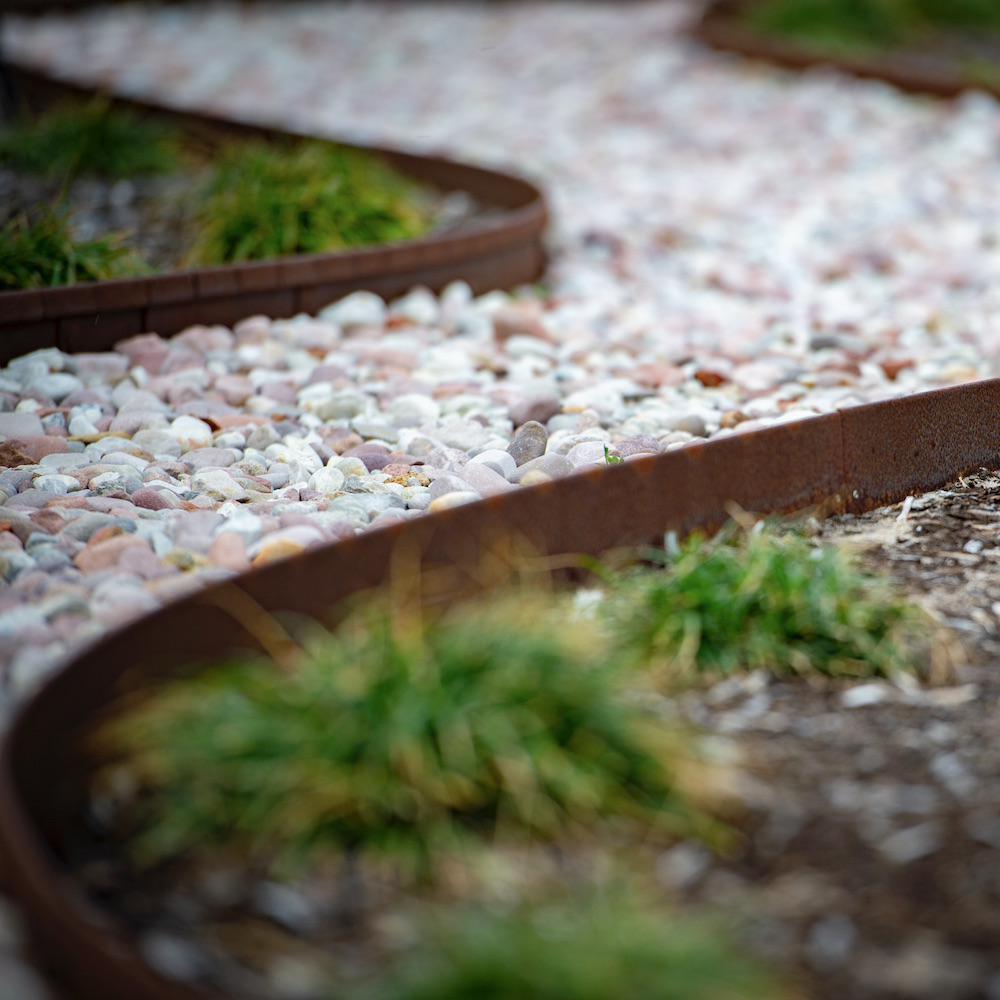
Gravel and pebbles are a low-maintenance, contemporary alternative to mulch or grass, and they bring texture underfoot and to the eye while draining freely in heavy rain. A firm edge is essential, otherwise loose stone migrates into beds and across paths within a season. Contain gravel areas with a defined steel border on both sides so the surface stays where you want it and the lines stay sharp.
15. Anchor the Design With Steel or Stone Planters
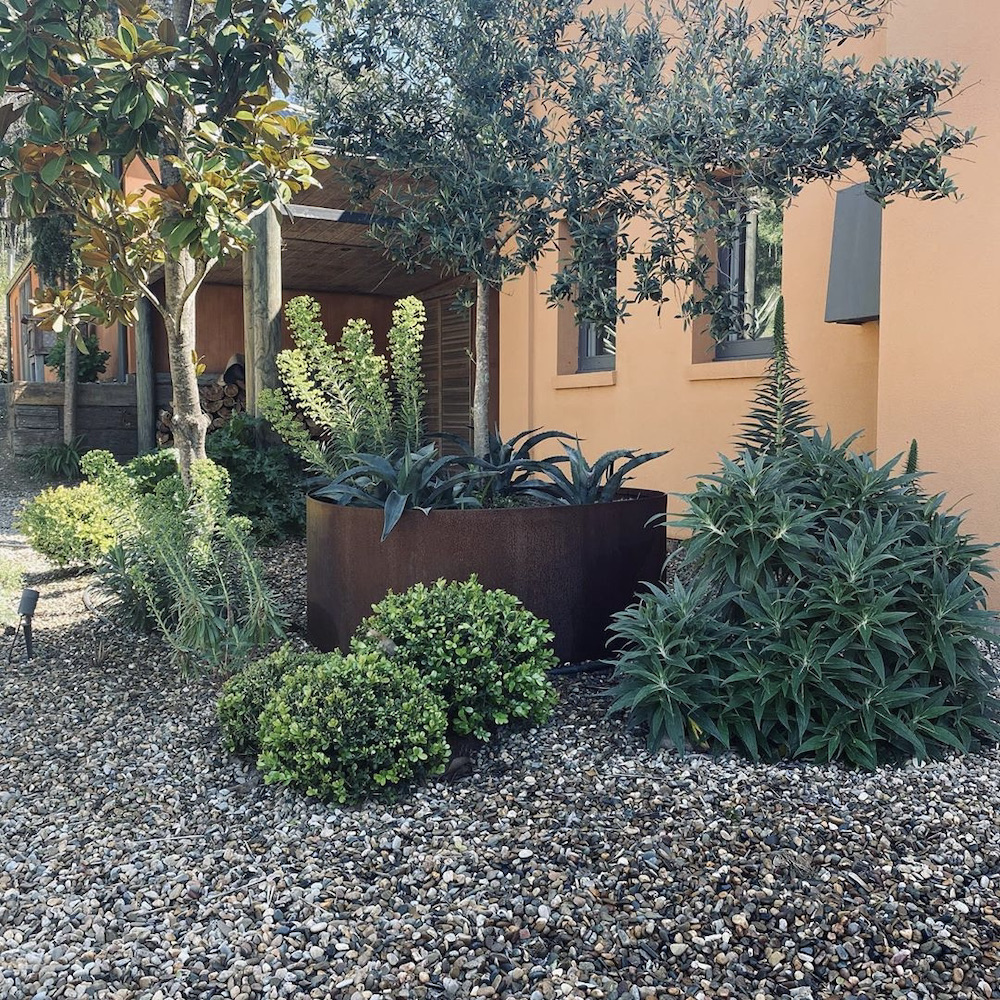
A planter can mark an entrance or add planting over paving. Straightcurve planter boxes are bottomless, so plan suitable lining, clearance and drainage on hard surfaces. Set them in position before filling, when they are easier to handle. Explore the planter-box range and its Design Tool to plan your feature.
16. Add Seating Beside Raised Planting
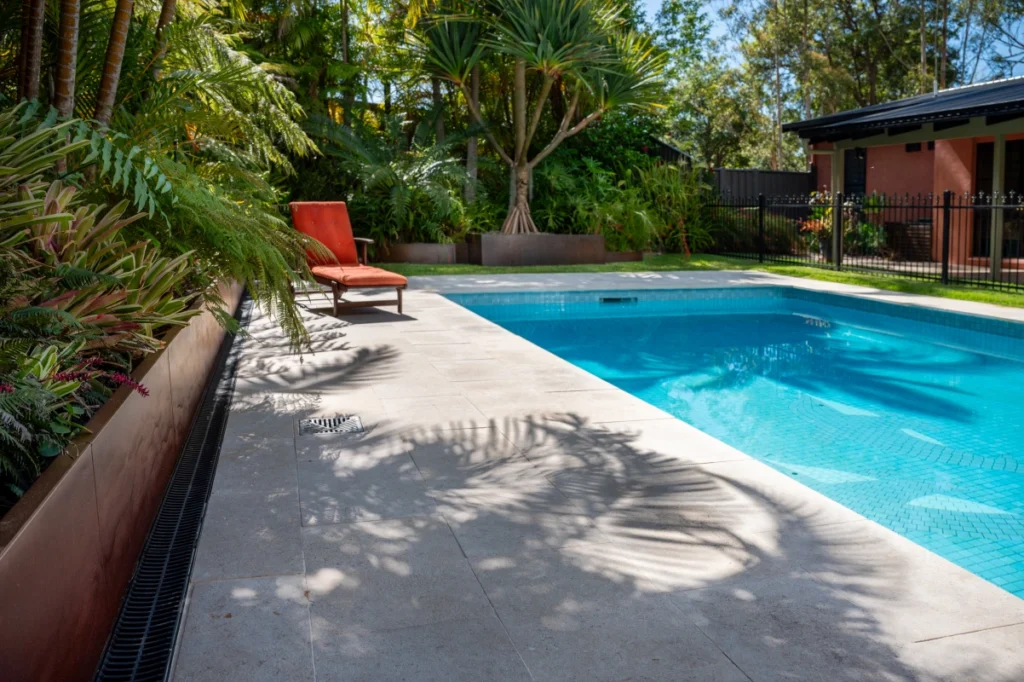
A bench beside a raised bed gives you somewhere to sit and enjoy the front garden. Match its materials to the beds, but give it its own footings: a garden panel and its top edge are not designed to carry people.
17. Add Movement and Calm With a Water Feature
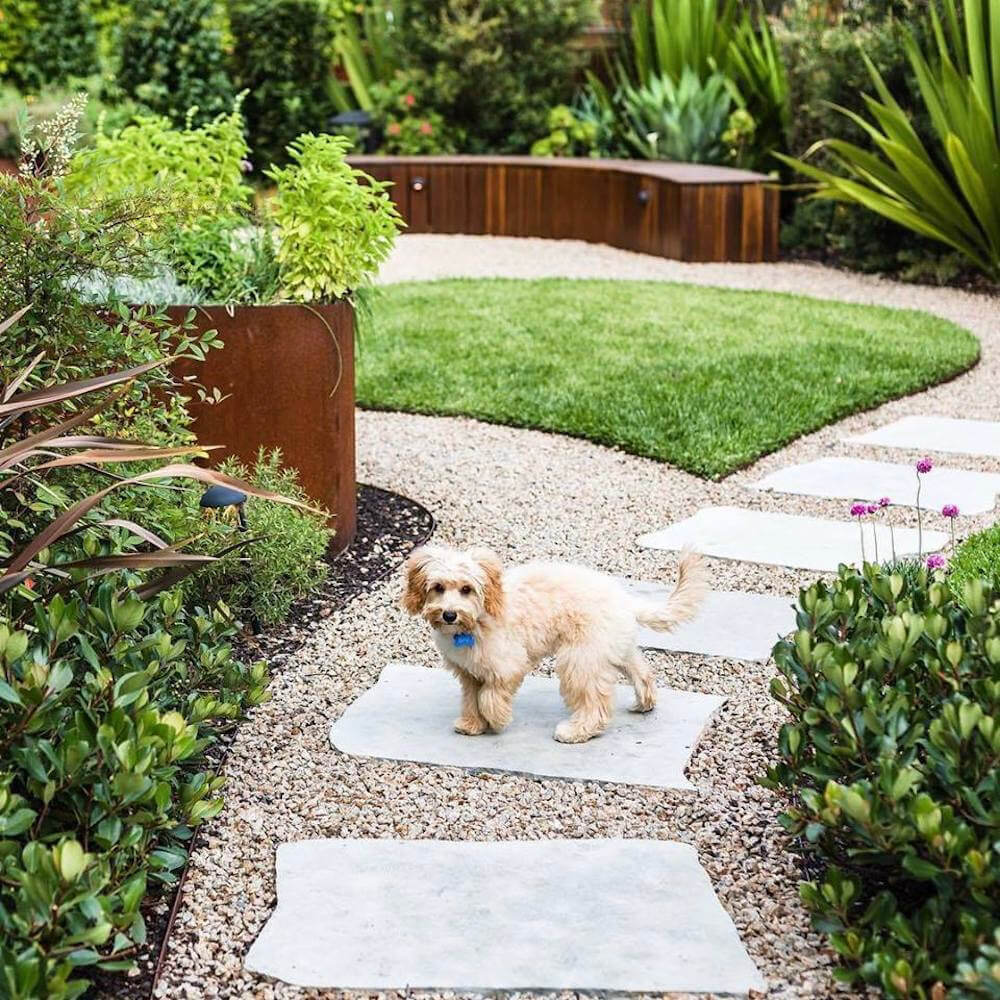
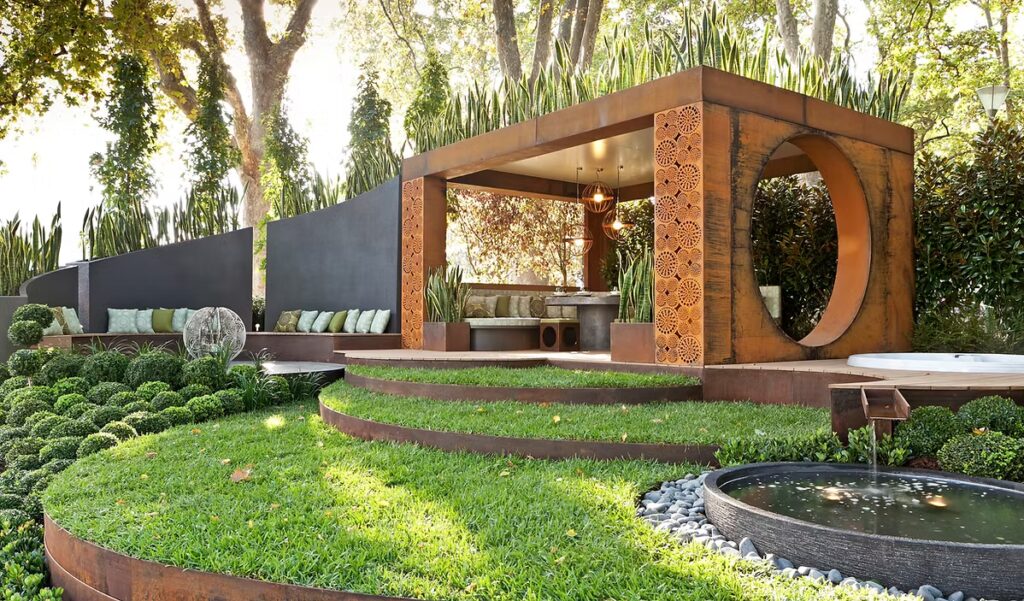
A fountain or small pond adds sound and movement to a front yard. Nearby steel edging or planters can tie it into the wider design, but keep the steel clear of direct, repeated splash and provide drainage. A recirculating system still needs topping up as water evaporates. Position the feature where you can enjoy it from the entrance or a front window.
18. Light Pathways With Solar or Low-Energy Fittings
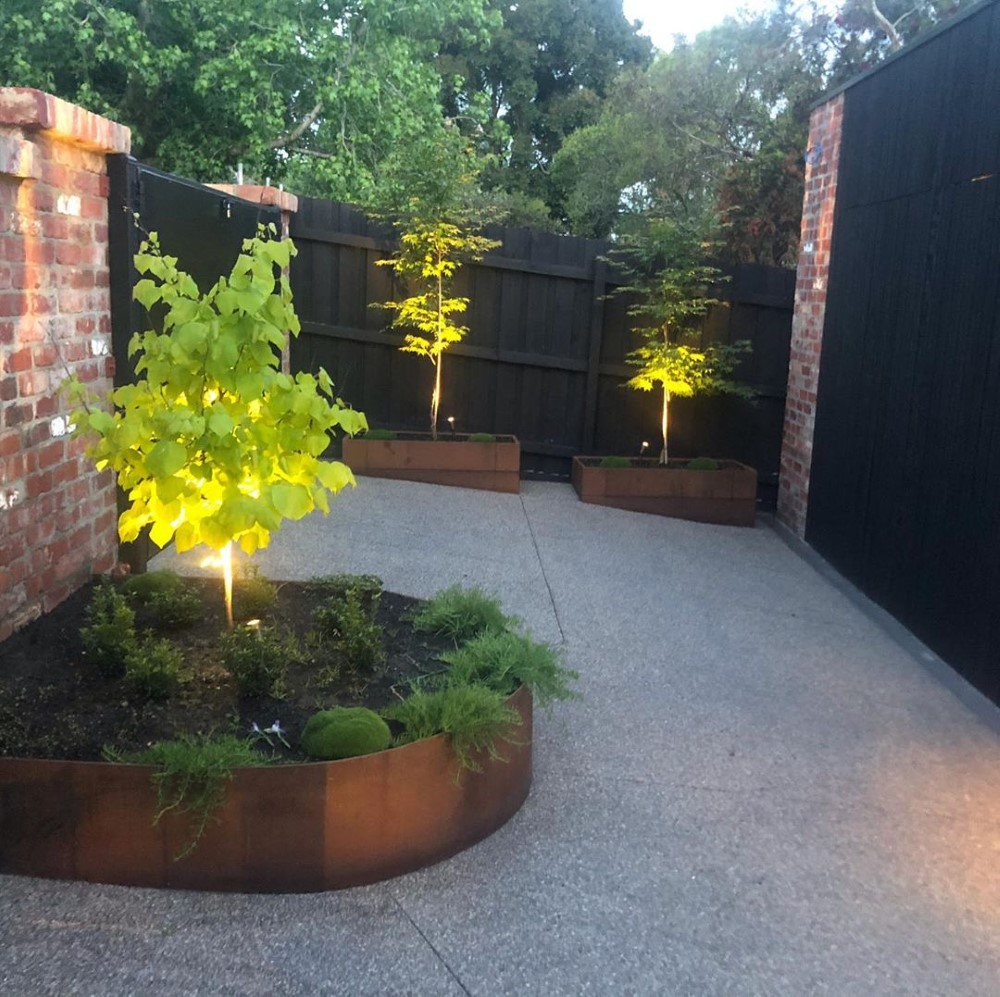
Path lighting makes a front yard safer after dark and extends how the space looks into the evening. Solar and low-energy fittings are simple to install and cost little to run, and warm-toned light flatters both planting and the patina of weathering steel. Space fittings evenly along paths and near steps, and use fewer than you think: a tight row of lights looks like a runway.
19. Plant Flowering Natives for Seasonal Colour
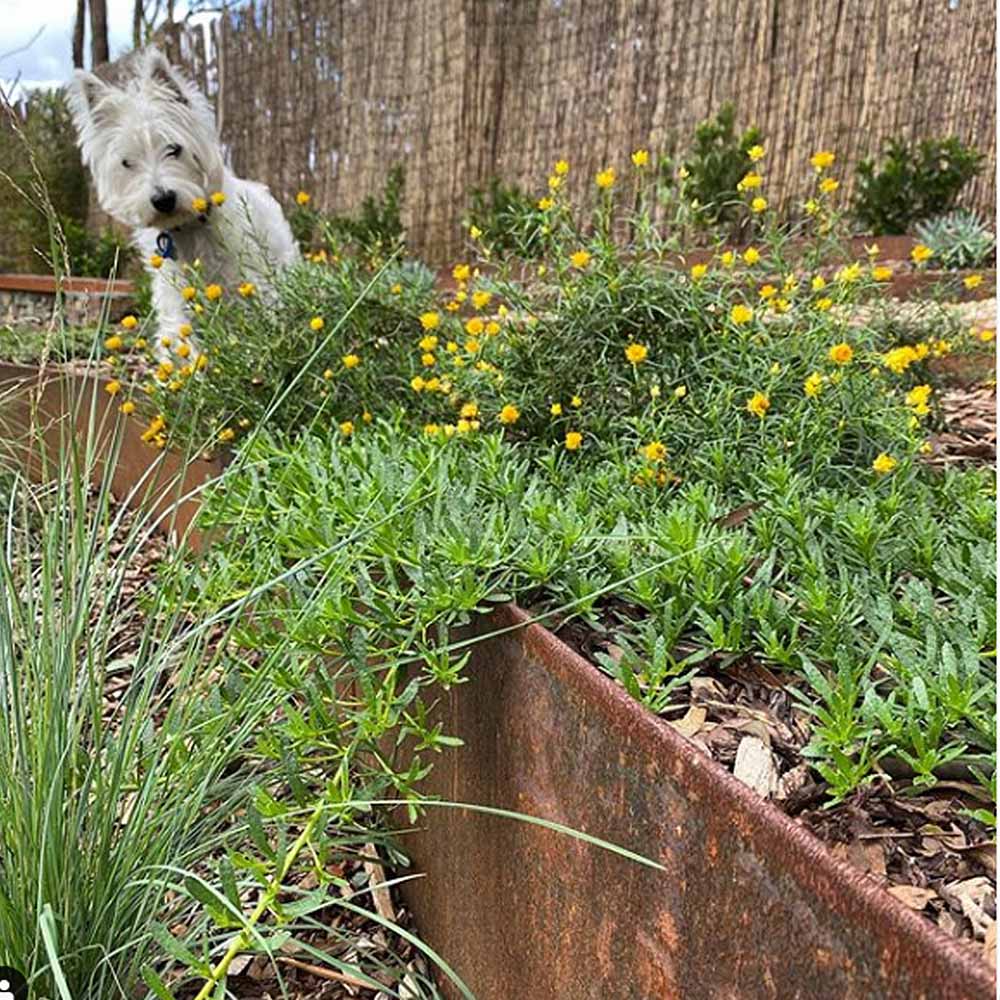
Flowering natives like bottlebrush and waratah deliver seasonal bursts of colour and support local pollinators. Choose a mix that flowers at different times so the front yard has interest across the year. Set flowering natives against a neutral backdrop, such as a steel-edged bed or a gravel surface, to make the colour stand out.
20. Use Mulch or Decorative Stones to Retain Moisture
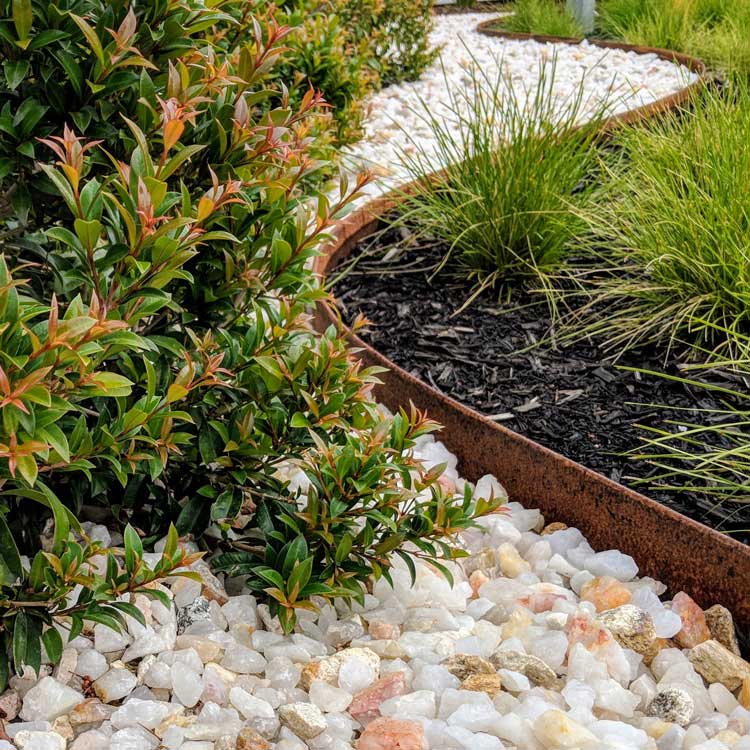
Mulch helps limit evaporation and weed germination. Choose a depth suited to the material and plants, keep it clear of stems and trunks, and check that water reaches the soil beneath. An edge contains mulch or decorative stone so it does not spread across the path.
21. Frame the Entrance With Symmetrical Planting
Symmetrical planting either side of the front path or door creates a balanced, welcoming approach. Matched feature plants like cycads or clipped topiary work well, and the repetition reads as considered and formal. A pair of matching planter boxes flanking the door is the simplest version, and symmetry pairs naturally with straight-edged beds, where the clean borders reinforce the balanced layout.
22. Layer Plants by Height for Depth
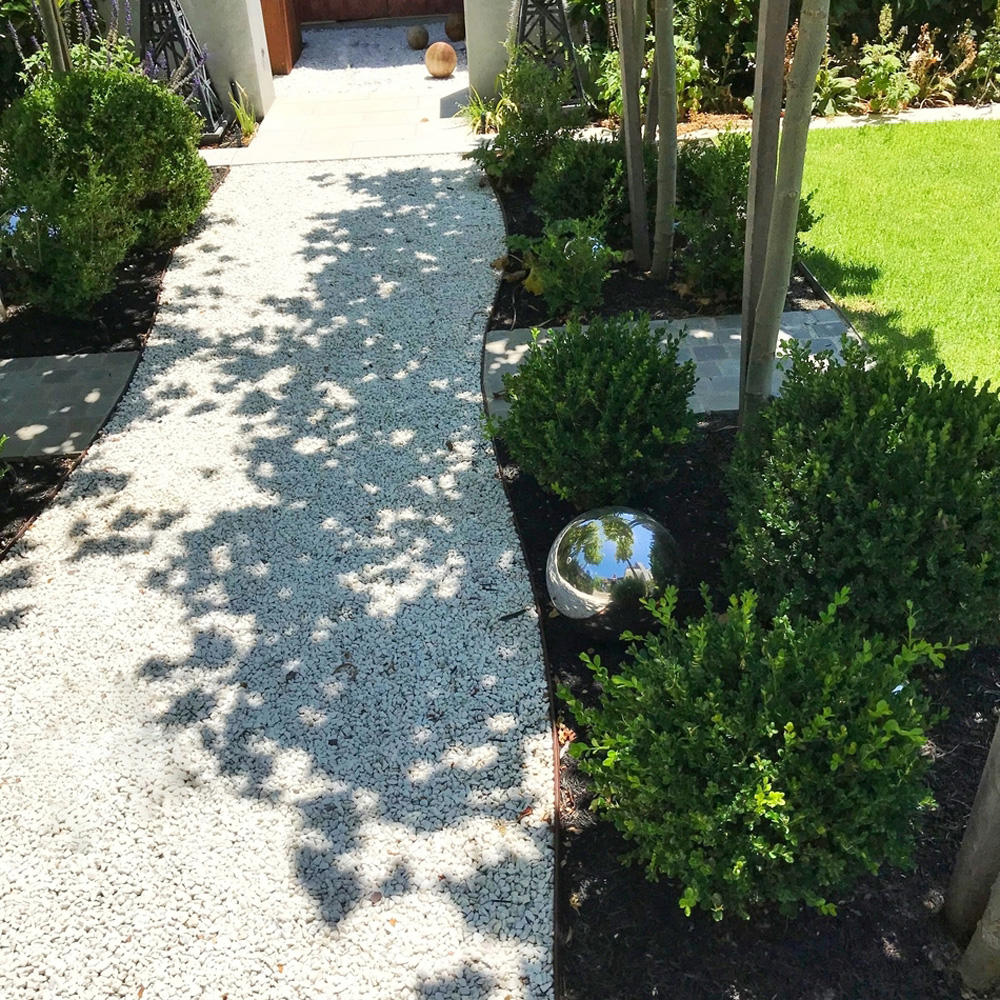
Layering plants by height gives a front yard depth and a fuller look. Set taller plants toward the back or centre and step down to low ground covers at the front, which is the same principle as a tiered garden bed. On a sloping block, stepped beds make this layering easier and hold the soil at each level, turning an awkward gradient into a series of usable terraces.
23. Add Warmth With Weathering Steel Edging
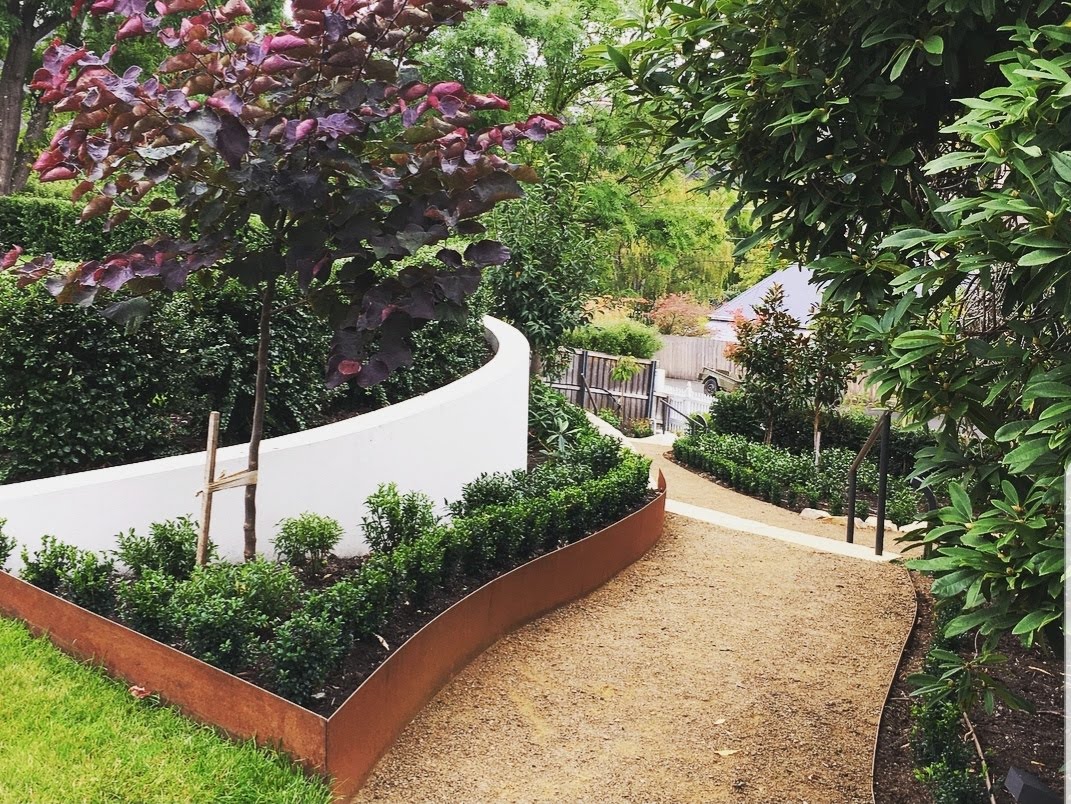
The clean structural line is one part of weathering steel’s appeal; its colour is the other. The patina changes from orange and russet towards deeper brown as it develops, with the timing affected by conditions. That warm tone works well with grey gravel, timber and native greenery. Plan drainage and care so the finish develops in a suitable setting. Our ideas for garden borders show how landscapers use it along paths and native beds.
24. Anchor the Garden With Feature Trees
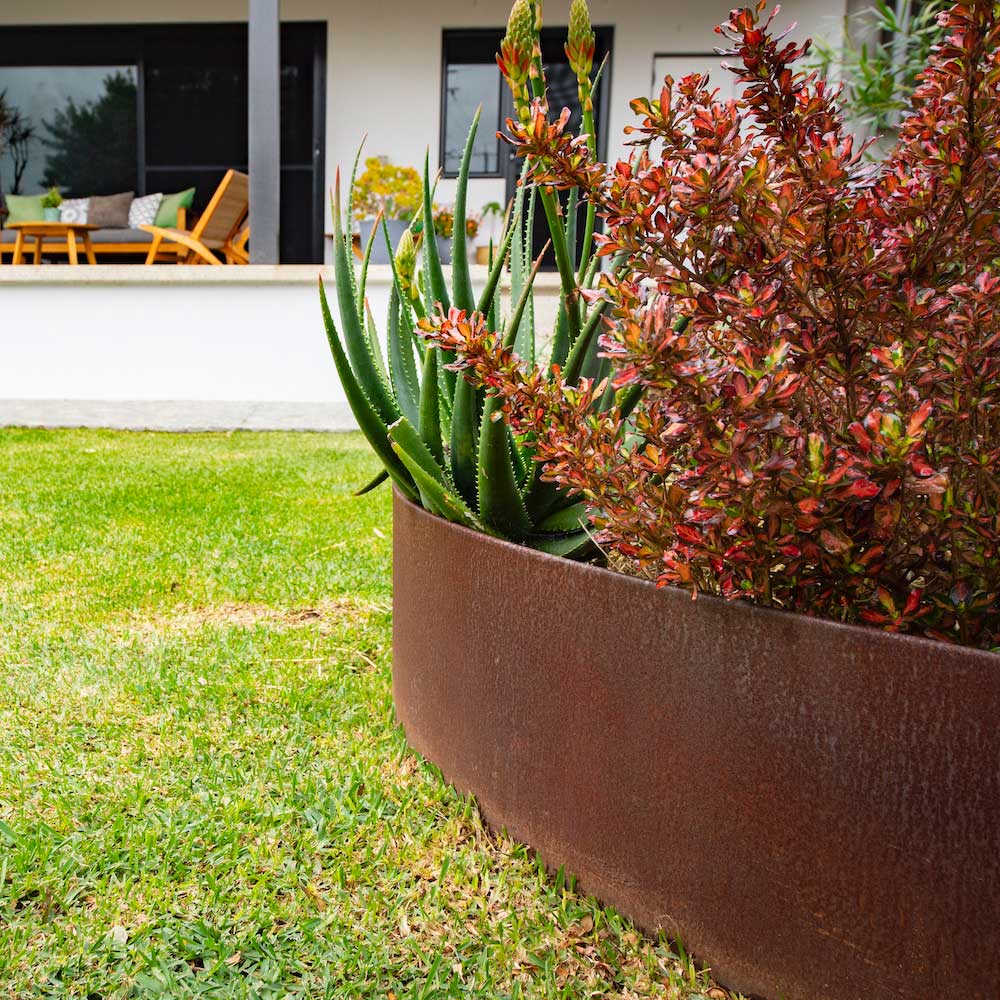
A feature tree gives a front yard scale, shade, and a natural focal point. Olive holds its silver foliage year-round, while frangipani suits warmer zones and drops its leaves in the cooler months, letting winter sun through. Underplant the base or ring the trunk with a curved bed to protect the roots and tie the tree into the wider scheme. One well-placed tree often does more for a frontage than several smaller plantings.
25. Zone the Space for Different Uses
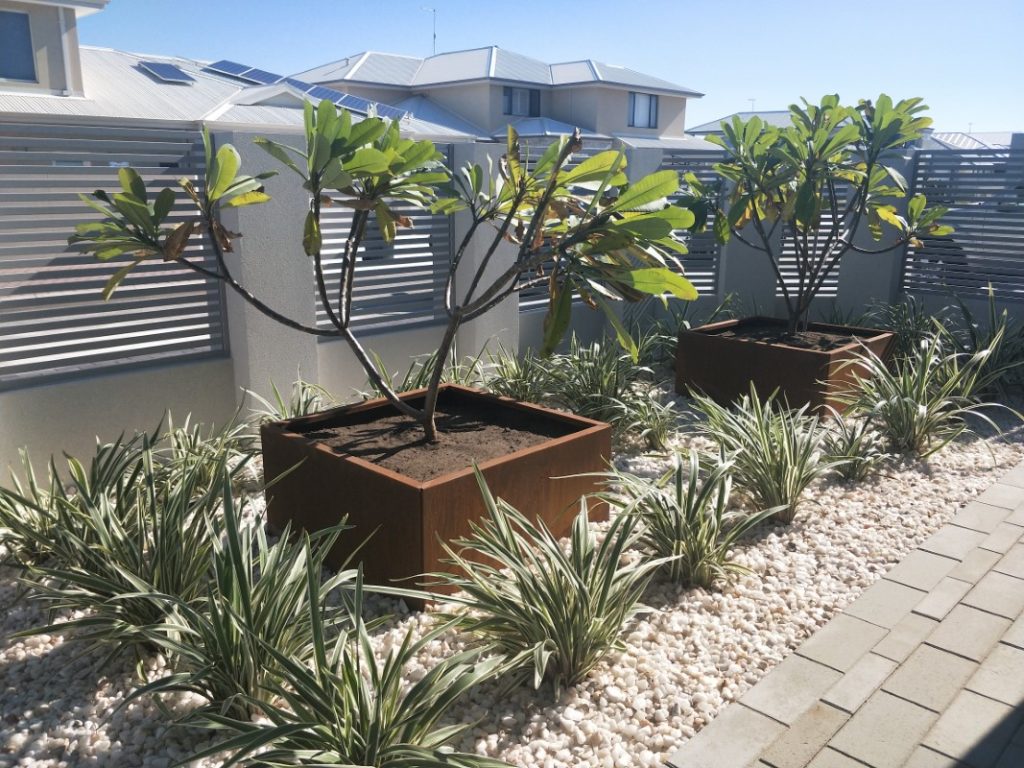
Dividing a front yard into zones, such as a seating nook and a small open area, makes even a modest frontage more usable. Define each zone with a change in surface, planting, or a clear edge so the transitions read clearly. Consistent edging across zones ties the design together, so the space feels planned.
26. Pair Garden Beds With Pathways for a Structured Finish
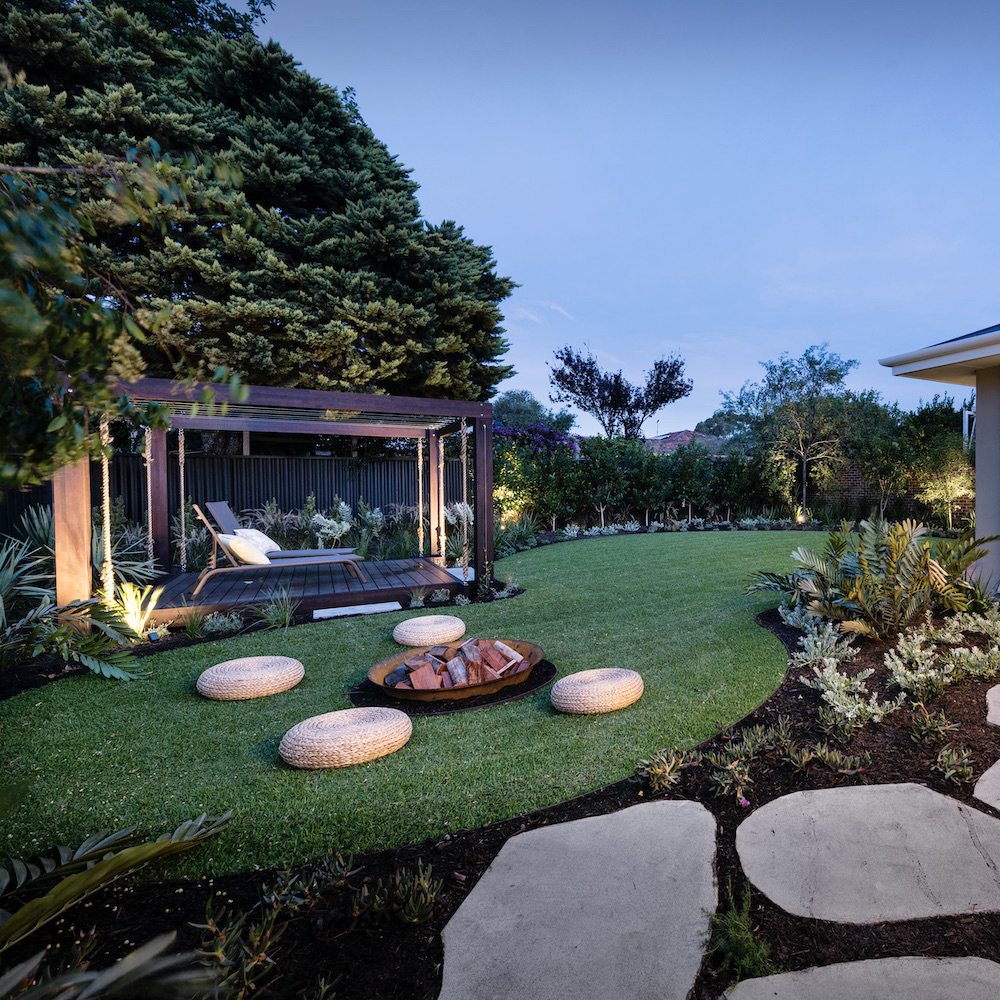
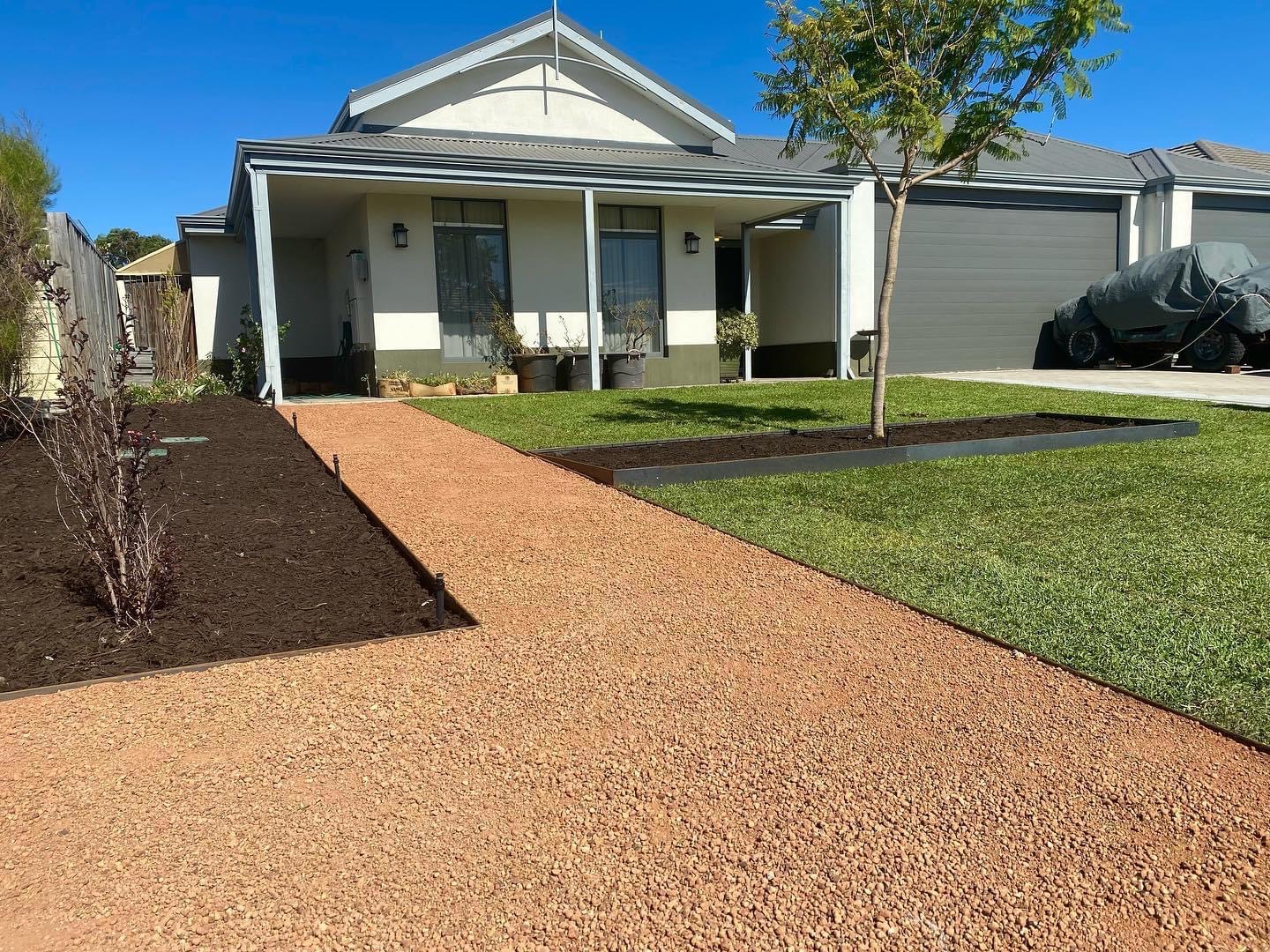
Integrating beds and pathways is what pulls all the earlier ideas together into a structured, polished result. Let the paths trace the bed edges so hardscaping and planting frame each other, and use a consistent edging profile throughout to unify the look. This combination of clean lines, considered planting, and durable materials is the core of a modern Australian front yard, and it is what keeps the space looking good with minimal upkeep long after it goes in.
Bringing Your Front Garden Ideas Together
The best front yards come from how planting, structure and materials work together. Hardy natives and ground covers reduce upkeep, defined beds and pathways give the space order, and durable steel edging keeps those lines clean. Work through the ideas above by layer, choose the ones that suit your block, and let a consistent edging line tie the whole design together.
For more inspiration and to see the products in person:
- Request a price list and brochure: pricing, the brochure and your nearest stockist by email.
- Find your nearest stockist: locations and contact details on our Where To Buy map.
- Explore steel garden edging: profiles for straight lines and curves.
- Read the essential guide to raised garden beds: planning and heights explained.
- Browse the gallery by style: real gardens filtered by category, including garden edging.
- Watch the installation videos: step-by-step guides to installing edging and raised beds.
Common Questions About Front Yard Landscaping
What are the best low-maintenance front garden ideas in Australia?
Swap some or all of the lawn for hardy natives such as lomandra, westringia and kangaroo paw, or for ground covers, gravel and mulch. Group plants by watering needs, put drip irrigation on a timer and keep the plant list short. A clear edge between beds, paths and lawn cuts trimming, though it still needs an occasional check for runners and loose fill.
How much does front yard landscaping cost in Australia?
Cost depends mainly on the area, how much hard landscaping is involved and whether you use a landscaper. Refreshing the planting, mulch and edging on an existing layout is usually the most affordable option. New paving, retaining walls, irrigation and driveway work add the most. Measure the area in square metres, price materials by the square metre or lineal metre, and get at least three written quotes for any trade work.
What plants suit a modern Australian front yard?
Match plants to each bed’s conditions:
- Full sun and dry: kangaroo paw, grevillea, westringia, lomandra, succulents and agaves.
- Part shade: dianella, correa and native violet.
- Coastal exposure: westringia and Correa alba, which tolerate salt-laden wind.
- Heavy clay: lomandra and dianella cope better than most, provided the bed is not waterlogged.
Check local suitability with a nearby nursery, as conditions vary widely between and within states.
How do I stop my garden beds spreading into the lawn?
A physical border helps contain lawn and mulch. Choose its height and installed depth for the grass and ground, and keep watching for runners above or below it. Edging can reduce trimming; it does not eliminate it.
What can I put in my front yard instead of grass?
Hardy ground covers such as native violet or dichondra, gravel or pebbles over a compacted base, and mass-planted native grasses such as lomandra all replace lawn with less watering and no mowing. Contain each surface with a clear edge so it doesn’t spread into paths and beds. If the area includes the nature strip, check your council’s rules first, as some councils only permit turf or low planting there.
How do I plan a front yard layout from scratch?
Start with a simple sketch of the block showing the house, driveway, existing trees and the direction of the sun. Mark the entry path first, then the beds either side of it, then any seating or feature areas. Decide where the edging lines fall before you plant, choose plants for each bed’s sun and soil, and finish with mulch, gravel and lighting.
What edging works best for a front yard?
Steel edging is a durable choice for front yards because it keeps a clean line between beds, paths, and lawn when installed to the product guide. Zero-Flex (straight only) and Rigid (straight lines and gentle curves) suit formal paths and geometric beds, while Flex is shaped by hand for curved borders and tree rings. Weathering steel adds a warm, modern tone; galvanised is a practical option near the coast. Along a drive, keep the edge clear of the wheel paths; our driveway edging guide covers the options. For more layouts, see our garden edging ideas.
Can I redesign my front yard as a DIY project?
Simple borders and prepared, level beds can suit DIY. Check the product’s joining system and tools first: Original edging uses Tek screws, Straightcurve’s 100mm and 150mm Flex and Rigid ClickConnect™ range joins by hand with no drills, screws or welding, and raised-bed systems have their own connections and bracing. Ground preparation and fixing still need basic tools. Seek help for substantial excavation, retaining, drainage or work near services.
Does weathering steel edging last outdoors?
Weathering steel is designed for outdoor use and forms a stable protective patina. In favourable conditions (well-drained, inland, properly installed and cared for) it can last structurally well beyond a decade. In more challenging conditions, especially coastal sites with organic material against the steel and poor drainage, lifespan can be significantly shorter. Within about 2km of the coast, galvanised steel is a practical alternative. Good drainage and the care steps in our Product Care Guide make the biggest difference, and our Longevity Guide covers the specifics.