- 01 A pool garden transformed: the project
- 02 Why the old pool area needed to change
- 03 Choosing weathering steel for a pool garden
- 04 Drainage is the most important detail in a pool garden
- 05 The installation: what the process looked like
- 06 The result three years on
- 07 Is corten steel suitable near a swimming pool?
- 08 Coastal UK pool gardens: specify galvanised
- 09 Common questions about pool garden landscaping
A pool garden transformed: the project
If you’re planning a swimming pool landscaping project (whether you’re renovating a tired existing pool area or starting from scratch) one of the most common questions we hear is: can you use weathering steel (corten) near a pool?
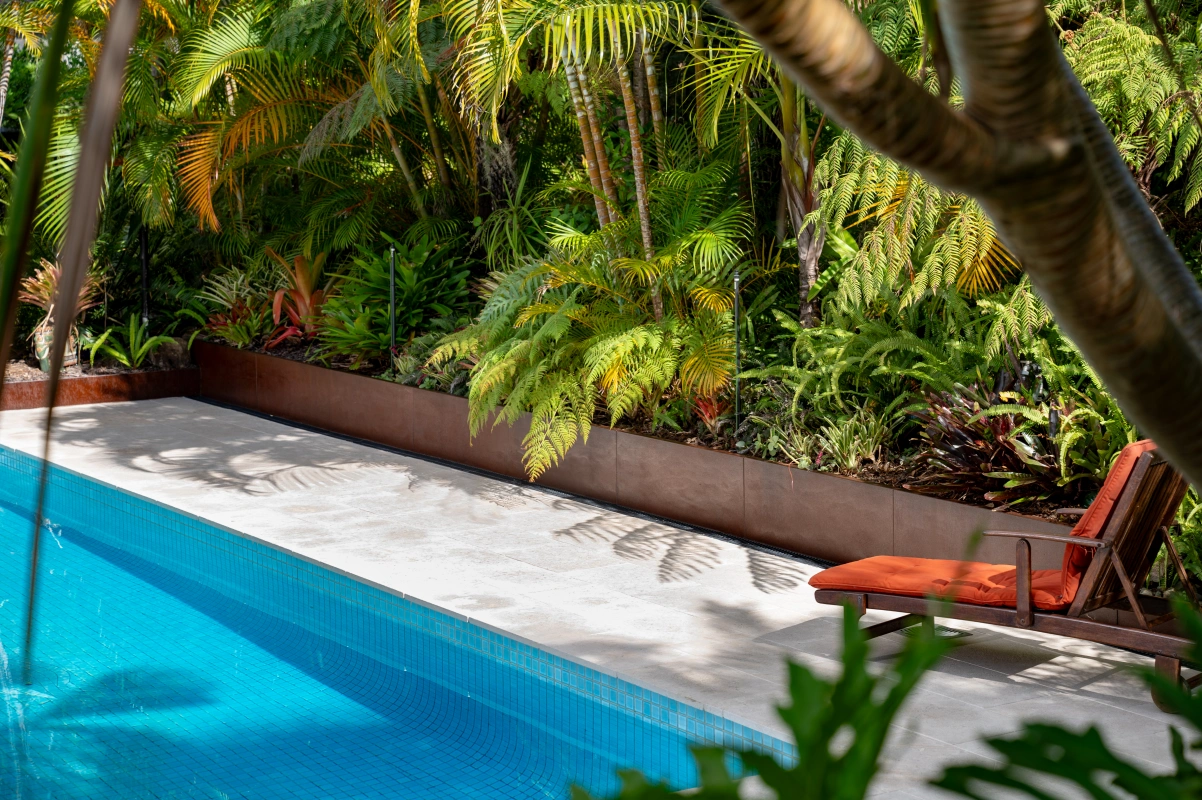
This case study answers that question with real evidence. It’s a project completed by the Straightcurve Australia team, documenting how one homeowner replaced an ageing concrete block retaining wall and mould-covered paving slabs around a backyard swimming pool with mixed-height modular weathering steel raised bed panels. The before-and-after photos tell the story clearly. Three years on, the result still looks exactly as it did on day one.
The principles behind this project (product choice, drainage planning, pool-environment suitability) apply equally to UK pool gardens. We’ve added a material guidance section below specifically for UK conditions, including coastal and chloride considerations.
Quick Summary
This is an interview-style case study documenting a complete pool garden renovation using Straightcurve weathering steel raised bed panels. The homeowner replaced a crumbling concrete block wall and slippery paving slabs with modular weathering steel beds, gaining more poolside space, a cleaner aesthetic, and dramatically lower maintenance. The article covers material suitability for pool environments, the installation process, and what three years of real-world performance looks like, plus a practical FAQ on using corten steel near swimming pools.
Why the old pool area needed to change
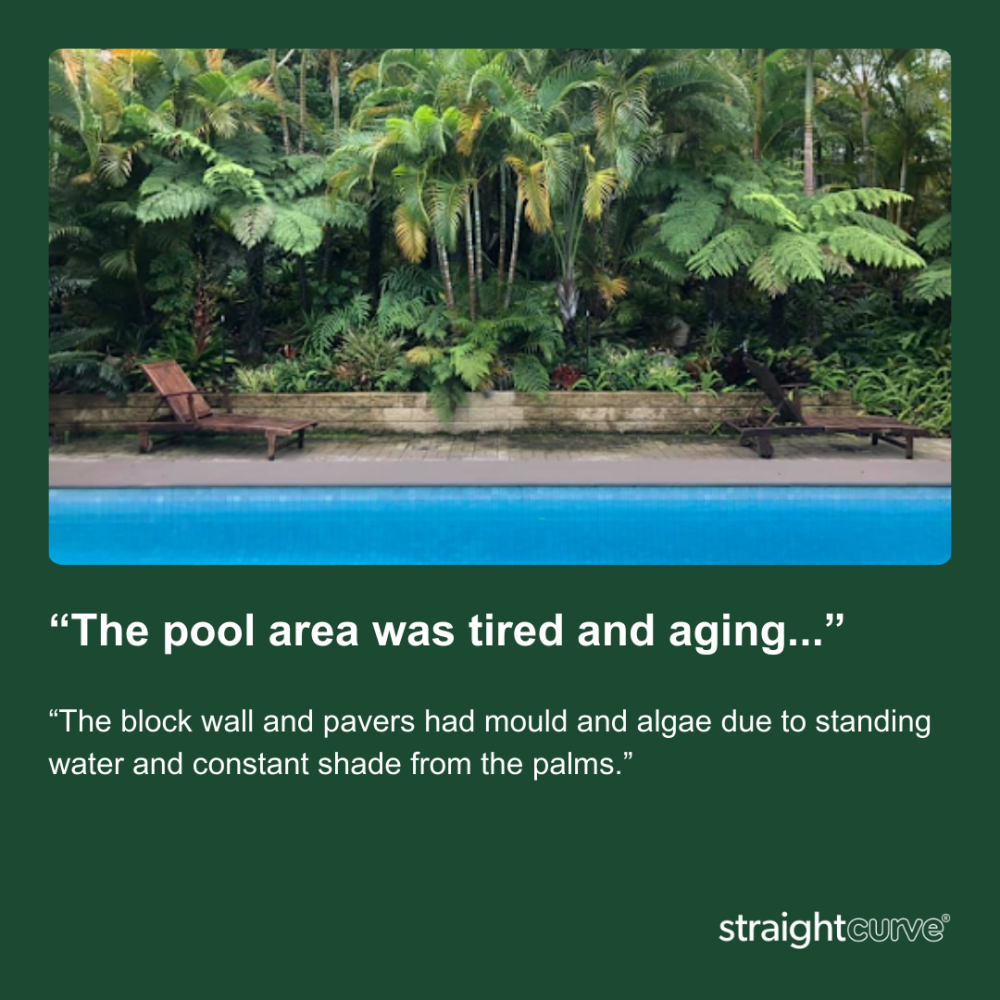
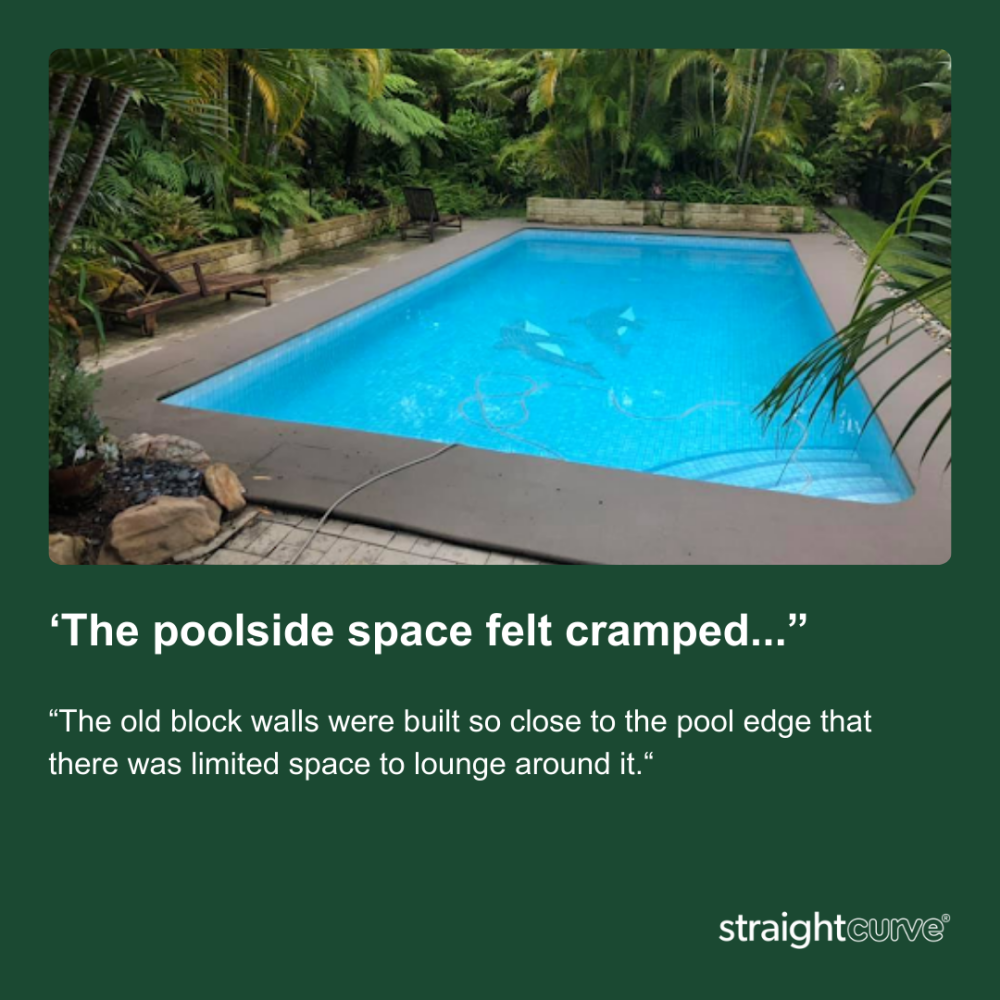
The pool in this project is a 10m × 5m pool that had been in place for around 15 years before the renovation. It was surrounded by mature planting positioned very close to the water’s edge, porous concrete block retaining walls, and pool surround slabs that had developed persistent mould and algae. The roots of large palms planted close to the pool were lifting the slabs and coping.
The problems were compounding each other. The planting cast constant shade over the block wall and paving, which meant they never dried out properly, ideal conditions for biological growth. Scrubbing the slabs and walls was a recurring maintenance burden with no long-term fix while the underlying conditions remained the same.
The homeowner’s goals for the renovation were straightforward: replace the porous block wall with something modern and low-maintenance, push the planted beds back to open up more usable space around the pool, and introduce proper drainage to stop water from pooling against the structure.
Choosing weathering steel for a pool garden
The homeowner replaced the concrete block wall with mixed-height modular panels in weathering steel (also known as corten steel) from Straightcurve. The decision came down to three things: aesthetics, space, and durability.
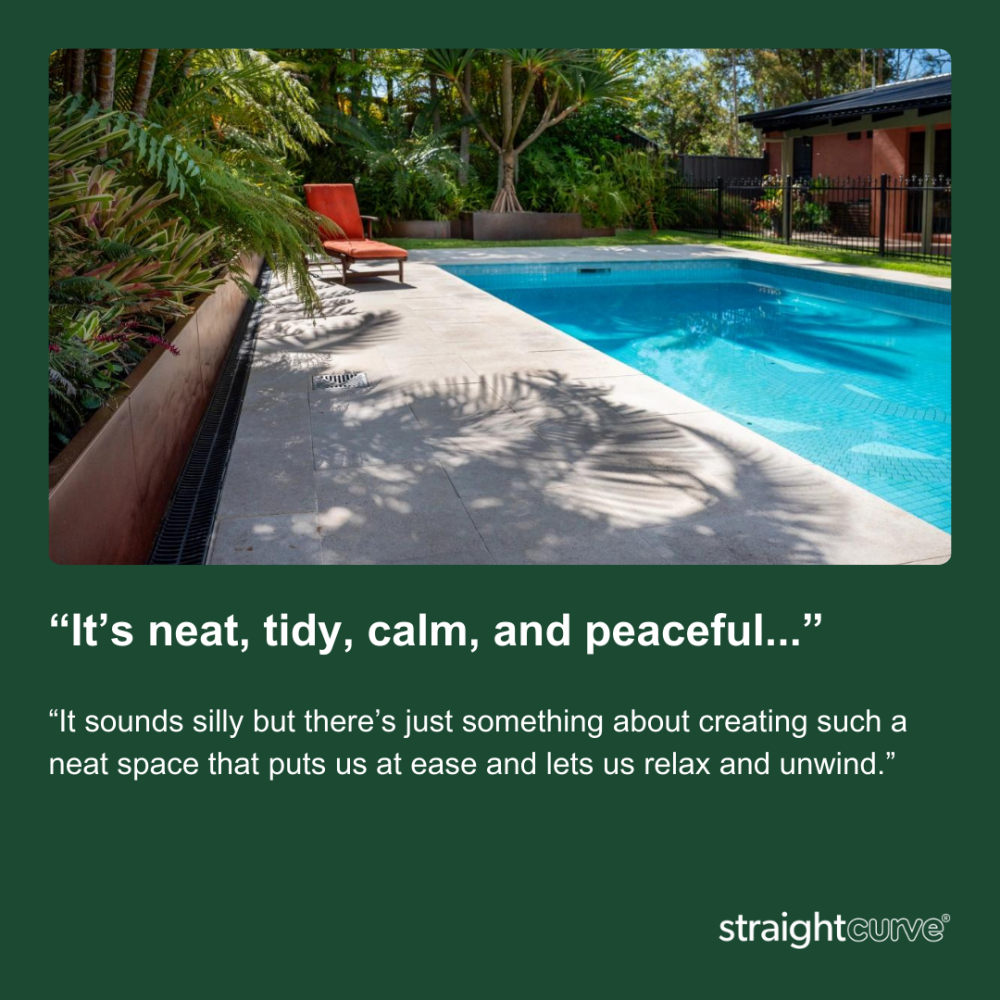
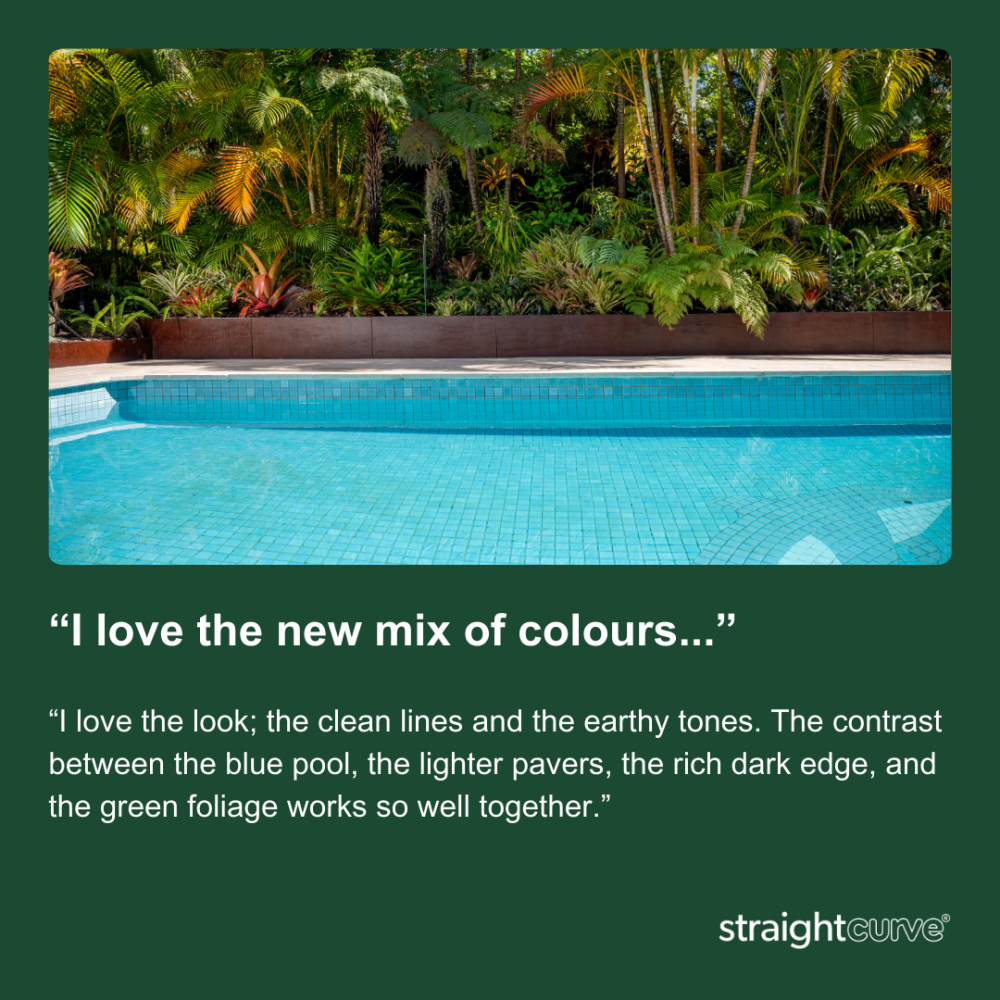
On aesthetics, the rich dark tone of a matured weathering steel patina works particularly well against a blue pool, light paving slabs, and green planting. It’s a material that earns its place visually in a way that painted or powder-coated alternatives don’t. On space, steel panels are considerably thinner than a concrete block wall, which gained several centimetres of usable poolside area simply by swapping materials. And on durability, the modular system requires no ongoing painting, sealing, or structural maintenance once installed correctly.
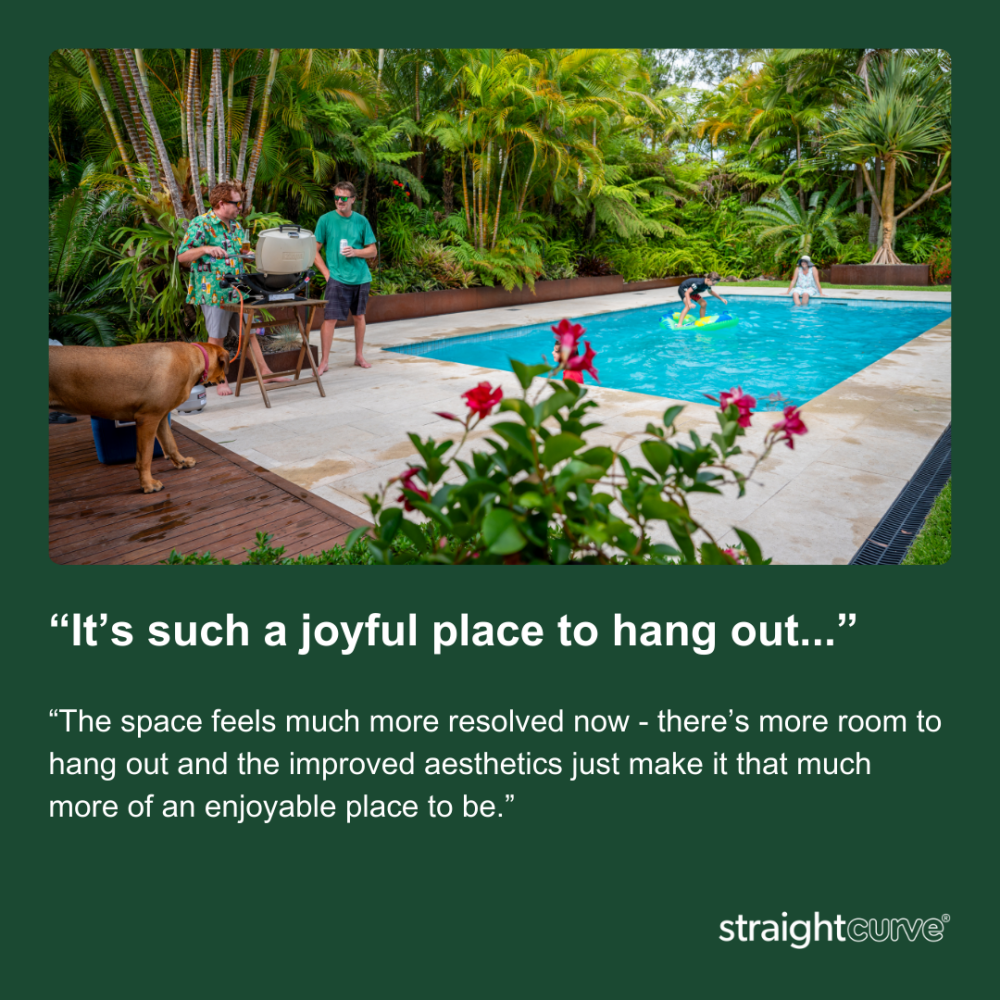
The old pool surround slabs were replaced with sealed limestone paving. Drainage channels were added between the garden beds and paving to manage pool water and rainfall runoff.
Pro Tip
Drainage is the most important detail in a pool garden
Pool water splashing onto planted beds creates a persistent moisture environment. If that moisture sits against the base of steel panels without draining away, it accelerates corrosion over time. The solution used in this project (drainage channels between the paving and the bed faces) is the right approach. Plan drainage before you plan anything else.
The installation: what the process looked like
The project was a combination of professional groundwork and owner-installed Straightcurve panels. The site was completely stripped first, all existing paving slabs and the old concrete block retaining wall were removed to allow the earthworks to proceed cleanly. That initial phase, including clearing, re-levelling, and preparing the ground, took around two weeks.
The Straightcurve panels were installed over subsequent weekends. The homeowner noted that working with modular steel panels was considerably less labour-intensive than the block wall it replaced, a full concrete block wall requires carrying, setting, and mortaring hundreds of individual heavy blocks. The connector plate system clicks together without tools, which makes the installation manageable as a DIY project even at raised bed heights.
One practical note for UK installations: if you’re installing into made ground or soil that’s been disturbed during pool construction, check drainage carefully. Compacted or poorly-draining backfill holds moisture against the below-ground section of the steel, which affects longevity. Good drainage fill around the buried section makes a meaningful difference.
The result three years on
Three years after installation, the panels are still straight with no movement whatsoever. The patina on the weathering steel has matured and stabilised, the colour the homeowner described as “rich dark” in the early photos remains consistent. The contrast between the steel, the light limestone paving slabs, and the pool water is exactly what was planned for at the outset.
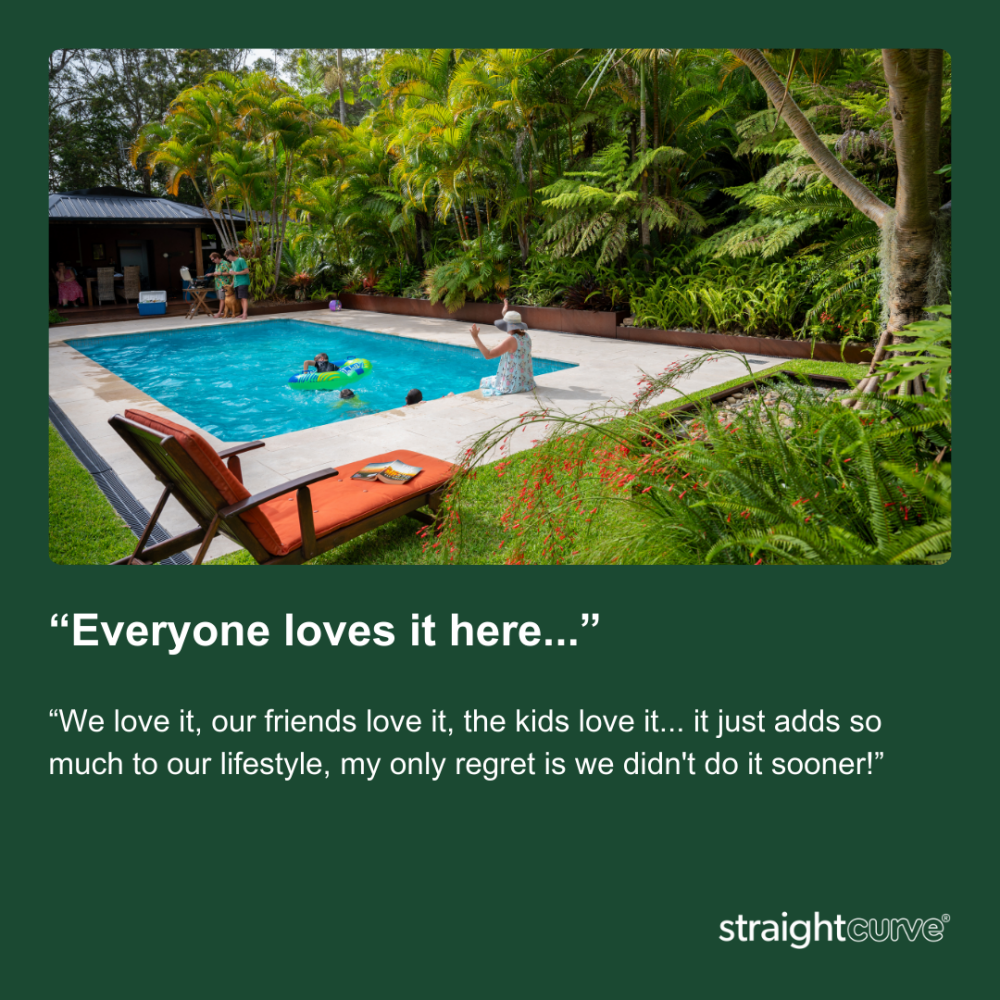
The maintenance picture has transformed. No more mouldy concrete blocks or slippery pool surround tiles. The drainage channels are doing their job. The planting (now set back further from the pool edge) is manageable and no longer casting permanent shade over the hardscape.
The homeowner’s summary: “To us, it’s like an oasis that we’ve created around the swimming pool. And it’s also very low maintenance. That’s important because it’s all well and good to build something beautiful, but it’s a pain if you have to maintain it every day.”
Is corten steel suitable near a swimming pool?
This is the question most people are actually searching for when they find this article, so here’s a clear answer.
Weathering steel (corten) can be used in pool garden environments. The key distinction is between adjacent to pool water and in contact with pool water or pool chemicals. The two are very different conditions.
Pool water contains chlorine. Chlorine (or more precisely, the chloride ions it produces) is one of the most aggressive agents for steel corrosion. Direct, sustained contact with chlorinated water or heavily chlorine-laden air (such as inside an indoor pool building) is not suitable for unprotected weathering steel. For those applications, galvanised steel is the right choice.
For outdoor pool gardens in a normal UK climate, the situation is more manageable. Weathering steel used as raised bed panels or garden edging adjacent to a pool (not submerged, not in constant splash contact) can perform well provided:
- Good drainage is designed in from the outset, so pool water doesn’t sit against the base of the panels
- The panels are not within the constant splash zone of the pool (a reasonable setback or drainage channel between the pool surround and the bed face addresses this)
- The site is not within 2km of the coast, where airborne chloride from sea salt compounds the pool chloride environment. In coastal locations, galvanised steel is the safer specification
- The UK climate actually supports weathering steel patina development well. The temperate wet-dry cycle (rain followed by drying) is exactly what the material needs to form and maintain its protective patina. This is a genuine advantage over drier climates where patina formation can be slower.
Pro Tip
Coastal UK pool gardens: specify galvanised
If your pool is within approximately 2km of the coast, the combination of airborne sea salt and pool water creates a compounding corrosion risk for weathering steel. Our Longevity Guide and Product Care Guide cover the specific care steps. For those who prefer a lower-maintenance option in that environment, galvanised steel is a practical alternative with better performance in high-chloride conditions.
For product details and material guidance on raised beds and garden edging, request a price list or explore raised bed options online.
Common questions about pool garden landscaping
Can you use corten steel near a swimming pool?
Yes, with the right conditions. Weathering steel (corten) works well as raised beds and garden edging adjacent to an outdoor pool, provided good drainage separates it from standing pool water and it’s not in a constant splash zone. Avoid using unprotected weathering steel in indoor pool buildings or where direct sustained contact with chlorinated water is likely. For coastal locations within a couple of kilometres of the sea, weathering steel benefits from additional care. Our Longevity Guide and Product Care Guide cover the specific steps that make the most difference, and galvanised steel is a practical alternative for these environments.
What is the best garden edging for a pool area?
Steel is one of the most practical choices for pool garden edging and raised beds, it’s thin (gaining you space compared to block walls), durable, and low maintenance once installed. For most UK inland pool gardens, weathering steel gives a beautiful natural patina that works visually alongside water and planting. For coastal pools or areas with significant splash exposure, galvanised steel is the more durable option. Both are available in the Straightcurve range.
Does weathering steel rust near a pool?
Weathering steel develops a controlled patina, this is intentional and is the material’s protective mechanism, not a sign of failure. Near a pool, the patina will still form normally provided the steel isn’t in constant contact with pool water or heavily chlorinated air. The project in this article shows panels that have been next to a pool for three years and remain structurally sound and visually consistent. Correct drainage at installation is the single most important factor in long-term performance.
How do I landscape around a swimming pool on a budget?
The most cost-effective approach is to plan the drainage and groundworks properly first, remedying poor drainage after installation is expensive. For the above-ground elements, modular steel raised bed systems like Straightcurve are competitive with masonry alternatives when you factor in labour: the connector plate system installs without tools and doesn’t require a landscaper for the panel assembly. The paving choice and planting are the other major variables, sealed paving slabs require less ongoing maintenance than porous alternatives near water.