- 01 Why raised beds are worth considering
- 02 What are the benefits of gardening in raised beds?
- 03 What are the potential disadvantages?
- 04 Design before you build
- 05 Do the benefits outweigh the costs?
- 06 What materials are safe to use?
- 07 What mistakes do people make?
- 08 Why do people love raised bed gardening?
- 09 Weathering steel in the UK climate
- 010 How big should your raised beds be?
- 11 How do you choose materials for building raised beds?
- 12 How do you fill and maintain raised beds?
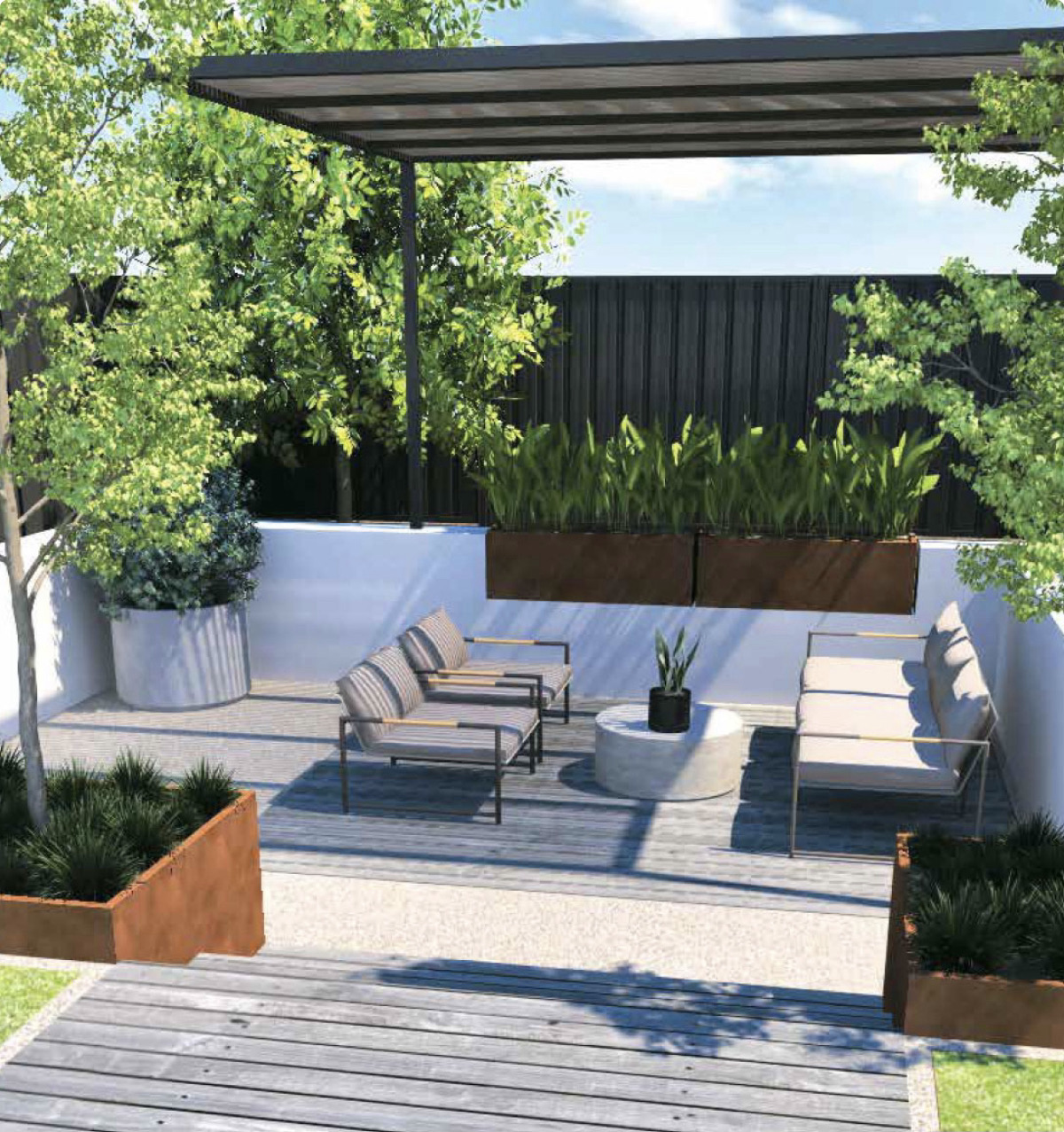
- 13 How do you make raised beds look beautiful?
- 14 Age is an advantage with weathering steel
- 15 Common questions about raised beds
Why raised beds are worth considering
Raised beds have become one of the most popular ways to garden in the UK, and for good reason. Whether you’re growing vegetables on a patio, creating a structured border in a small back garden, or building tiered planting on a slope, raised beds give you control that in-ground gardening simply can’t match.
If you’re considering building your first raised beds, or replacing an existing setup that hasn’t worked as well as you hoped, this article gives you direct answers to the ten questions we hear most often. No padding, just the information you need to make a good decision.
Quick Summary
Raised beds offer better soil control, improved drainage, fewer weeds, and easier access than in-ground planting. The main trade-offs are upfront cost and higher watering needs. Steel (particularly galvanised steel or corten (weathering steel)) is the most durable material choice for long-term builds. Most mistakes come down to location, bed size, soil quality, and material selection. Get those four things right and raised beds are one of the most rewarding garden investments you can make.
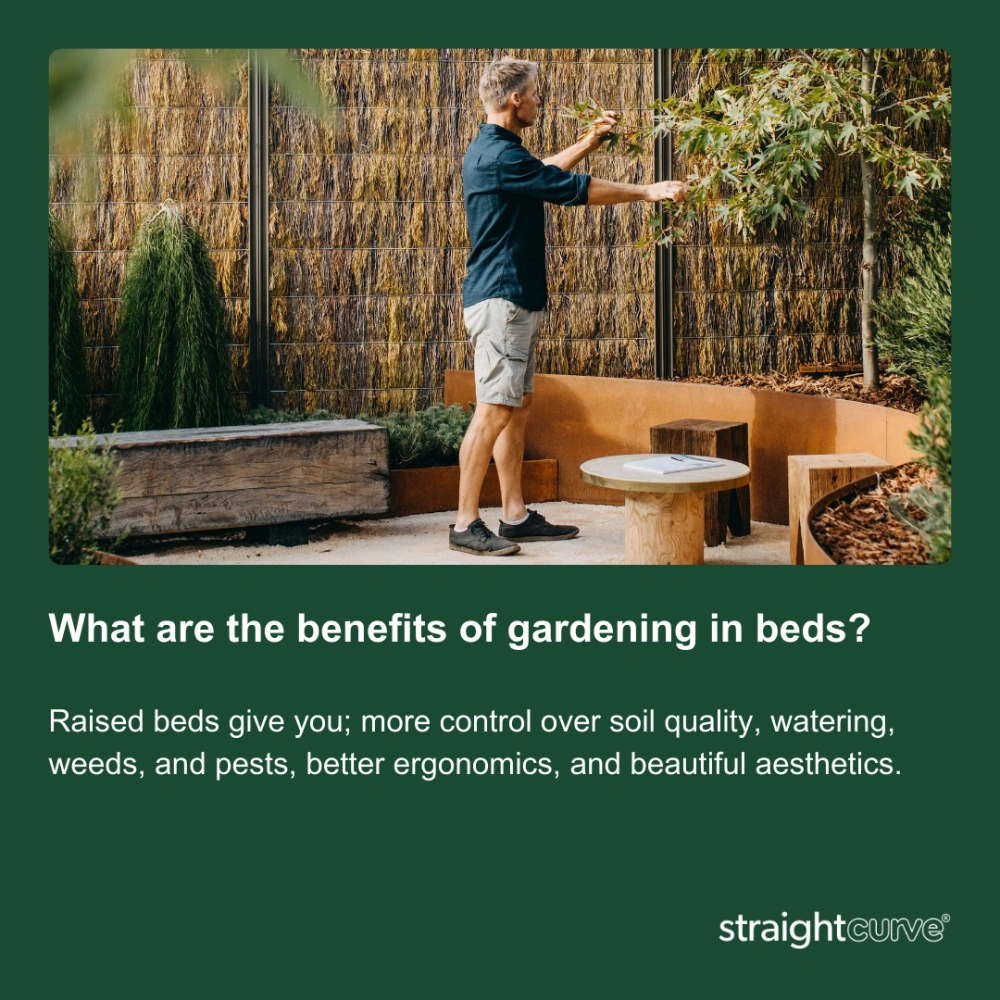
What are the benefits of gardening in raised beds?
The primary benefit is control (over soil quality, drainage, and growing conditions) in a way that in-ground gardening rarely allows. Raised beds let you start with exactly the right growing medium for what you’re planting, regardless of what your underlying soil is like.
The main benefits, in order of practical importance:
- Improved soil quality: you choose and build the soil mix from scratch, tailored to what you’re growing
- Better drainage: raised beds drain more freely than compacted ground, which matters especially in the UK’s wet winters
- Fewer weeds and pests: fresh, weed-free soil and a defined perimeter significantly reduce maintenance
- Extended growing season: raised bed soil warms faster in spring, giving you a head start, and retains warmth longer into autumn
- Easier access: the right bed height means less bending and kneeling, which makes a real difference for gardeners with back or joint problems
- Greater location flexibility: beds can go on concrete, gravel, patios, or poor ground where planting in-situ would be impossible
- Aesthetic structure: defined beds add order and visual interest to a garden in a way that loose borders rarely achieve
For a deeper look at each of these, our Essential Guide to Raised Beds covers them in detail with project examples.
What are the potential disadvantages?
The honest answer is that raised beds do have trade-offs, and it’s worth knowing them before you commit.
Upfront cost is the most obvious one. Building in quality materials costs more than digging a border. A well-built steel raised bed will last decades, which changes the long-term maths considerably.
Water requirements are higher than in-ground beds. Raised beds drain freely (which is one of their advantages) but it also means they dry out faster, particularly in summer. Factor in an irrigation plan or be prepared to water more regularly than you would at ground level.
Material choice matters more than people expect. Some materials that look appealing (certain treated timbers, reclaimed sleepers, galvanised containers not designed for planting) can leach chemicals into the soil, which is a problem if you’re growing edibles. More on this in Q4.
Sub-optimal design is a common issue with first builds. A bed that’s too wide, too tall without proper access, or positioned without regard for sunlight will underperform. Design decisions made at the planning stage are hard to undo later.
Pro Tip
Design before you build
The biggest raised bed mistakes are made before the first panel goes in. When you’re ready to move from planning to building, the how to build raised beds guide walks through each stage — site preparation, panel assembly, soil filling, and finishing — covering the decisions that make the difference. Sketch your layout, measure your reach from both sides, check sunlight across the day, and think about watering before you order materials. Ten minutes of planning saves weeks of frustration.
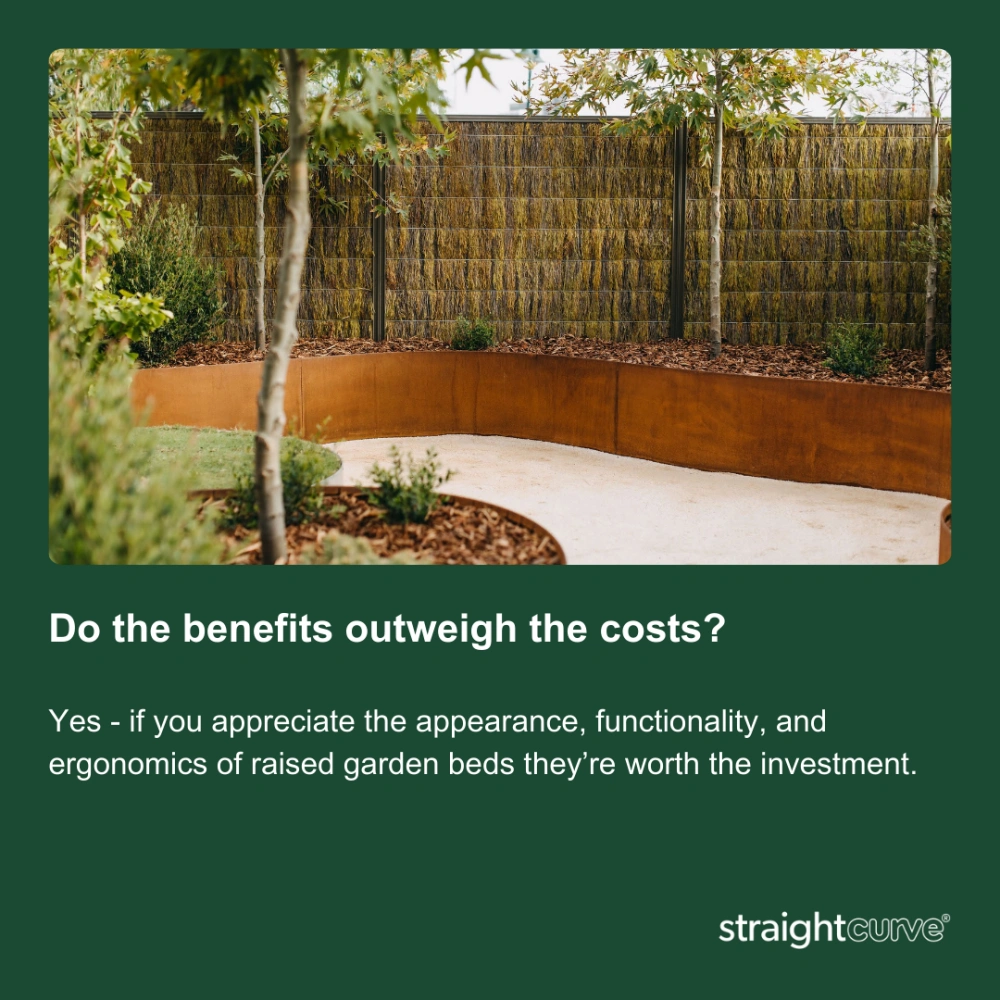
Do the benefits outweigh the costs?
For most UK gardeners, yes, but it depends on what you’re trying to achieve. If you have decent existing soil and are happy gardening at ground level, there’s no pressing need to switch. Raised beds are an upgrade, not a necessity. For a specific answer to how long steel raised beds last in UK conditions — the variables that extend or reduce working life — the lifespan guide breaks it down by steel type and environment.
Where they deliver clear value: poor existing soil (clay-heavy, waterlogged, or compacted ground is extremely common across the UK), limited space, accessibility needs, or a desire for a structured garden that’s easier to maintain long-term. In all of those scenarios, the investment pays back quickly in usable, productive growing space.
The key is building with materials that match your time horizon. A bed made from quality steel (whether galvanised or corten weathering steel) is a one-time investment designed to last. A bed made from cheap timber may need replacing within three to five years, which erodes the economics quickly.
What materials are safe to use?
Most materials are safe for raised bed gardening, but food safety is worth thinking about carefully if you’re growing edibles.
Avoid: chemically treated timber (particularly older pressure-treated wood containing arsenic-based preservatives), reclaimed containers that previously held industrial chemicals, and certain galvanised metals that aren’t food-grade. The rule of thumb is: if you don’t know its history, don’t use it for food growing.
Steel is food-safe. Both galvanised steel and corten (weathering steel) are safe options for growing vegetables, herbs, and fruit. Steel doesn’t leach harmful chemicals into the soil and has an excellent track record in food-growing applications.
Untreated timber is safe but has a limited lifespan, expect three to seven years before rot becomes an issue, depending on the species and conditions.
Rendered brick or concrete block is safe and very durable, but expensive to build and difficult to modify once built.
From a practical safety perspective, also consider the edges. Sharp or rough edges on DIY metal builds can be a hazard. Straightcurve panels are designed with a rolled edge finish, no sharp cuts or raw exposed edges.
What mistakes do people make?
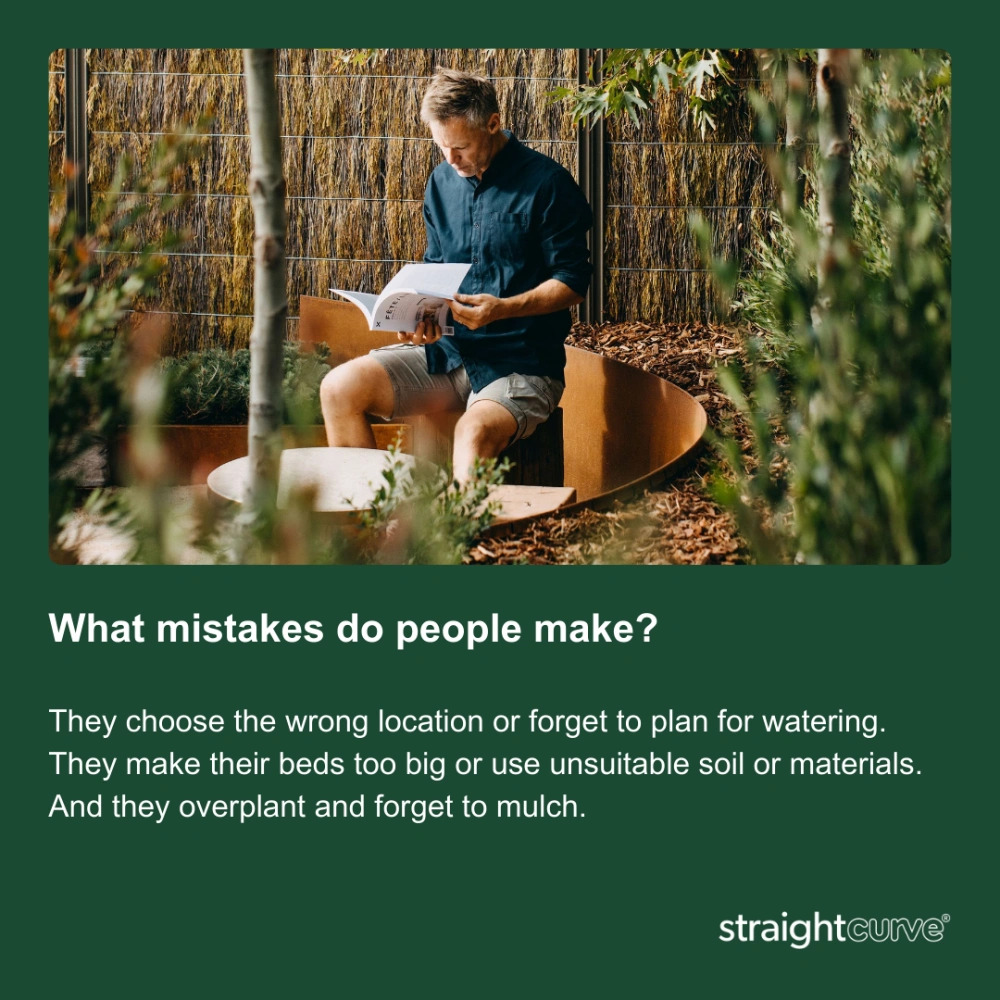
These are the seven most common mistakes we see, in order of how frequently they cause problems:
- Wrong location: too much shade, too exposed to wind, or positioned where access is awkward. Sunlight is non-negotiable for most vegetables (6–8 hours direct sun per day).
- Forgetting to factor in watering: raised beds need more water than in-ground. No irrigation plan means the beds become a chore, or plants fail in dry spells.
- Beds that are too wide: if you can’t comfortably reach the centre from either side without stepping in, the bed is too wide. 1.2m is a practical maximum for most people.
- Wrong materials: either unsuitable for food growing, or too short-lived for the investment. Don’t build to last five years if you want something that lasts twenty.
- Wrong soil: potting compost alone is not enough. A mix of topsoil, compost, and organic matter gives much better long-term results.
- Overplanting: it’s tempting to pack plants in at the start. Overcrowded plants compete for nutrients and are more susceptible to disease.
- Skipping mulch: a layer of mulch on top of the soil reduces evaporation, suppresses weeds, and protects the soil structure. It’s a simple habit that makes a noticeable difference.
Why do people love raised bed gardening?
The reasons are personal, but a few themes come up consistently. The ability to tailor soil to what you’re growing is a big one, being able to grow acid-loving plants in one bed and brassicas in another, with the right conditions for each, is something in-ground gardening rarely allows.
Accessibility is another. Raised beds at the right height mean gardening without the physical strain of working at ground level, which opens the hobby up to people who might otherwise find it difficult.
And then there’s the aesthetic side. A well-designed set of raised beds (particularly in steel, whether galvanised or corten weathering steel with its characteristic warm rust patina) adds a structure and permanence to a garden that planted borders don’t achieve. The UK’s wet climate is actually well-suited to corten: the natural wet/dry cycling that the UK experiences through autumn and spring is ideal for developing a stable, even patina on weathering steel.
Pro Tip
Weathering steel in the UK climate
Corten (weathering steel) performs particularly well in the UK. The regular rainfall and dry spells create the wet/dry cycling that allows the protective patina to develop evenly. It’s one of the reasons weathering steel raised beds have become increasingly popular with UK garden designers.
How big should your raised beds be?
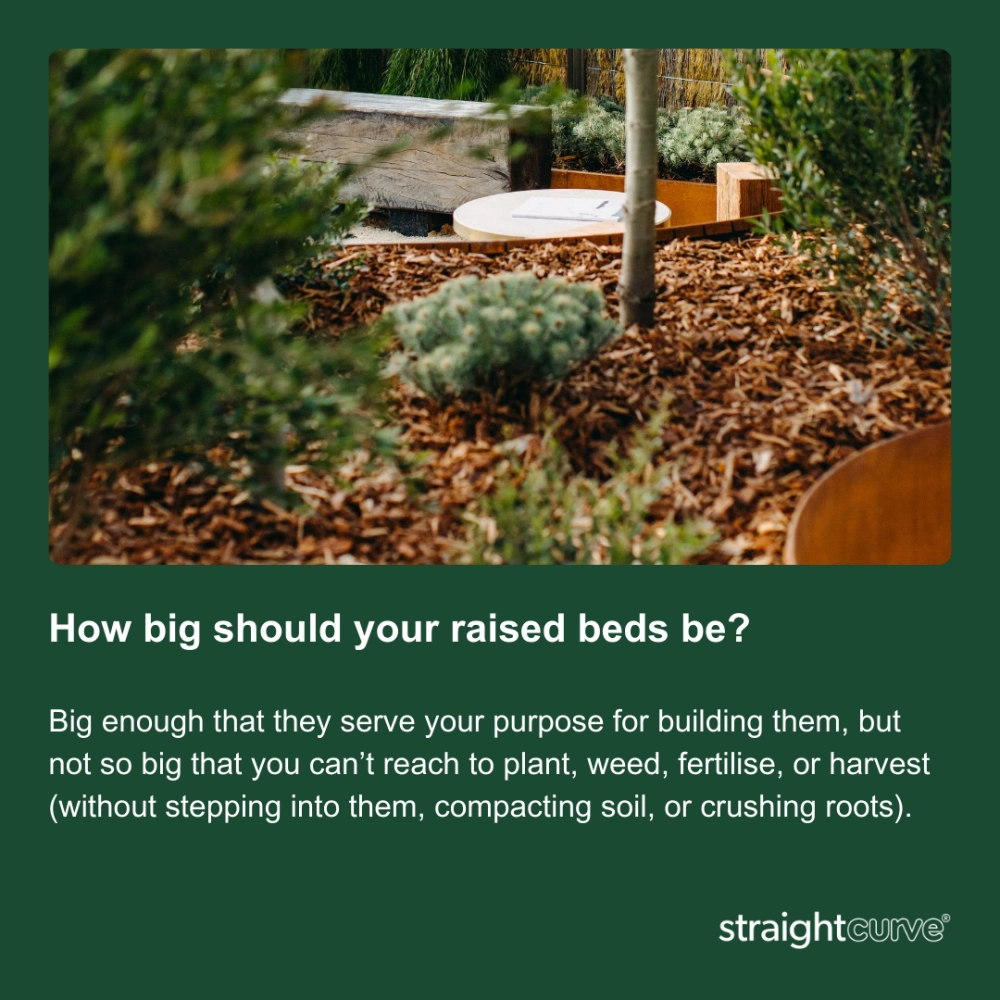
The right size depends on how you intend to use them. For growing and harvesting (vegetables, herbs, cut flowers), the practical limit is how far you can comfortably reach from the side without stepping in. Stepping into a raised bed compacts the soil, damages drainage, and can crush roots. As a working guide:
- Width: no more than 1.2m if accessible from both sides; no more than 0.6–0.8m if accessible from one side only
- Length: as long as you like, though beds over 3–4m can be awkward to work around; consider breaking longer runs with a path or stepping stone
- Height: 240mm suits most ornamental planting; 400mm is better for most vegetables; 560mm works well for deep-rooting crops and gives the added benefit of a comfortable working height without bending
For purely aesthetic beds (feature planting, tree rings, ornamental grasses) you have more flexibility on width since you’re not reaching in to harvest.
How do you choose materials for building raised beds?
Start by asking yourself three questions:
What aesthetic do you want?
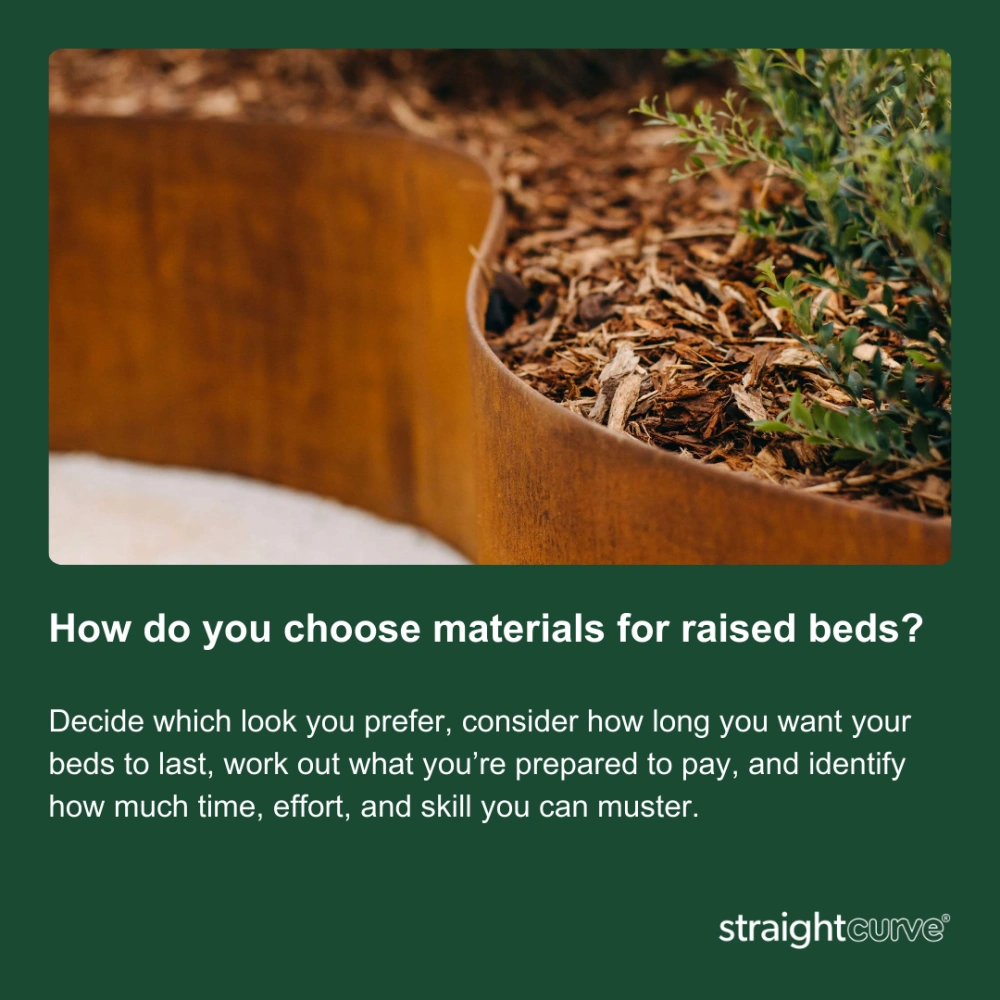
The material sets the visual tone for everything around it. Galvanised steel gives a clean, contemporary finish. Corten weathering steel develops a warm, rustic patina that deepens with age. Rot-resistant hardwood timber has a natural, traditional feel. Rendered brick or concrete block suits bold, architectural schemes. Lightweight timber or composite works for temporary or low-cost builds.
How long do you want them to last?
One to three seasons → lightweight timber or plastic
Five to ten years → hardwood timber, treated sleepers (non-food use)
Fifteen years or more → galvanised steel (15-year warranty with Straightcurve) or weathering steel (10-year warranty)
What are you growing?
If growing edibles, confirm your chosen material is food-safe (see Q4). Galvanised steel and corten weathering steel are both food-safe. For ornamental planting only, you have more options.
Straightcurve’s modular raised bed panels are available in both galvanised steel and corten weathering steel. The connector plate system means panels join without tools, and the modular format allows any shape, straight, curved, or a combination of both.
How do you fill and maintain raised beds?
- Filling: Don’t use garden soil alone, it compacts over time in a raised bed and drains poorly. A good general-purpose mix is 60% quality topsoil, 30% compost, and 10% well-rotted manure or worm castings. For vegetable beds, lean toward more compost. For ornamentals, topsoil-heavy mixes work well.
Layer coarse material (gravel, wood chip, or broken crocks) in the bottom 50–100mm to improve drainage, this is especially useful in the UK where winter waterlogging is a common problem.
- Maintenance: Top up with fresh compost between growing seasons. Raised beds deplete nutrients faster than in-ground beds because the drainage is more active. Mulching the surface after planting reduces moisture loss and weed pressure significantly.
- Watering: In summer, raised beds may need watering every day or two. A simple drip irrigation system or soaker hose laid under the mulch is the most efficient solution for vegetable beds.
For full product details, heights, and pricing on Straightcurve raised beds, request a price list or explore the raised beds range online.
How do you make raised beds look beautiful?
The visual impact of a raised bed comes from four things working together:
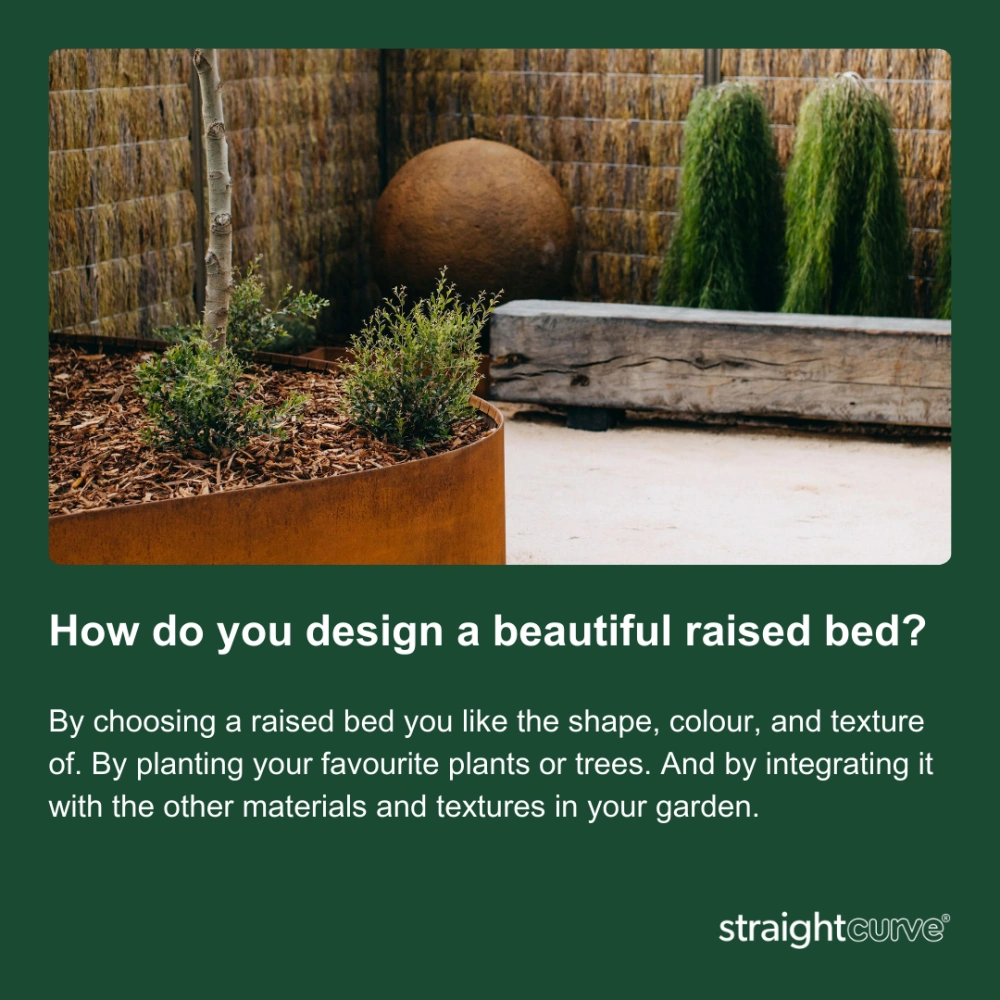
The material and finish of the bed itself, weathering steel develops a warm, rich rust patina that looks better with age. Galvanised steel gives a clean, contemporary look. Powder-coated metal allows colour. Timber offers a natural finish. The choice sets the tone for everything around it.
The craftsmanship of the build, how well panels are joined, how level the bed sits, how clean the corners are. A precise build looks intentional; a rough one looks improvised.
What you plant and how you plant it, density and plant selection matter as much as the structure. For ornamental beds, consider layering heights: low groundcover at the edges, mid-height perennials in the middle, a single structural plant at the back or centre.
What you pair with the bed, the materials and colours surrounding the bed influence how it reads. Weathering steel pairs naturally with gravel, slate, and bronze-toned plants. Galvanised steel sits well alongside pale stone, white render, and clean green planting.
Pro Tip
Age is an advantage with weathering steel
Weathering steel looks better as it matures. The patina deepens and stabilises over the first 12–24 months, ending up a rich, consistent warm brown. It’s one of very few garden materials that genuinely improves with time rather than deteriorating.
Common questions about raised beds
Are steel raised beds safe for growing vegetables?
Yes, both galvanised steel and corten (weathering steel) are food-safe materials. Neither leaches harmful chemicals into the soil, making them suitable for growing vegetables, herbs, and fruit. The material to avoid is chemically treated or contaminated metal, such as reclaimed industrial containers with an unknown history. Purpose-built steel raised bed panels like those in the Straightcurve range are designed for food-growing applications.
How deep should a raised bed be for vegetables?
For most vegetables, a minimum depth of 300mm gives roots enough room to develop well. Leafy greens can manage with 200–250mm. For root vegetables such as carrots and parsnips, aim for 400–500mm. Straightcurve raised bed panels are available in 240mm, 400mm, and 560mm heights, which covers the full range of growing depths.
What is the best material for raised beds in the UK?
For long-term durability, galvanised steel and corten (weathering steel) are the strongest performers. Galvanised steel is recommended for coastal gardens or areas with aggressive soil conditions and carries a 15-year warranty on Straightcurve products. Corten develops a self-protecting rust patina that stabilises over time and suits the UK’s climate particularly well, with a 10-year warranty. Timber is a popular lower-cost choice but requires replacement within 5–10 years depending on the species. Confirm warranties with the team before publishing. Our Longevity Guide and Product Care Guide cover detailed guidance on installation and care in coastal and challenging environments.
How often do raised beds need watering?
More often than in-ground beds, typically every one to two days during summer, depending on what you’re growing, bed depth, and weather. The free-draining nature of raised beds is one of their strengths, but it does mean moisture doesn’t stay in the soil as long. A soaker hose or drip irrigation system laid under a mulch layer is the most efficient way to manage watering in productive vegetable beds.
Can I build raised beds on a patio or concrete?
Yes, one of the main advantages of raised beds is that they don’t need ground contact. They work on concrete, paving slabs, gravel, and decking. On hard surfaces, ensure the bed has adequate drainage at the base (a layer of coarse gravel) and that the surface beneath can handle water runoff.