- 01 Why raised beds are worth it
- 02 Choosing the right material for your raised beds
- 03 Steel vs timber for UK conditions
- 04 Corten steel and weathering steel raised beds
- 05 Weathering steel near the coast
- 06 How to choose the right size and shape
- 07 Mixing Flex and Zero-Flex
- 08 How to build your own raised beds: a step-by-step guide
- 09 Filling and maintaining your raised beds
- 010 Buying raised beds: what to look for
- 11 Common questions about raised beds UK
Why raised beds are worth it
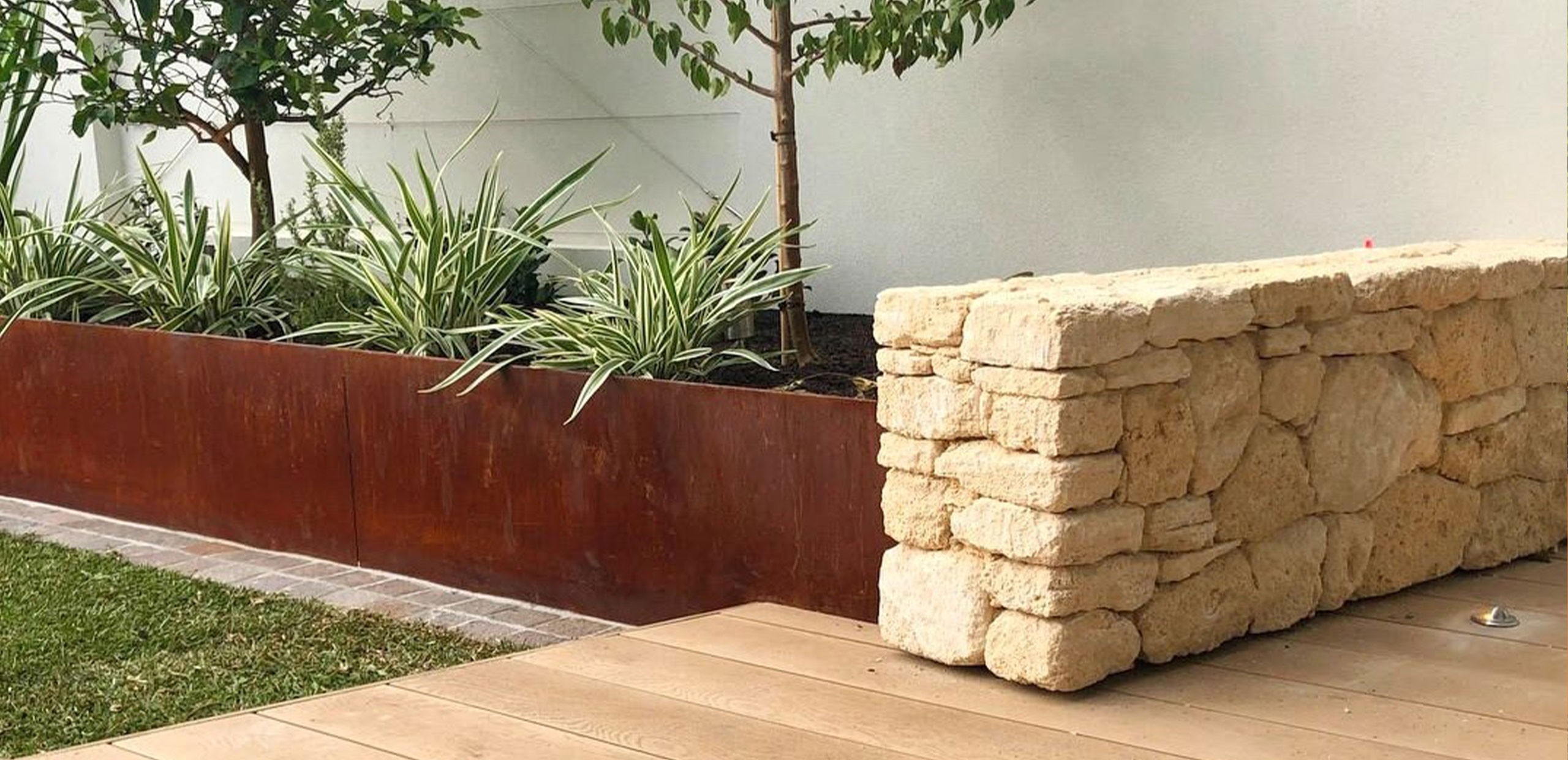
Raised beds are one of the most practical upgrades you can make to a UK garden. They give you complete control over soil quality, improve drainage in the heavy clay and wet conditions that affect much of Britain, and make planting and harvesting far easier on your back. Whether you have a small urban back garden, a sloping plot, or a wide-open space, raised beds work with almost any layout.
Steel raised beds (particularly those made from corten steel or galvanised steel) are becoming the material of choice for gardeners and landscapers across the UK. They’re durable, low maintenance, and have a clean contemporary look that works well with both formal and naturalistic planting styles.
If you’re looking for a modular steel raised bed system that’s designed to handle curves, straight lines, and custom shapes without requiring custom fabrication, the Straightcurve range is worth a look.
Quick Summary
This guide covers everything you need to know about raised beds in the UK: the best materials (including corten steel and weathering steel), how to choose the right size and shape for your garden, a step-by-step DIY build process, and practical maintenance advice suited to the UK climate. If you’re comparing steel vs timber, or trying to decide between Flex, Rigid, and Zero-Flex edging panels, you’ll find the answers here.
Choosing the right material for your raised beds
Selecting the right material comes down to three things: how long you want the beds to last, how much maintenance you’re willing to do, and the look you’re after. Here’s a straightforward comparison of the main options available to UK gardeners.
Timber remains popular because it’s familiar, but it does rot (particularly in the UK’s wet winters) and treated timber introduces chemicals into the soil over time. Steel outperforms it on both longevity and low maintenance, and in the case of weathering steel, it develops a character that many gardeners find more attractive than timber or plain metal.
For a detailed breakdown of what affects how long steel raised beds last across different UK soil types and conditions, see our dedicated lifespan article.
Pro Tip
Steel vs timber for UK conditions
The UK’s wet winters accelerate timber rot, particularly at soil level where moisture is constant. A timber raised bed that lasts 8 years in a drier climate may fail in 5 in a wet UK back garden. Steel raised beds (especially galvanised) don’t share this vulnerability. If longevity matters, steel is the more reliable choice for UK conditions.
Corten steel and weathering steel raised beds
Corten steel (also called weathering steel) is one of the most popular materials for raised beds among UK landscapers and garden designers. It develops a distinctive warm rust-coloured patina as it oxidises, which stabilises over time and acts as its own protective layer. It’s worth understanding a few things before you buy.
How corten and weathering steel work
Corten is a trade name; weathering steel is the material category. They refer to the same thing: a low-alloy steel that forms a stable, tightly-adhered patina rather than flaking rust. The patina develops through repeated wet/dry cycles, and the UK’s temperate maritime climate, with its reliable seasonal rainfall and drying periods, is well-suited to patina development. This is genuinely good news for UK gardeners: corten performs predictably here.
The patina develops over the first 12–24 months of exposure. During this period, some orange-brown run-off is normal. Position your beds with this in mind, away from light-coloured paving or paths where staining would be visible.
Weathering steel is not rust-resistant. It manages oxidation through controlled patina formation. The distinction matters: in coastal locations within approximately 2km of the coast, where salt air can affect patina formation, weathering steel benefits from additional care, see our Product Care and Longevity Guides for the specific steps that make the most difference. For those locations where lower maintenance is a priority, galvanised steel raised beds are a practical alternative.
For most UK inland and suburban gardens, weathering steel raised beds are an excellent long-term option. Straightcurve offers weathering steel raised bed panels in three heights (240mm, 400mm, and 560mm) in both Flex (for curves) and Rigid/Zero-Flex (for straight lines) configurations.


Pro Tip
Weathering steel near the coast
If your garden is within roughly 2km of the coastline, salt air can affect how weathering steel develops its patina. With the right care steps, covered in our Product Care and Longevity Guides, it can still perform well. For those who prefer a lower-maintenance option in coastal conditions, galvanised steel raised beds are a practical alternative with the same clean installation system.
How to choose the right size and shape
Height
The height you choose determines both how the beds function and how they look. Three heights are available in the Straightcurve range:
- 240mm, a practical low profile, suitable for most vegetables, herbs, and flowers. Sits naturally in the garden without dominating.
- 400mm, the most popular choice. Deep enough for root vegetables and most perennials. Also reduces bending considerably, which matters for accessibility.
- 560mm, a near bench-height bed. Ideal for anyone with limited mobility or back issues. Also works well as a visual feature or divider in larger gardens.
Beds wider than approximately 1.2m become difficult to reach across without stepping in. Keep this in mind when planning, you should be able to reach the centre comfortably from either side without compacting the soil.
Shape: curved vs straight
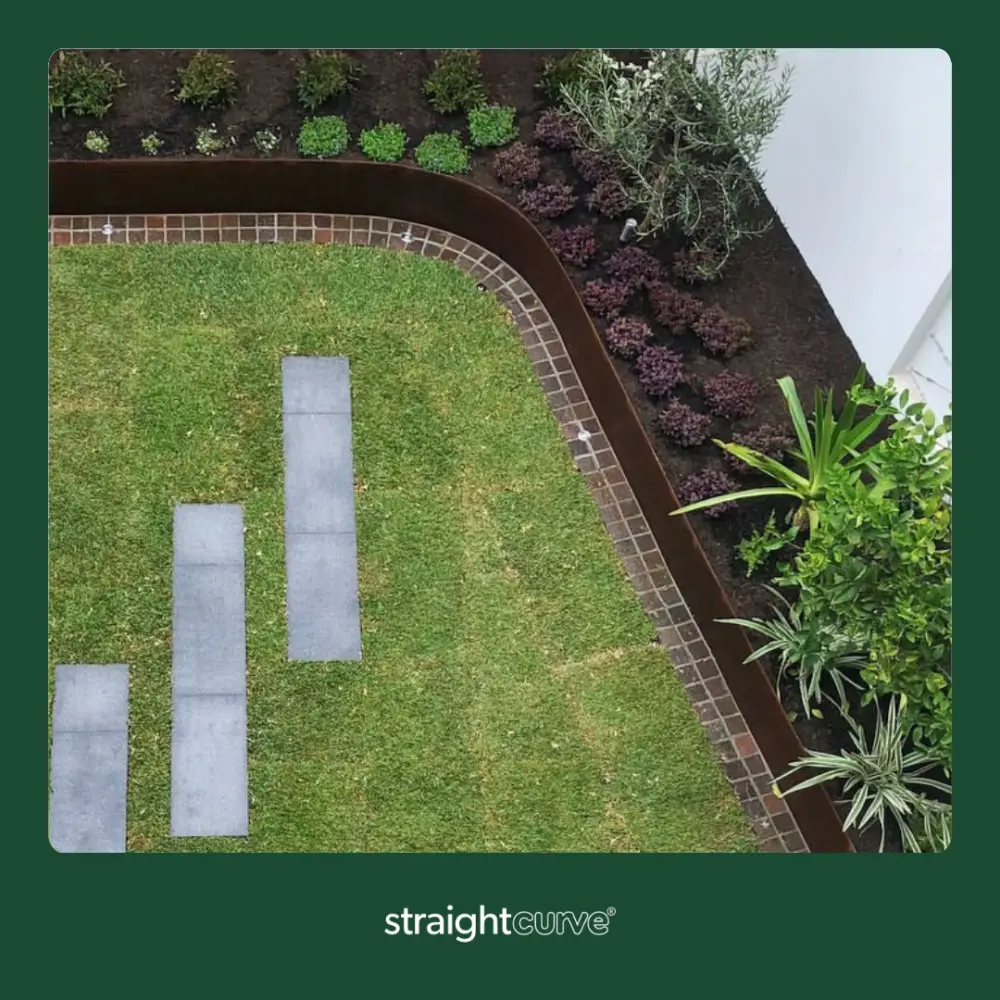
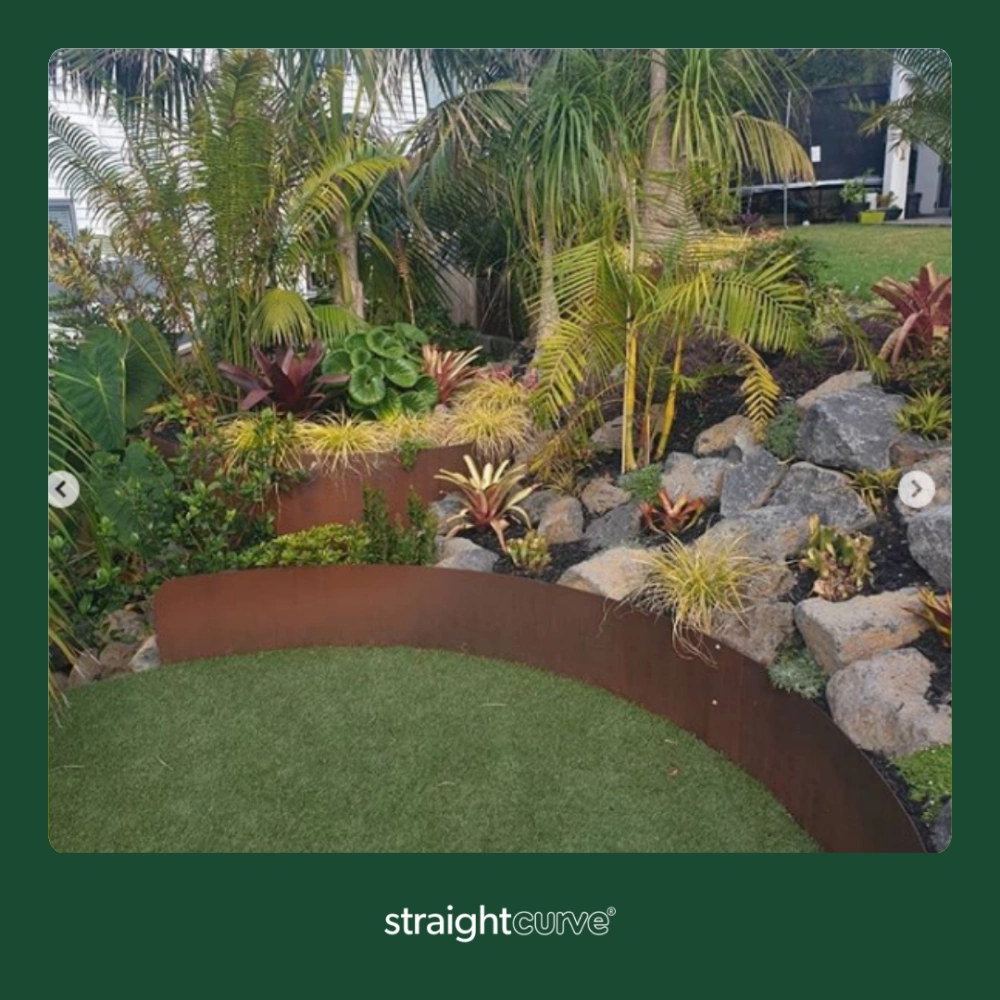
Raised beds don’t have to be rectangular. The Straightcurve Flex series allows you to shape panels by hand on site, creating smooth curves, kidney shapes, free-form organic layouts, and circular beds. The Rigid and Zero-Flex panels are designed for straight lines and formal, structured layouts. Flex and Zero-Flex panels are join-compatible, so you can combine curved and straight sections within the same project.
Pro Tip
Mixing Flex and Zero-Flex
Flex and Zero-Flex panels connect directly to each other, which means you can run a curved front edge into a straight back run without any awkward transitions. Useful for beds that follow a curved lawn edge but sit against a straight fence line.
How to build your own raised beds: a step-by-step guide
Building your own steel raised beds with a modular system like Straightcurve is a straightforward DIY project. No welding, no specialist tools. Here’s the process.
What you’ll need
Panels (Flex, Rigid, or Zero-Flex in your chosen height), connector plates, galvanised fixing spikes (typically included), a mallet, a measuring tape, a spirit level, and landscape fabric or cardboard for weed suppression.
Step 1: Mark out the area
Use stakes and string to mark the footprint of the bed. For curved beds, use a garden hose to lay out the shape before committing. Consider access, leave enough space around the bed to kneel, work, and move a wheelbarrow if needed.
Step 2: Prepare the ground
Clear the area of grass and weeds. Lay down cardboard or landscape fabric inside the bed footprint to suppress weeds from below. This is especially important in UK gardens where perennial weeds like bindweed and couch grass are persistent.
Step 3: Assemble the frame
Join panels using the internal connector plates. For curved sections, flex the Flex panels to your desired curve, they shape by hand with no tools. For straight runs, use Rigid or Zero-Flex panels and ensure corners are square. The Straightcurve system uses a panel-to-panel click connection so joins are clean and discreet.
Step 4: Anchor the frame
Drive the galvanised fixing spikes through the integrated feet into the ground using a mallet. For taller beds (400mm or 560mm), use bracing accessories if the bed will hold a significant volume of soil, the load increases considerably with height.
Step 5: Fill the bed
Layer the bottom with coarse material (gravel or grit works well) to promote drainage. In UK gardens with clay-heavy soil beneath, this is worth doing even for lower beds. Fill with a nutrient-rich soil mix: a blend of topsoil, compost, and a quality growing medium. Leave 30–50mm of space at the top to prevent soil washing over the edge when watering.
Step 6: Plant and mulch
Plant seeds or transplants according to their spacing requirements. Apply a layer of mulch to retain moisture and suppress weeds, but avoid packing mulch directly against the steel panels, as sustained direct contact with organic material accelerates corrosion at the soil line.
For a more detailed guide including planning, soil mixing, and design variations, see our complete raised beds guide.


Filling and maintaining your raised beds
Getting the soil mix right
The quality of your soil mix determines how your plants perform. Unlike growing in the ground, you have full control here, use it.
For vegetables and herbs, combine roughly equal parts topsoil, garden compost, and a quality multipurpose growing medium. Good drainage is as important as fertility, if the mix compacts and holds water, root health suffers. For flowers, a lighter, well-drained mix suits most species; adjust pH and nutrition to the plants you’re growing.
A simple layering technique: place coarse material (grit or gravel) at the base, then fill with your soil mix. This prevents the drainage layer from mixing with the growing medium over time.
Maintenance through the UK seasons
- Spring (March–May): Top up with compost as the season begins. This is your main opportunity to replenish nutrients lost over winter.
- Summer (June–August): Raised beds drain faster than in-ground beds, water more frequently during dry spells. UK summers are becoming drier; a drip irrigation system or soaker hose is worth considering for vegetable beds.
- Autumn (September–November): Clear spent crops. Add a green manure or mulch layer before winter to protect soil structure.
- Winter (December–February): UK ground frost can heave shallow-rooted plants out of the soil and damage tender root systems. Use cloches or fleece on beds with perennial plantings during hard frosts. The steel itself is unaffected by frost.
Annual care for the steel
Check around soil level annually, this is the most vulnerable zone for any steel edging. Ensure mulch or compost is not packed directly against the panel surface. Inspect fixing spikes to confirm the frame hasn’t shifted through frost heave. No painting, sealing, or coating is required for weathering steel or galvanised panels under normal conditions.
Buying raised beds: what to look for
The UK market for raised beds has grown considerably, you’ll find options at every price point, from flat-pack timber kits at DIY stores to premium modular steel systems. Here’s what to prioritise.
- Material quality first: Thin steel gauge will bend under soil pressure and corrode faster. Look for panel thickness and check whether the steel grade is specified. Straightcurve panels are made from quality-tested weathering or galvanised steel with certified composition, not generic thin-gauge sheet.
- Modular vs custom-fabricated: Custom-fabricated steel beds are expensive to buy, transport, and modify if your plans change. A modular system that panels together on site gives you the same result at a fraction of the cost, with the flexibility to reconfigure later.
- DIY kits vs pre-built: Pre-built beds are convenient but limit your options on size and shape. DIY kits from a modular system like Straightcurve let you design to your plot, not the other way around.
Where to buy steel raised beds in the UK
Straightcurve raised beds are available through specialist garden suppliers and landscape trade stockists across the UK. Request a price list to find your nearest stockist and get full product and sizing details, or shop raised beds online.
Common questions about raised beds UK
What is the best material for raised beds in the UK?
Steel (either corten weathering steel or galvanised steel) is the most durable and low-maintenance choice for UK raised beds. Timber is popular but rots faster in the UK’s wet winters, typically requiring replacement within 5–10 years. Corten weathering steel develops a stable rust patina that suits the UK climate well, and galvanised steel offers excellent longevity in coastal or high-moisture conditions. Both require minimal upkeep compared to timber. Our Longevity Guide and Product Care Guide cover detailed guidance on material selection and care in coastal and challenging conditions.
How deep should raised beds be?
For most vegetables and herbs, 240–400mm is sufficient. A 400mm bed provides good root depth for the majority of crops including root vegetables, and significantly reduces the bending required during planting and harvesting. A 560mm bed is near bench height and suits anyone with limited mobility or back concerns. Avoid going deeper than necessary, it increases the volume of soil mix required without proportional benefit for most plants.
How long do steel raised beds last?
In typical UK inland garden conditions, weathering steel raised beds perform well beyond 10 years with proper care. Galvanised steel lasts longer still, typically 15+ years. The main factors affecting lifespan are sustained contact with organic materials at soil level, drainage quality, and proximity to the coast. Avoid packing compost or mulch directly against the panels and ensure good drainage around the frame to maximise service life.
Do weathering steel raised beds stain nearby paving?
During the initial patina development phase (typically the first 12–24 months after installation) weathering steel produces orange-brown run-off when wet. This can stain light-coloured paving, gravel, or rendered walls. Position beds with this in mind or use a gravel buffer zone around the base. Once the patina stabilises, run-off reduces significantly.
Can I install raised beds on a slope?
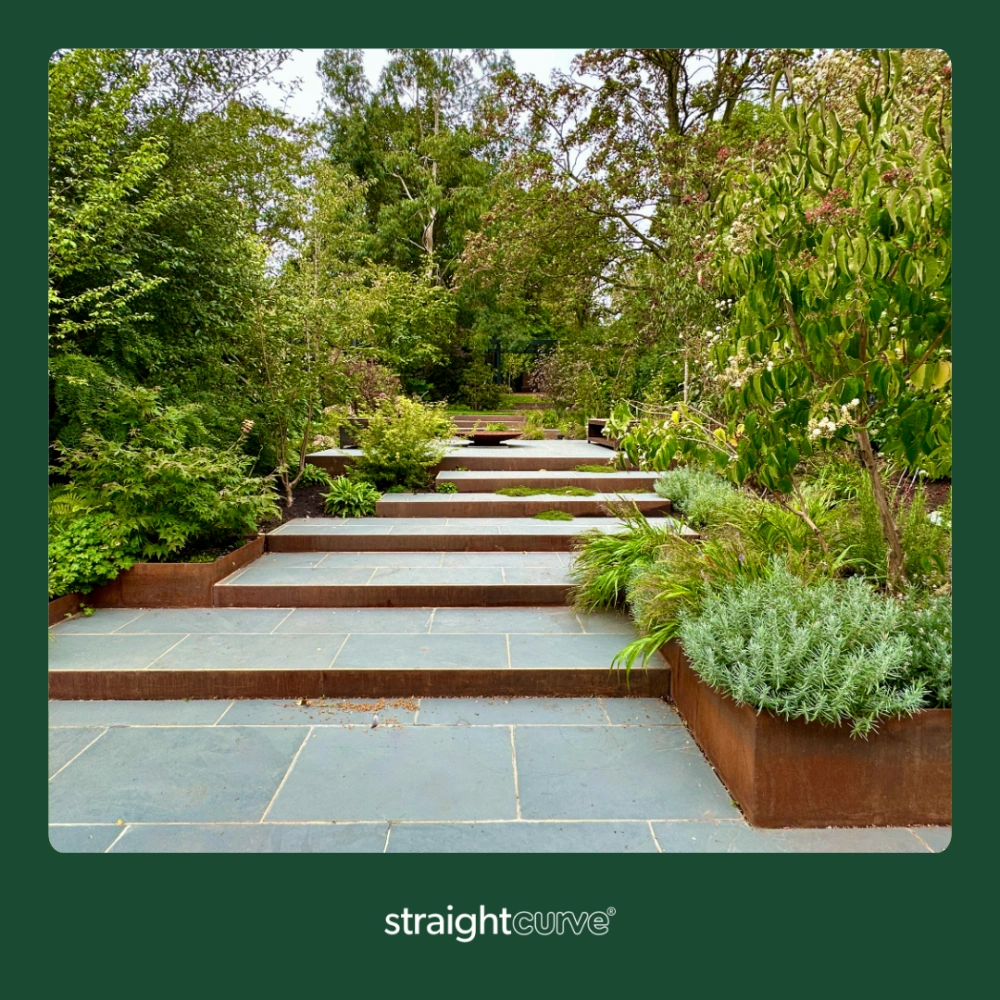
Yes. Straightcurve panels can be stepped or tiered to follow a sloping site, creating a terraced effect that retains soil while adding structure and visual interest. This is one of the more popular applications in UK gardens with uneven terrain. The modular system adapts to any gradient: no custom fabrication needed. For sloping garden ideas and the three main approaches — terraced raised beds, retaining edges, and stepped plantings — the application guide walks through each option.