- 01 Choosing the right garden edging material
- 02 Quick-reference comparison table
- 03 Brickwork
- 04 Rocks and Gabions
- 05 Block or Stonework
- 06 Corten and Weathering Steel Garden Edging
- 07 Corten vs weathering steel: same thing
- 08 Galvanised Steel Edging
- 09 Timber Sleepers
- 010 Poured Concrete Edging
- 11 Aluminium Edging
- 12 Recycled Plastic and Composite Edging
- 13 Natural Edging: Woven Willow, Log Rolls and Bamboo
- 14 Think in terms of lifetime cost, not upfront cost
- 15 Common questions about garden edging
Choosing the right garden edging material
Choosing garden edging is one of those decisions that’s easy to underestimate. The material you pick determines how much maintenance you’ll do for years ahead, how well your borders hold up through wet winters and ground movement, and whether the finished result looks the part or starts to deteriorate after a season or two.
The ten options below cover the full range, from corten steel and weathering steel at the durable end of the spectrum, to natural materials that offer short-term charm at a lower upfront cost. If you want the full picture — materials, product types, installation, and what to look for when buying — the complete guide to garden edging covers every element in depth. Each has a genuine place in the right garden. The goal here is to give you an honest picture of what each material actually delivers, so you can match the right option to your situation.
Quick Summary
This guide compares ten of the most popular garden edging materials, brickwork, rocks and gabions, stone blocks, corten and weathering steel, galvanised steel, timber sleepers, poured concrete, aluminium, recycled plastic, and natural edging. For each option you’ll find practical pros, cons, and a realistic lifespan. Steel edging (both corten (weathering steel) and galvanised) consistently outperforms other materials on longevity and low maintenance, though the right choice depends on your soil, coastal proximity, and garden style. A quick-reference comparison table follows immediately below.
Quick-reference comparison table
Before diving into the detail, here’s an at-a-glance summary of all ten options. Lifespan figures assume correct installation and reasonable conditions. Aggressive soils, poor drainage, or coastal proximity will reduce these for any material.
Corten / weathering steel: 20–50+ years. Best for modern, naturalistic, and contemporary gardens. DIY-friendly. Cost: ££££
Galvanised steel: 20–40 years. Best for coastal gardens, contemporary designs, and clean lines. DIY-friendly. Cost: £££
Brickwork: 20–50 years. Best for traditional, cottage, and formal gardens. Requires some skill. Cost: ££
Timber sleepers: 10–20 years. Best for naturalistic, rustic, and raised borders. DIY-friendly. Cost: ££
Poured concrete: 20–30 years. Best for sweeping curves and mowing strips. Requires some skill. Cost: £–££
Stackable stone blocks: 30+ years. Best for slopes, retaining, and structured gardens. DIY-friendly for low walls. Cost: £££
Natural rock / gabions: Indefinite. Best for informal, wildlife-friendly, and naturalistic gardens. DIY-friendly. Cost: ££
Aluminium: 20–30 years. Best for low-profile, coastal, and discreet edging. DIY-friendly. Cost: £££
Recycled plastic / composite: 10–20 years. Best for budget-conscious builds and wet conditions. DIY-friendly. Cost: £
Natural edging (willow, log rolls, bamboo): 2–5 years. Best for cottage, informal, and temporary use. DIY-friendly. Cost: £
Brickwork
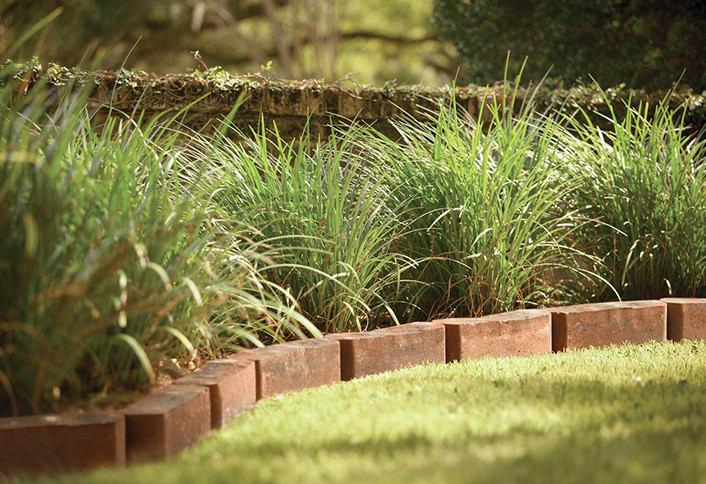
Brickwork is a popular choice that ties in well with a traditional or cottage garden look. Bricks are quite adaptable, suiting a formal, geometric layout or looking well in irregular, creative patterns. The latter can include curves or staggers, such as the so-called domino or sawtooth style, where mismatched bricks are set on the diagonal. Bricks can also be laid as soldiers (standing up on edge) or sailors (flat on their side), giving you genuine flexibility in the finished look.
Reclaimed bricks are easy enough to source from salvage yards and builders’ merchants across the UK. If you’re setting them on a tamped base of sharp sand without mortar, be prepared for some movement over time, particularly through frost cycles. For a solid, lasting result, a concrete footing is the better approach and opens up more options. Bricks set slightly higher than the soil level on a concrete footing can even serve as a mowing strip, allowing mower wheels to run along the edge and saving you trimming time over many years. If you have an invasive lawn grass like couch grass or Yorkshire fog, pay close attention to creating an unbroken root barrier beneath the edging.
Pros:
- Wide range of colours, sizes, and laying patterns
- Suits both formal and informal garden styles
- Relatively affordable material cost
- Reclaimed bricks add character and sustainability
Cons:
- Labour-intensive installation, especially for curved layouts
- Can crack in areas with persistent ground frost or significant ground movement
- Won’t stop invasive root systems without an additional barrier beneath
- Mortar joints may need repointing over time
Rocks and Gabions
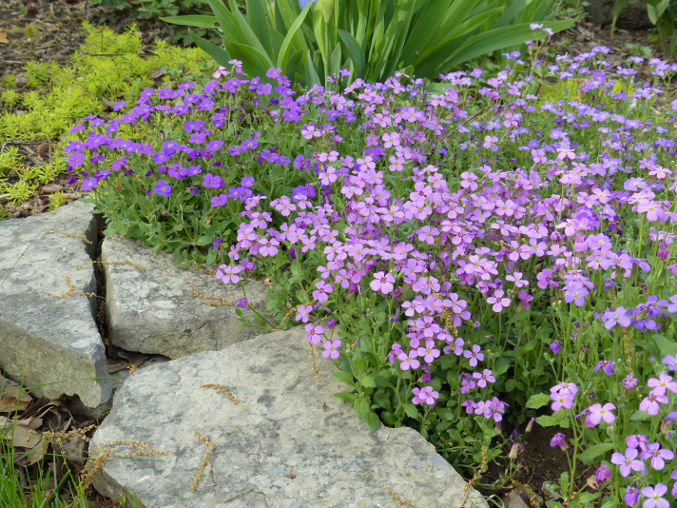
Working with loose feature rocks is a more involved and creative approach than most other garden edging options. The key is matching rocks on shape and colour to create a natural-looking border. Set them firmly on a base of crushed stone so they sit proud rather than sinking into the bed soil. This style of edging lends itself to an informal, winding look, and inter-planting can soften the overall feel further. Thyme, hardy geraniums, or sempervivums are well-suited gap fillers for this kind of naturalistic border.
Before committing to loose rock edging, check what’s available at your local landscape yard, stone character varies enormously by region, and it’s worth seeing what you can get before deciding on a style.
Gabions offer a more structured alternative. These wire-mesh cages filled with stone allow for less exacting rock selection, since the effect comes from the mass rather than individual feature stones. You can fill them with recycled building materials, broken bricks, or mixed stone to create a surprisingly attractive edge or low wall. A well-constructed gabion can even double as informal seating if capped with timber.
Pros:
- Natural, organic look that blends into the landscape
- Well-suited to interplanting and wildlife-friendly gardens
- Rocks don’t rot, rust, or degrade
- Gabions allow creative fill choices and work at various heights
Cons:
- Time-consuming and requires a good eye for rock selection
- Heavy to transport and position
- Loose rocks can shift on slopes or in heavy rain
- Weeding between loose rocks can be fiddly and ongoing
Block or Stonework
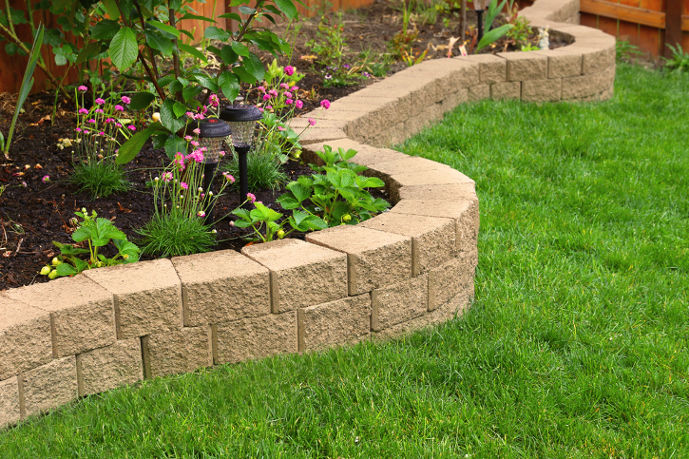
Stackable stone blocks offer a step up in formality and structure. They’re particularly well-suited to sloped sites where you need to retain soil as well as define a border. Many easy-stack systems are available with a good range of colours and textures, and genuinely work as a DIY project for low-height applications.
The main variable is height. Low single-course stacks are straightforward to install and adjust on-site. As walls get taller, fixings and structural requirements increase. In the UK, retaining walls over approximately one metre generally require planning permission, worth checking with your local authority before you start if height is part of the plan.
For something more individual, a dry-stone wall built by a skilled stonemason produces a finish that’s genuinely distinctive. It’s an investment, but one that reads as craftsmanship rather than product, and tends to look better over time rather than worse.
Pros:
- Excellent for retaining soil and mulch on sloped sites
- Wide variety of pre-made block styles, colours, and textures
- Easy-stack systems are genuinely DIY-friendly for low walls
- Custom stonework creates a one-of-a-kind, premium look
- Extremely durable and long-lasting
Cons:
- Block walls over 500mm typically require structural consideration and may need planning consent
- Heavy materials mean higher transport costs
- Custom stonemason work is expensive
- Difficult to adjust or relocate once installed
- Mortar-set stonework may crack with ground movement
Corten and Weathering Steel Garden Edging
Corten steel and weathering steel refer to the same material, a low-alloy steel that develops a rust-coloured patina when exposed to weather. For the specifics of how long steel garden edging lasts — and how corten compares to galvanised steel across different UK environments — the lifespan guide maps the variables against realistic timelines. That patina isn’t ordinary rust: it forms a dense, adherent layer that significantly slows further corrosion, unlike standard mild steel where rust continues to eat into the metal. The result, in the right conditions, is an edging material that develops character over time rather than deteriorating.
The warm, earthy tones of corten and weathering steel make it a natural companion to lush planting, naturalistic garden designs, and contemporary landscaping alike. Modern flexible profiles mean it can follow smooth, organic curves on-site without specialist tools, making it a practical DIY option as well as a favourite of professional landscapers.
The UK’s temperate maritime climate is actually well-suited to weathering steel patina development. The regular wet-dry cycle that characterises British weather is exactly the condition the material needs to form and maintain its protective surface layer, something worth noting if you’ve seen concerns elsewhere about steel edging performing poorly in wet climates.
One important caveat for UK gardens: in coastal locations within approximately 2km of the coast, or areas with high airborne salt deposition, patina formation can be affected and the steel will need more care to perform well. For coastal gardens, galvanised steel is worth considering as an alternative, both options are available in the Straightcurve range. See our Product Care and Longevity Guides for care steps that extend weathering steel lifespan in more demanding conditions.
Pros:
- Develops a distinctive, self-stabilising patina with no painting or ongoing coating required
- Long lifespan, 20+ years in well-managed conditions, potentially much longer in ideal inland environments
- Flexible profiles allow smooth, flowing curves for natural landscapes
- Won’t crack, splinter, rot, or shift once installed
- UK climate (wet-dry cycling) supports good patina development
- Increasingly DIY-friendly with modern modular connection systems
Cons:
- Higher upfront cost compared to materials like timber or plastic
- Rust run-off can stain adjacent paving, concrete, or light-coloured surfaces during the initial weathering phase, typically the first 6–12 months
- Requires more care in coastal gardens or high-chloride environments, galvanised steel is an alternative for those locations
- Thinner gauges can dent during installation if not handled with care
Pro Tip
Corten vs weathering steel: same thing
“Corten” is a brand name for a specific weathering steel product. You’ll see both terms used interchangeably in garden edging, they describe the same class of material and perform the same way. When buying, the key spec to check is the alloy composition, not the brand name.
Galvanised Steel Edging
Galvanised steel edging shares many characteristics with corten and weathering steel (clean lines, strength, flexible profiles) but with a zinc coating that provides a different kind of corrosion protection. Rather than developing a patina, the zinc layer acts as a sacrificial barrier, corroding slowly in place of the underlying steel.
The finish tends to lighten the visual weight of a garden edge, a clean, silver-grey that suits modern, minimalist, and coastal-style gardens. Over time, galvanised steel weathers to a matte grey that sits quietly in the landscape without drawing attention.
For coastal UK gardens or areas with consistently wet or salt-affected conditions, galvanised steel is the recommended choice over weathering steel. The zinc coating offers better resistance in these environments, though it is not indefinitely immune to chloride attack, closer to the coast, coating weight matters and ongoing maintenance becomes more important.
Our Longevity Guide and Product Care Guide cover the specific steps that make the most difference in coastal and challenging environments.
Pros:
- Zinc coating provides good corrosion resistance, particularly in damp conditions
- Clean, contemporary appearance that suits modern gardens
- Preferred choice for coastal gardens where weathering steel is unsuitable
- Flexible profiles allow curved and organic layouts
- Long lifespan, 20–40 years depending on coating weight and conditions
- No rust staining on adjacent surfaces
Cons:
- Zinc coating can be scratched during installation, creating localised points where corrosion can develop
- Doesn’t develop the warm patina aesthetic of corten
- Galvanising will eventually wear, particularly in acidic soils or persistently wet environments
- Higher upfront cost than timber or plastic options
Timber Sleepers
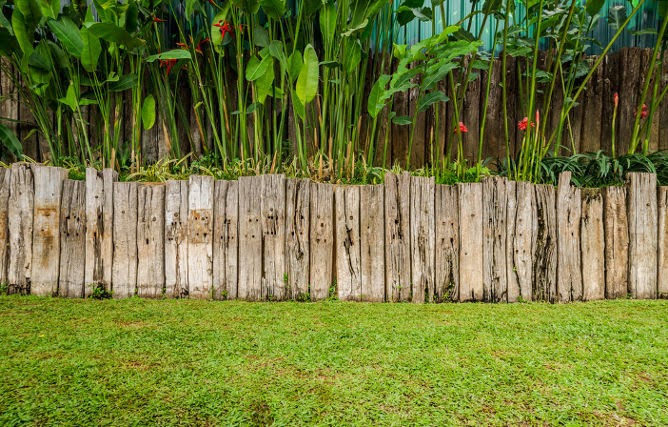
Timber sleepers offer a warm, substantial garden edge that works well across a range of styles, from rustic and naturalistic to more structured raised bed designs. Done well, they look genuinely good, and they’re one of the more accessible DIY options: easy to cut on-site with basic tools, and straightforward to install, particularly with steel retaining uprights that allow clean connection between lengths.
The critical variable is timber species. In the UK, oak and sweet chestnut are among the best naturally durable choices for ground-contact use, both hold up well to moisture and don’t require preservative treatment. Larch is a more affordable option and performs reasonably well in garden conditions. Railway sleepers (reclaimed) are widely used and can add character, though species and preservation treatment vary, so check before buying, CCA-treated (arsenic-treated) sleepers should not be used near edible garden beds.
Maintenance is worth factoring into your thinking. Timber will eventually rot in ground contact, the question is when, not if. Even durable species typically have a lifespan of 10–20 years in UK conditions. Oiling or treating periodically will extend this and keep the appearance looking intentional rather than weathered.
Pros:
- Warm, natural aesthetic that suits a wide range of garden styles
- Relatively straightforward to install for a DIY project
- Can be stacked, stood vertically, or used as single-height borders
- Reclaimed sleepers offer character and sustainability
- Easy to cut and shape on-site with basic tools
Cons:
- Will eventually rot in ground contact, typical lifespan 10–20 years in UK garden conditions
- Can be susceptible to wet rot in persistently damp conditions, which is common in UK gardens
- CCA-treated (arsenic-treated) sleepers should not be used near edible gardens
- May warp, crack, or split over time, particularly in exposed sites
- Quite heavy, a standard hardwood sleeper can weigh 60–80kg
- Ongoing maintenance (oiling or treating) required to preserve appearance
Poured Concrete Edging
Poured concrete gives you complete control over shape, height, and profile. Because it’s placed as a liquid, it fills virtually any curve. It can then be finished smooth, textured, stamped, or coloured to match your design. This is a popular option for creating integrated mowing strips, a concrete edge set at the right height allows mower wheels to run along it, eliminating the need for a separate trimming pass.
Closely related is machine-extruded concrete edging (often called continuous concrete kerbing). This is a professional service that produces a consistent profile along the entire run. DIY poured concrete is possible for smaller runs, though results depend heavily on preparation, shuttering, and finishing skill.
The main long-term risk is cracking. UK soils (particularly clay-heavy soils that expand and contract with moisture) can put pressure on concrete over time. Once cracked, concrete edging is difficult to repair neatly and often requires replacing an entire section.
Pros:
- Completely customisable in shape, colour, texture, and profile
- Follows any curve smoothly with no joints or connections
- Creates a permanent, solid edge that won’t shift
- Can be formed as a mowing strip for low-maintenance lawn care
- Relatively affordable for DIY
Cons:
- Prone to cracking over time, particularly in clay-heavy or frost-affected soils
- Difficult to repair neatly once cracked, often requires full section replacement
- Permanent and very difficult to relocate or adjust
- Professional machine extrusion adds significant cost
- Coloured concrete typically fades unevenly over time
Aluminium Edging
Aluminium edging has grown in popularity as a lightweight, corrosion-resistant alternative to steel. It won’t rust, making it a reliable option in coastal areas, clay-heavy gardens, and anywhere that persistent moisture is a consideration. It’s typically available in thin, flexible profiles that can follow gentle curves on-site.
Aluminium is most commonly used as a discreet, near-invisible edging, separating a lawn from a garden bed at ground level without drawing attention to the material itself. It’s a workhorse rather than a design feature.
Pros:
- Won’t rust or corrode, even in coastal or very wet conditions
- Lightweight and easy to handle during installation
- Flexible enough for gentle curves
- Low-profile options are nearly invisible once installed
- Minimal maintenance
Cons:
- Thin profiles can bend, kink, or buckle under pressure or foot traffic
- Lacks the structural strength of steel, not suitable for retaining soil at any significant height
- Limited design appeal, effective as a functional divider but not a visible feature
- Can be pushed out of position by aggressive root systems or soil movement
- Joins and stakes can become visible over time as soil levels change
Recycled Plastic and Composite Edging
Recycled plastic and composite edging products have improved considerably. Made from post-consumer plastics (often HDPE) they offer an environmentally conscious option that won’t rot, rust, or attract insects. Composite options (blending recycled plastic with wood fibre) can more closely replicate the look and texture of natural timber.
These products come in various forms, flexible rolls, plank-style boards designed to mimic sleepers, and interlocking block systems. Higher-quality products hold their appearance well. Cheaper options tend to look artificial, and all plastic edging is susceptible to UV degradation over time.
Pros:
- Won’t rot, rust, or attract insects
- Made from recycled materials
- Lightweight and easy to cut and install
- Available in timber-look profiles for a more natural appearance
- Unaffected by moisture, suited to persistently wet UK gardens or irrigated beds
- Generally affordable
Cons:
- Can look artificial, particularly cheaper products
- May become brittle and fade with prolonged UV exposure
- Doesn’t have the structural strength for retaining walls or significant height
- Can warp or bow in extreme heat
- Aesthetic quality varies enormously between products
Natural Edging: Woven Willow, Log Rolls and Bamboo
For cottage gardens, informal borders, and wildlife-friendly spaces, natural edging materials like woven willow hurdles, log rolls, and bamboo create a charming, organic look that’s hard to replicate with harder materials. These sit comfortably in gardens that lean into a softer, less structured aesthetic.
Woven willow provides a traditional English cottage feel and is widely available from UK garden centres and willow suppliers. Log rolls offer a rustic border that defines beds without feeling rigid. Bamboo edging, typically sold as panels of canes bound with wire, adds an Eastern or tropical flavour.
The honest trade-off is lifespan. In UK conditions (with persistent rain, winter wet, and soil contact) natural edging materials typically last two to five years before rot and decay become visible. They’re best treated as a short-to-medium-term solution or a seasonal design feature rather than a long-term investment.
Pros:
- Organic, natural look that suits cottage, woodland, and wildlife gardens
- Biodegradable and environmentally friendly
- Generally inexpensive and widely available
- Easy to install
Cons:
- Short lifespan, typically 2 to 5 years before rot and decay set in, often faster in UK conditions
- Provides almost no structural support; won’t retain soil or mulch
- Attractive to insects, fungi, and moisture damage
- Can look untidy as it ages and deteriorates
- Frequent replacement adds to long-term cost and effort
Pro Tip
Think in terms of lifetime cost, not upfront cost
Natural edging replaced every three to four years will typically cost more over a decade than a steel edge installed once. When comparing options, the relevant number is total cost over 10–15 years, not the price per metre today.
Common questions about garden edging
What is the most durable garden edging material?
Steel consistently outperforms other materials on longevity. Corten steel (also called weathering steel) develops a patina that significantly slows further corrosion, in well-managed, inland garden conditions it can last 20+ years with minimal maintenance, and often much longer. Galvanised steel offers comparable durability, particularly in wetter or coastal environments. Natural stone and concrete blocks are also long-lasting. Materials like timber, plastic, and natural edging sit at the shorter end of the lifespan spectrum.
What is the difference between corten steel and weathering steel?
They’re the same material. “Corten” is a brand name for a specific weathering steel product; “weathering steel” is the generic term for the same class of low-alloy steel. Both refer to steel that develops a rust-coloured patina when exposed to weather, a patina that significantly slows further corrosion under the right conditions. You’ll see both terms used interchangeably in garden edging. When buying, check the alloy composition rather than the brand name.
Can I install steel garden edging myself?
Modern flexible steel edging is well-suited to DIY installation. Both corten and galvanised steel products are available with easy-connect modular systems that require only basic tools and no specialist skills. Flexible profiles can be shaped on-site to follow curves and contours. Rigid and thicker profiles (particularly those used for raised bed height applications) are still DIY-friendly but benefit from following installation guidance carefully. Straightcurve’s modular system is designed specifically to give homeowners professional results without needing a landscaper.
What is the cheapest garden edging option?
Natural edging materials (log rolls, woven willow, and bamboo) are generally the cheapest upfront, followed by recycled plastic and DIY poured concrete. However, these options also have the shortest lifespans. A log roll replaced every three years will cost considerably more over a decade than a steel edge installed once. When budgeting for edging, total cost over 10 years is a more reliable figure than price per metre today.
Is timber garden edging a good choice?
Timber sleepers look excellent and offer a warm, natural aesthetic that suits a wide range of garden styles. The key consideration is lifespan, even naturally durable species like oak or sweet chestnut will eventually rot in ground contact, typically over 10–20 years in UK conditions. If you choose timber, select a naturally durable species appropriate for ground contact and avoid CCA-treated sleepers near edible garden beds. Budget for some ongoing maintenance (oiling or treating periodically) and eventual replacement.
What garden edging is best for curves?
Flexible steel edging (both corten and galvanised) is the strongest performer for smooth, flowing curves. Modern profiles can be shaped on-site to follow virtually any line. Poured concrete also handles curves well since it’s formed in place. Aluminium and recycled plastic edging can manage gentler curves. Bricks can achieve curves but require considerably more skill and time. Rigid steel and stone blocks are generally best suited to straight lines and clean angles.
How deep should garden edging be installed?
As a general rule, garden edging should be set at least 75–100mm into the ground for stability. If you’re dealing with an invasive lawn grass (couch grass is a common UK culprit) you’ll want edging and/or an accompanying root barrier to extend at least 150–200mm deep to prevent runners from crossing underneath.
Do I need a concrete footing for garden edging?
It depends on the material. Bricks and stone blocks benefit from a concrete footing for long-term stability. Steel edging is secured with stakes or pins driven into the ground and doesn’t require concrete. Timber sleepers may need steel stakes or uprights but rarely require concrete unless retaining significant soil. Poured concrete edging is, of course, its own footing.
Can garden edging help with lawn maintenance?
Yes, this is one of the most practical benefits of a well-installed edge. Materials like steel, brick on a concrete footing, and poured concrete can be set at a height that allows mower wheels to run along the edge, eliminating the need for a separate hand-trimming pass. Over several years of lawn maintenance, this time saving is substantial.
What garden edging works best on slopes?
Stackable stone blocks, timber sleepers, and steel edging with adequate burial depth all perform well on sloped sites. Flexible steel edging works particularly well for gradual slopes, as it can step down incrementally to follow the gradient. For steeper gradients, a proper retaining wall system is more appropriate than a standard garden edge.
Is recycled plastic edging worth using?
Higher-quality composite products can look genuinely good, particularly those designed to replicate timber. They won’t rot and hold up well in wet UK conditions. However, cheaper products can look artificial, and all plastic edging is susceptible to UV degradation over time. It’s best used as a functional, ground-level divider rather than a visible design feature, and in situations where budget is the primary constraint.