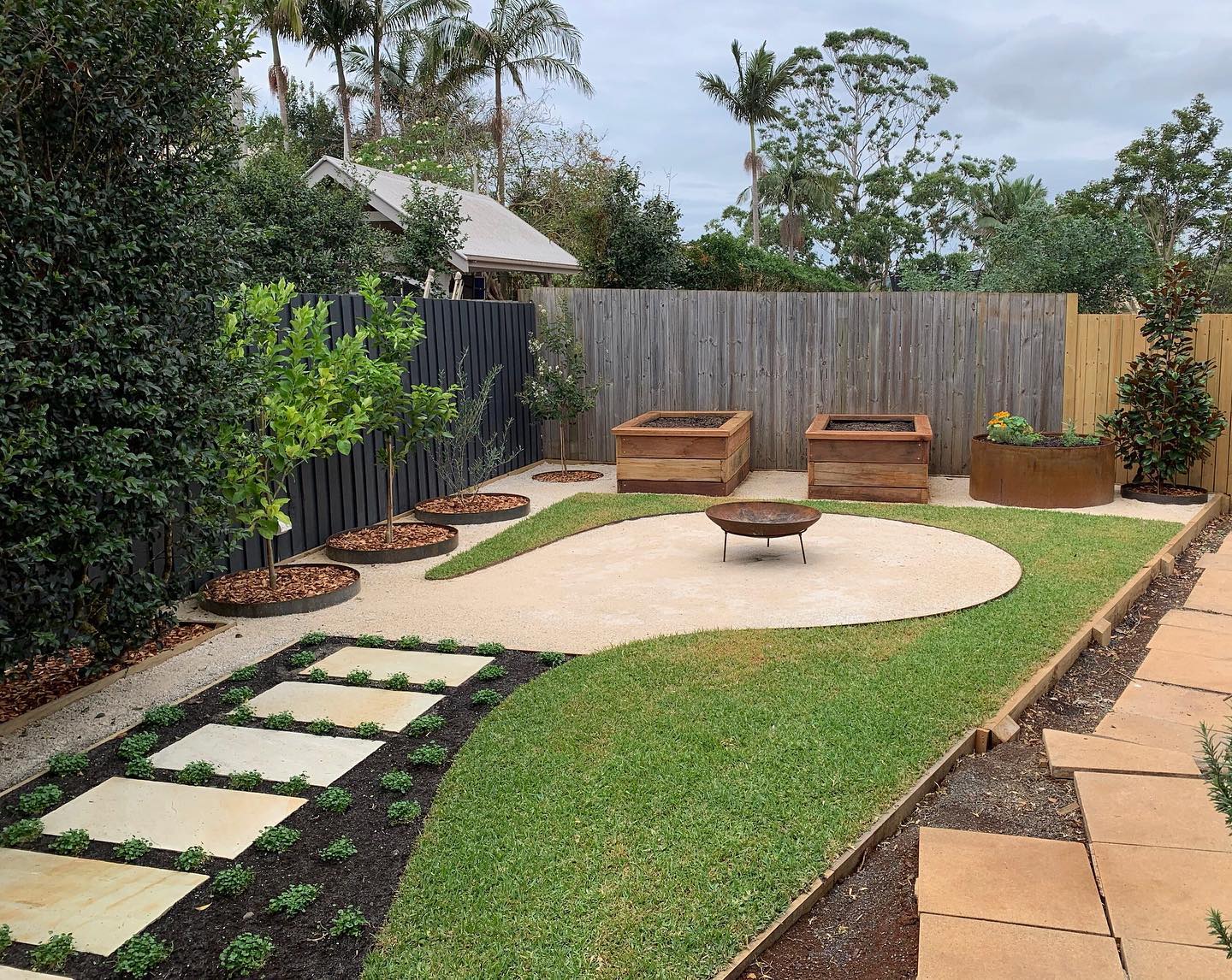
- 01 Why steel garden edging is the low-maintenance choice
- 02 Built to last: galvanised and corten weathering steel explained
- 03 Choose your steel by location, not just look
- 04 Keeping borders crisp: the simple rules
- 05 One install, years of straight edges
- 06 Reduce your garden workload: not just your edging
- 07 Common questions about low-maintenance garden edging
Why steel garden edging is the low-maintenance choice
Most garden edging looks fine on day one. The difference shows up in year two, year five, and year ten, when plastic has cracked, timber has softened, and cheaper metal has buckled or shifted. Steel garden edging is genuinely different, and the reason comes down to the materials.
Straightcurve’s steel garden edging range is available in two finishes: galvanised steel and corten weathering steel (also known as weathering steel). Both are engineered for long-term outdoor use, buried in soil, exposed to rain, and subject to the kind of continuous damp-dry cycle that the UK climate reliably delivers. Neither requires painting, sealing, or seasonal treatment to hold its shape and its edge.
Quick Summary
Steel garden edging (particularly galvanised and corten weathering steel) stays crisp and upright with almost no ongoing maintenance once installed correctly. The key advantages are structural integrity against mower and strimmer contact, clean separation between lawn and beds, and the ability to install raised elements that reduce the need for regular border digging. This article covers how both steel types perform over time, what makes borders stay neat with minimal effort, and how to use edging to reduce your overall garden workload.
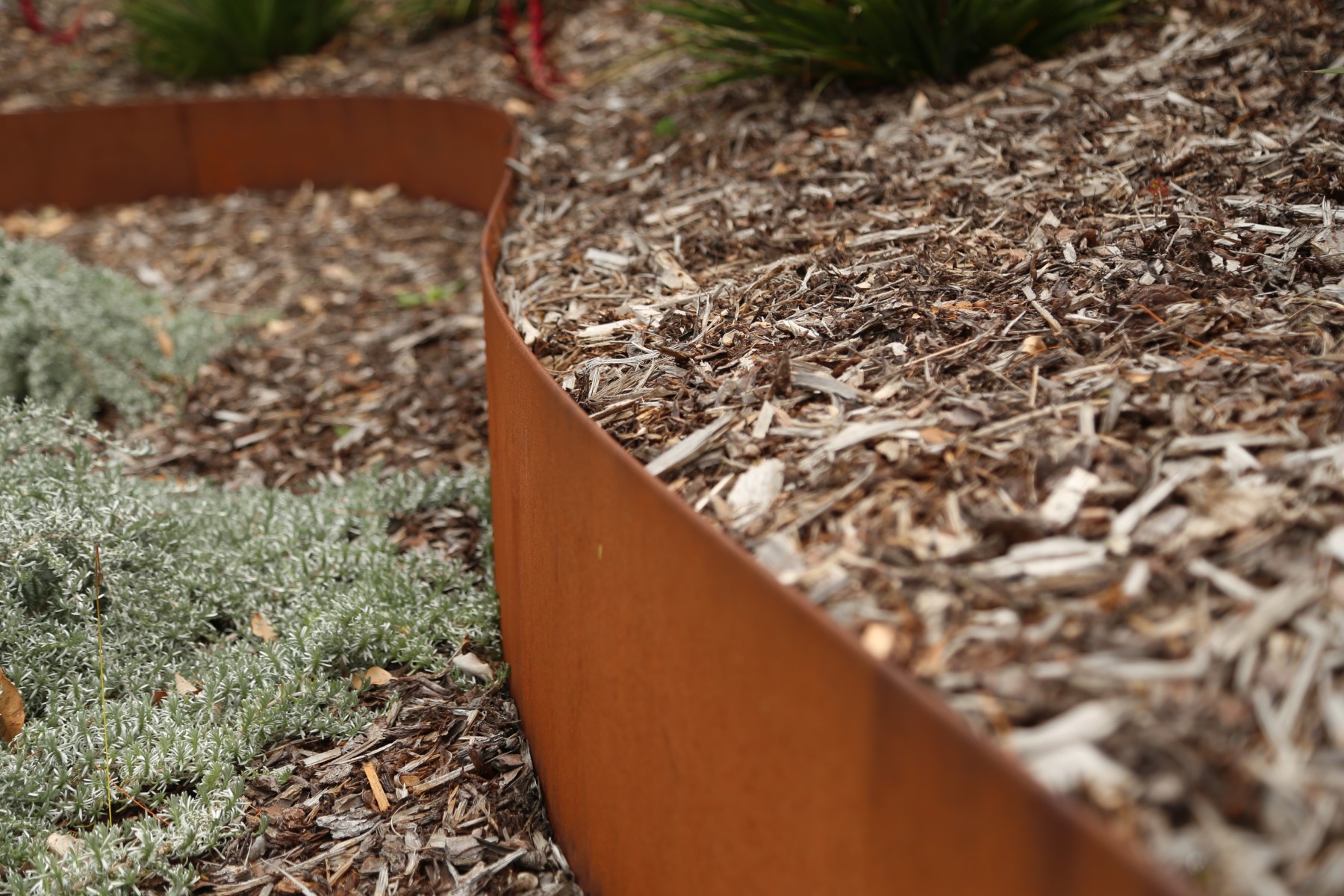
Built to last: galvanised and corten weathering steel explained
Understanding which steel type suits your garden is the most important decision you’ll make, and it’s a straightforward one once you know the basics.
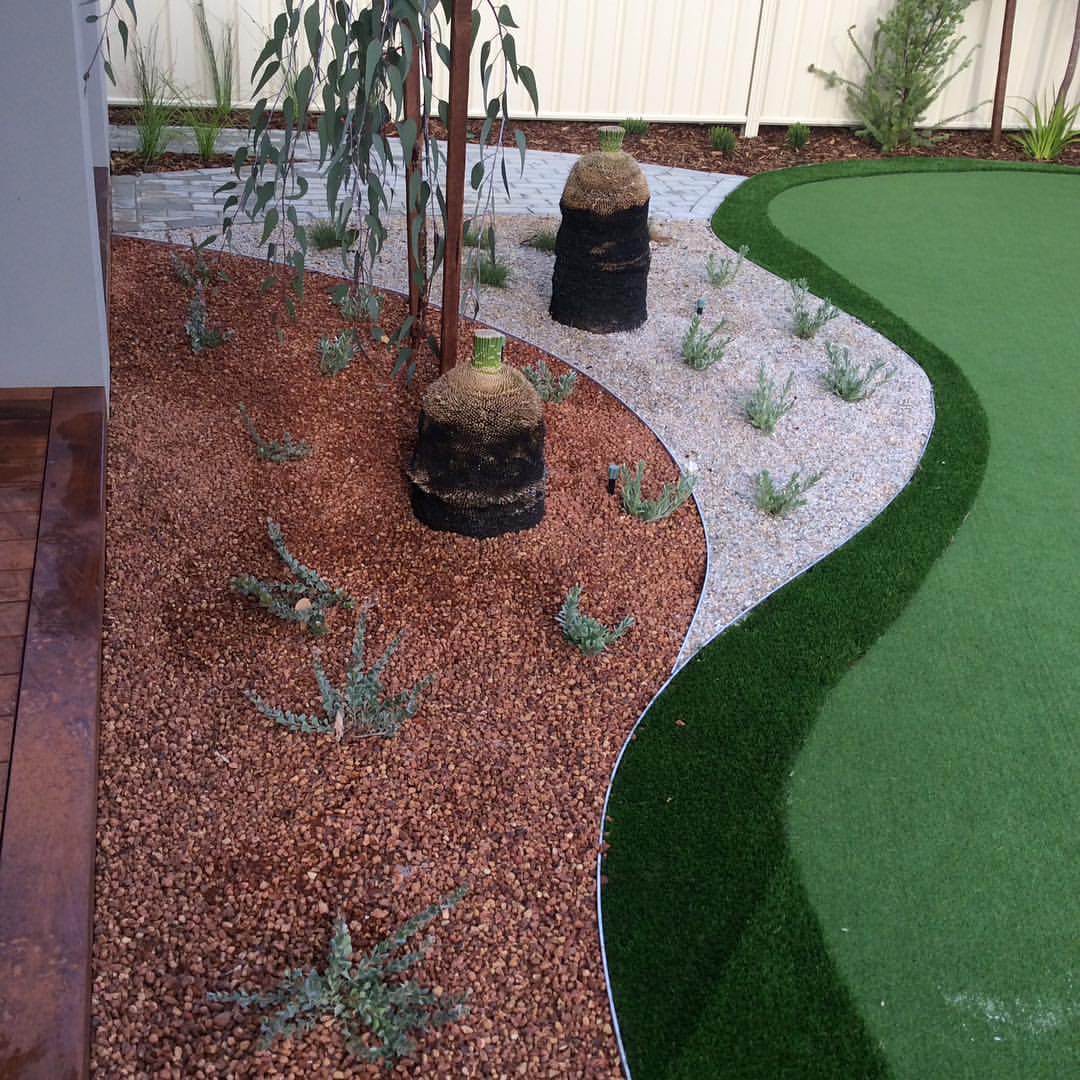
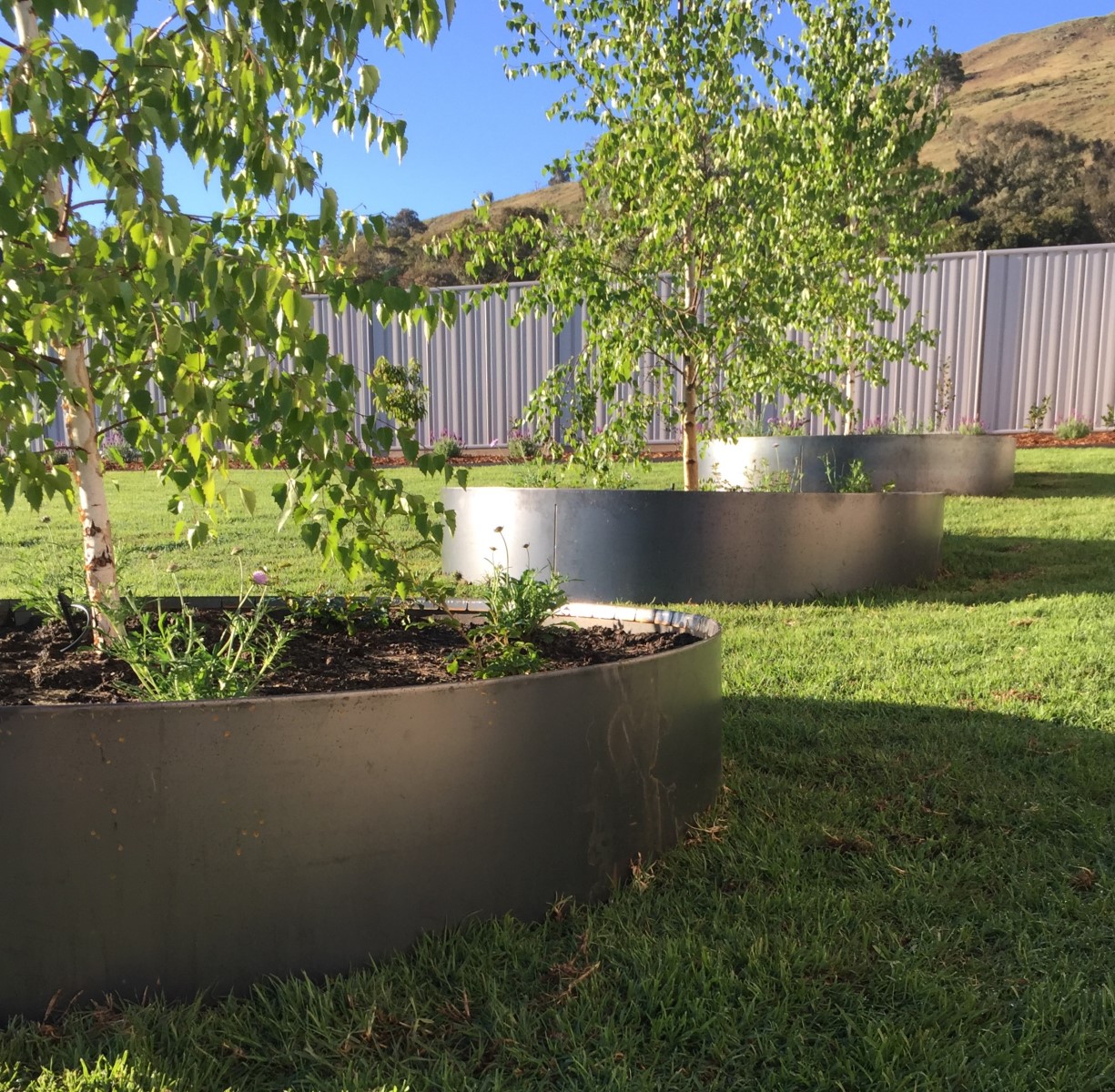
Galvanised steel is coated with a layer of zinc that acts as a barrier against corrosion. It is a practical choice for gardens near the coast (within 2km of the sea), for heavier clay soils, or anywhere drainage is poor. The finish is clean and silver-grey, and it holds its structural integrity without any surface treatment needed after installation.
Corten weathering steel, also called weathering steel, works differently. Rather than a surface coating, it uses a specialised steel alloy that develops a dense, stable rust patina when exposed to the wet-dry cycle of open air. That patina isn’t just a colour: it’s the steel’s own protective layer, slowing further corrosion. The warm, earthy tone it develops suits natural planting schemes, modern landscape designs, and anywhere you want the edging to be a visual feature rather than just a boundary. The UK’s temperate climate (with its regular cycle of rain and dry periods) is actually well-suited to weathering steel patina development.
For coastal gardens within approximately 2km of the sea, or in areas with regular salt-laden air, weathering steel benefits from additional care as salt disrupts the wet-dry cycle the patina depends on. Our Longevity Guide and Product Care Guide cover the specific steps that make the most difference. For those who prefer a lower-maintenance option in these conditions, galvanised steel is a practical alternative.
Pro Tip
Choose your steel by location, not just look
The appearance of corten is appealing, but site conditions should drive the decision. If you’re near the coast, in heavy clay, or in a garden with poor drainage, galvanised is the more durable choice. If you’re inland with reasonable drainage, weathering steel will reward you with a finish that only improves over time.
Keeping borders crisp: the simple rules
Steel edging holds its line without any help from you, but a few habits at installation and in the first season make a meaningful difference to how it looks long-term.
- Install it proud. Setting the edging slightly above the soil level (typically 5–10mm) gives you a clean guide edge for your lawn mower and strimmer. You can run the mower wheel against it without scalping the lawn, and the strimmer has a clear line to follow. This is the feature that eliminates most of the hand-edging work that other materials create.
- Keep soil and mulch levels consistent. As soil compacts and mulch breaks down, buried sections of edging can become exposed. If this happens with weathering steel, sections that formed their patina underground (in damp, enclosed conditions) can behave differently once exposed to air and sun. Keep soil and mulch topped up to maintain the buried depth, and the edging will perform as designed.
- Don’t pack organic material directly against the steel. Compost, wood chips, and bark mulch hold moisture against the steel surface, which interferes with how both steel types age. A small clearance (or a gravel strip between the edging and any organic fill) helps. This applies particularly to weathering steel, which relies on proper wet-dry cycling to develop its patina.
Pro Tip
One install, years of straight edges
Once Straightcurve steel edging is installed and staked correctly, it doesn’t move. There’s no re-pinning each spring, no replacing sections after a hard winter, no re-setting after heavy rain. The structural stability is the maintenance saving, you’re not repairing the edging, you’re just gardening around it.
Reduce your garden workload: not just your edging
The biggest maintenance gain from quality steel garden edging isn’t the edging itself, it’s what you can do with it.
A well-placed steel edge stops grass encroaching into beds. That’s hours of hand-edging and border digging eliminated across a growing season. A clean raised border keeps mulch, gravel, and soil where they belong, no cross-contamination, no annual reset. And when edging defines a clear boundary, mowing becomes faster and more mechanical: straight runs, clean turns, no guesswork.
For gardens where maintenance time is a genuine concern, Straightcurve’s raised garden bed panels take this further. A raised steel border 240mm or 400mm above ground level means no bending for weeding, better drainage from the start, and a defined space that stays contained through even the wettest UK winters. Combined with a layer of weed-suppressing membrane beneath the growing medium, the result is a productive planting area that asks very little of you season to season.
Whether the goal is a neater lawn, a more productive vegetable patch, or simply a garden that looks cared for without constant attention, the right steel edging does more work than most people expect.
Request a price list to see the full Straightcurve steel garden edging range, or browse online and order direct.
Common questions about low-maintenance garden edging
Does steel garden edging need any maintenance?
Very little. Once installed correctly, galvanised and corten weathering steel edging requires no painting, sealing, or seasonal treatment. The main tasks are keeping soil and mulch levels consistent around the edging and avoiding prolonged direct contact between organic material and the steel surface. Weathering steel develops its protective patina naturally over time, you don’t need to do anything to help it along other than let it go through its natural wet-dry cycles.
How long does steel garden edging last?
In favourable conditions (inland, well-drained soil, proper installation) weathering steel can last structurally well beyond a decade. Galvanised steel typically lasts longer still. Lifespan depends on your specific environment: proximity to the coast, soil type, drainage, and contact with organic materials all play a role. Coastal gardens within 2km of the sea should use galvanised steel rather than weathering steel for best results.
Our Longevity Guide and Product Care Guide cover detailed guidance on material selection and care in coastal and challenging conditions.
What's the difference between corten and weathering steel?
They are the same material. Corten is the original brand name for a type of weathering steel alloy developed in the 1930s. Today, weathering steel is produced under various names (Corten, Redcor, SSAB Weathering) but all meet the same international standards (ASTM, EN ISO, BS ISO) and perform the same way. When you see garden edging described as “corten” or “weathering steel,” it refers to the same product type.
Can I use steel garden edging to reduce how often I need to edge my lawn?
Yes, this is one of the main practical benefits. A steel edge installed slightly proud of the lawn surface gives you a guide for your mower and strimmer, eliminating most manual hand-edging. It also provides a physical barrier that stops grass encroaching into garden beds, which removes one of the most repetitive border maintenance tasks over a growing season.