- 01 Why build a raised garden bed?
- 02 Choose your project: three ideas to get you started
- 03 Leave room to reach
- 04 Weathering steel and corten: why they work so well for raised beds in the UK
- 05 Expect the colour to evolve
- 06 How to choose the right Straightcurve raised bed for your project
- 07 Getting started: four steps to your first raised bed
- 08 Common questions about DIY raised garden beds
Why build a raised garden bed?
A raised garden bed gives you immediate control over something most UK gardens make difficult: the soil. Whether you’re dealing with heavy clay, compacted ground, or a patio with no planting space at all, a raised bed sidesteps the problem entirely. You fill it with the growing medium you want, at the depth you need, and get straight to growing.
They’re also one of the most satisfying DIY projects you can take on. The build itself is straightforward (with a modular steel kit, most people are done in an afternoon) and what you end up with is a permanent feature that improves your garden and reduces maintenance for years to come.
Raised steel garden beds, including those made from weathering steel (also known as corten) and galvanised steel, have become increasingly popular in UK gardens over the last decade. They bring a clean, contemporary edge to planting and handle the UK’s wet-dry climate well, the regular rainfall and dry spells that frustrate timber actually help corten steel develop and maintain its protective rust-coloured patina.
Quick Summary
This guide covers three main types of raised bed project you can build with Straightcurve (a veggie patch, a feature bed, and a freestanding planter box) and explains which products suit each approach. It also covers how to choose between weathering steel (corten) and galvanised steel for a UK garden, and walks through the basic steps to get started. If you’re new to raised beds, the FAQ section at the bottom covers the most common questions.
Choose your project: three ideas to get you started
Before you look at products, it helps to know what you’re building for. The three most common DIY raised garden bed projects are quite different in what they require.
Veggie patch
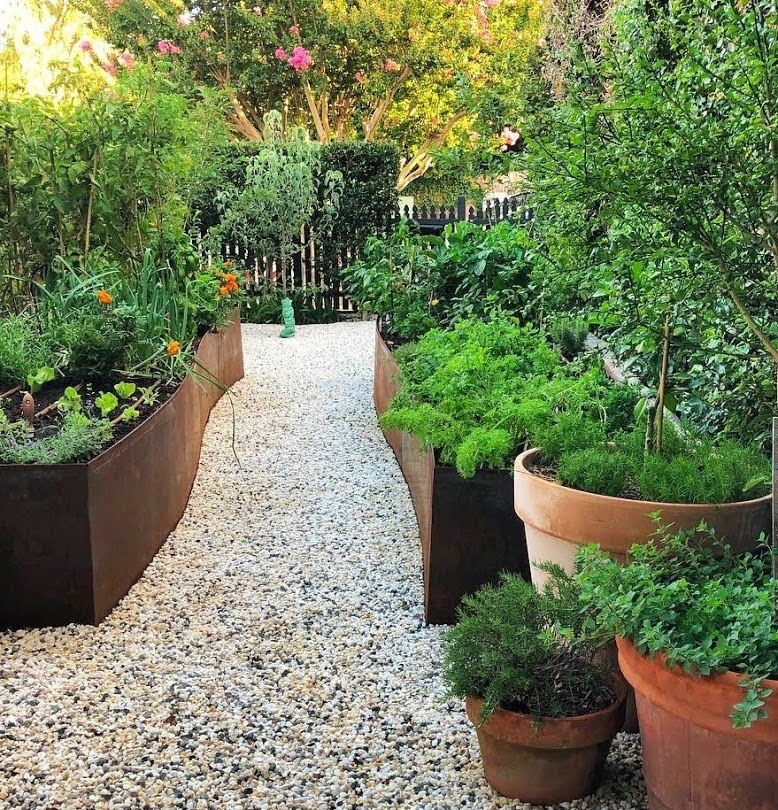
Growing your own vegetables is one of the most practical things you can do with a raised bed. Homegrown produce tends to be fresher and more flavourful than shop-bought, and herbs in particular are low-effort and high-reward, a raised herb bed near the kitchen door earns its keep quickly.
For a veggie patch, height matters. Most vegetables and herbs need at least 300mm of root depth to thrive, and 400mm gives you real flexibility. If you want to grow deeper-rooted crops like carrots or parsnips without amending the soil below, 560mm gives you the best conditions. Straightcurve’s Flex and Rigid raised garden beds come in 240mm, 400mm, and 560mm heights, for a veggie patch, we’d recommend the 400mm or 560mm options.
Shape is flexible too. If you want straight edges for a formal kitchen garden layout, Rigid panels give you that precision. If you’d prefer a more organic shape that flows with your existing garden design, Flex panels can be shaped by hand on site.
Feature bed
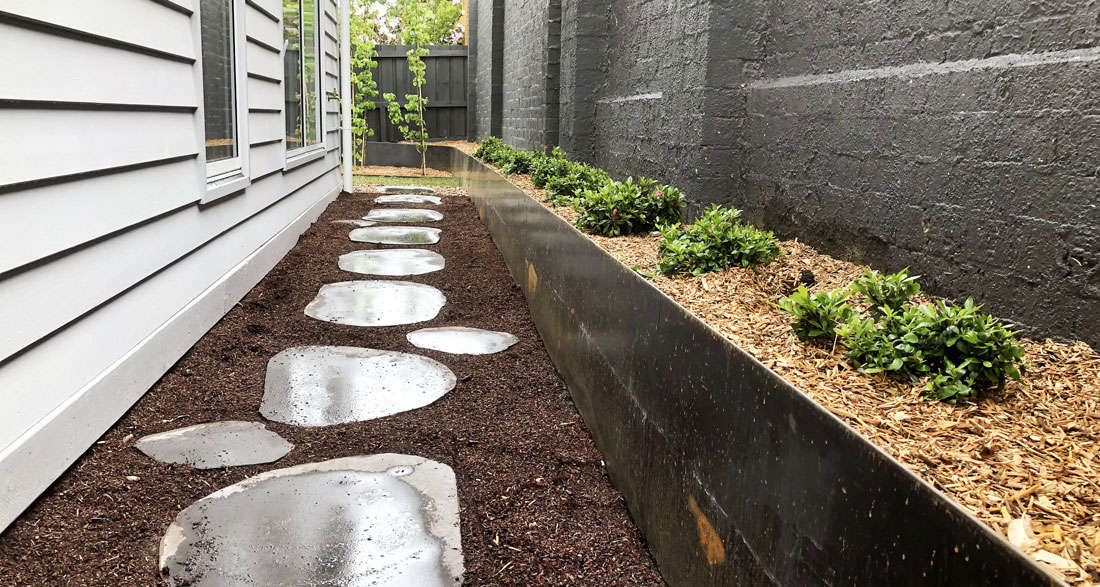
Not all raised beds are about food. A feature bed adds height, structure, and definition to a garden that’s feeling flat or undefined. This is where the material choice starts to matter for aesthetics as well as performance: weathering steel (corten) has a distinctive warm, rust-toned finish that works particularly well against gravel, stone, timber decking, or rendered walls.
A single well-placed feature bed (planted with ornamental grasses, lavender, or architectural plants like agapanthus) can anchor a garden design far more effectively than scattered planting at ground level.
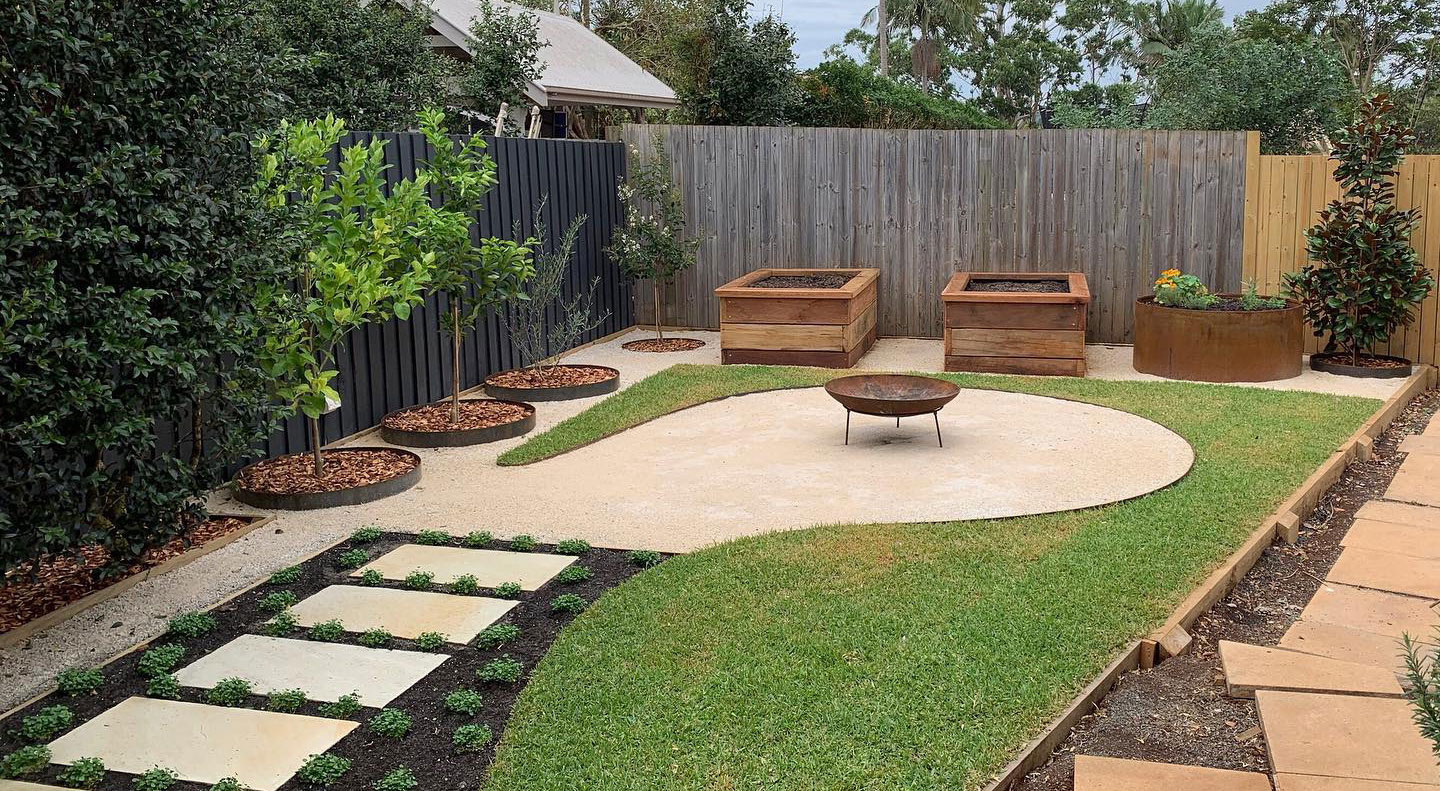
For this kind of project, a 400mm Rigid or Zero-Flex panel gives you a clean, formal edge. If the shape of your garden calls for a curve, Flex panels let you create smooth sweeping forms without any cutting or fabrication.
Freestanding planter box
If you want a raised bed that doesn’t need to be dug in or permanent (for a patio, terrace, or courtyard) a freestanding planter box is the right approach. Straightcurve’s planter box system assembles into square or rectangular forms and sits directly on any flat surface. No groundwork required.
This is also the option to consider if you’re in rented accommodation, or if you want to be able to reconfigure your garden layout later. The modular panels disassemble cleanly.
Pro Tip
Leave room to reach
The most useful raised beds are no wider than about 1.2m, that’s the maximum most people can comfortably reach to the centre from either side without stepping in. If your bed will sit against a wall or fence and you can only access it from one side, keep it to around 600mm wide.
Weathering steel and corten: why they work so well for raised beds in the UK
Weathering steel (commonly known by the brand name Corten) is the material most associated with modern steel raised garden beds. Understanding how it works helps you use it correctly and get the most from it.
Corten is a low-alloy steel that forms a stable, adherent oxide layer on its surface when exposed to alternating wet and dry conditions. This layer (the characteristic warm rust tone) acts as a barrier that progressively slows further corrosion. It’s not “rust resistant” in the sense of being immune to rust; it manages rust, turning it into protection.
The UK climate is, in many ways, ideal for this process. The regular rain followed by dry periods gives corten exactly the wet-dry cycling it needs to develop and maintain its patina. Importantly, this means corten raised beds in a typical UK inland garden should stabilise and perform well over the long term.
There are conditions where weathering steel is not the right choice. If your garden is within roughly 2km of the coast, or in an area with high salt air exposure, the chloride levels will interfere with patina formation and accelerate corrosion. For coastal locations, galvanised steel is the better option, the zinc coating provides consistent protection regardless of salt exposure.
UK winters are also worth factoring in. Steel raised beds are generally unaffected by frost, but if you’re filling a planter box that sits on an impermeable surface, make sure drainage holes or gaps are adequate so water doesn’t pool and freeze against the steel.
Pro Tip
Expect the colour to evolve
New corten panels will look quite different from the finished patina, the initial rust can be uneven and patchy. This is normal. In a typical UK climate, the patina usually stabilises to a consistent warm brown within one to two seasons. Avoid placing corten panels directly against light-coloured paving or rendered walls during this period, as the early rust runoff can stain.
How to choose the right Straightcurve raised bed for your project
Straightcurve makes three panel types for raised garden beds, each suited to different applications:
- Flex: the right choice for curved or organic shapes. Panels bend by hand on site, no cutting or fabrication needed. Use for flowing borders, circular beds, tree rings, or any shape that isn’t a straight line.
- Rigid: holds a consistent curve radius and suits formal, symmetrical layouts. Good for structured kitchen gardens or feature beds where you want a defined, repeatable shape.
- Zero-Flex: maximally rigid, designed for precise straight lines. Use where geometry matters: square or rectangular beds, formal layouts, or any project where a perfectly straight edge is non-negotiable.
All three types are available in weathering steel (corten finish) and galvanised steel, and in 240mm, 400mm, and 560mm heights. Flex and Zero-Flex panels are join-compatible, so you can mix straight and curved sections in a single project.
For most DIY raised garden bed projects, a practical shortcut is to decide on your shape first (curved or straight) then choose your height based on what you’re growing.
Getting started: four steps to your first raised bed
Most Straightcurve raised garden bed projects follow the same basic sequence regardless of which product you choose. If you want the full detail on each stage, the step-by-step raised bed build guide covers site preparation, panel connections, filling, and finishing in sequence.
- Decide on size and shape: Sketch it out roughly, even a quick drawing helps. Think about access from all sides, where sunlight falls during the day, and whether you want a fixed shape or something you might reconfigure later.
- Choose your height: 240mm works well for decorative planting and ground cover. 400mm suits most vegetables, herbs, and flowering perennials. 560mm is best for deep-rooted crops or if you want to minimise bending.
- Prepare the ground: For an in-ground bed, you don’t need to excavate, the panels sit on the surface and the integrated locking feet hold them in place. Clear grass or weeds, level the area, and you’re ready to assemble. For a freestanding planter box on a hard surface, check that water can drain freely.
- Fill and plant: Fill with a good quality topsoil and compost mix. For vegetable growing, aim for a mix that’s roughly 60% topsoil, 30% compost, and 10% grit for drainage. Rake level and plant.
Assembly itself is designed for DIY, panels click together using Straightcurve’s connector plate system, with no tools required for the joins. Fixing spikes anchor the bed to the ground.
Common questions about DIY raised garden beds
What's the best steel for raised garden beds in the UK?
For most UK inland gardens, weathering steel (corten) is an excellent choice, the UK’s wet-dry climate supports good patina development, and the warm rust-toned finish suits a wide range of garden styles. For coastal gardens within 2km of the sea, galvanised steel is more appropriate, as salt air interferes with the corten patina process. Both are available in the Straightcurve raised garden bed range. Our Longevity Guide and Product Care Guide cover detailed guidance on material selection and care in coastal environments.
How deep should a raised garden bed be for vegetables?
For most vegetables and herbs, 300–400mm of growing depth is sufficient. The Straightcurve 400mm height is a practical all-rounder for a veggie patch. If you’re growing deeper-rooted crops like carrots, parsnips, or beetroot, the 560mm option gives you better conditions without needing to improve the subsoil below.
Can I build a raised garden bed on a patio or concrete?
Yes. Straightcurve’s planter box range is designed for exactly this, it assembles into a freestanding structure that sits on any level hard surface. The main consideration is drainage: make sure water can escape freely from the base to prevent waterlogging, particularly in UK winters. Avoid leaving pooled water in contact with the steel for extended periods.
Will corten steel stain my paving?
During the initial weathering period (usually the first one or two seasons) corten steel can produce rust runoff that stains light-coloured paving, stone, or rendered walls. Once the patina has stabilised this largely stops, but it’s worth placing boards or sheeting under and around new panels during this early phase, or choosing galvanised steel if your paving is particularly pale or porous.
How long does a steel raised garden bed last?
In well-drained inland conditions, Straightcurve weathering steel raised beds are built to last well over a decade. Galvanised steel panels perform even longer in the same conditions. Lifespan is most affected by soil pH, drainage, proximity to the coast, and whether organic material (compost, mulch) is in prolonged direct contact with the steel surface. For advice specific to your site conditions, see the Straightcurve Longevity Guide.